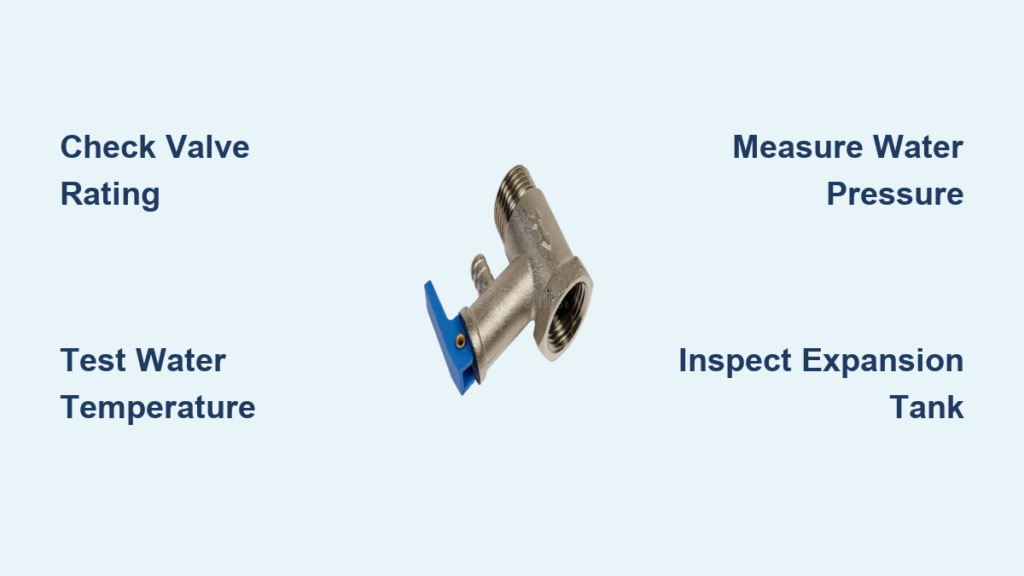
A leaking water heater pressure relief valve is more than an annoying drip. It is a warning signal that your system may be under dangerous stress. The Temperature and Pressure Relief (TPR) valve is a critical safety device designed to release water when pressure or temperature climbs too high. When it leaks, it is often doing exactly what it was built to do, reacting to a problem elsewhere in your plumbing rather than failing on its own.
If your valve drips after long showers or during cold snaps, the culprit is usually thermal expansion in a closed plumbing system. A failed expansion tank, excessive municipal water pressure, or even the wrong valve installed from the start can all trigger the leak. In this guide, you will learn how to accurately diagnose the root cause, test your system, and fix a leaking pressure relief valve safely and effectively.
Verify the Correct Valve Is Installed
Before diving into complex diagnostics, confirm you are working with the right component.
Check the Pressure Rating on the Valve
Every residential water heater requires a TPR valve rated for 150 psi and 210°F. These numbers are stamped directly on the valve body or printed on an attached metal tag. A surprisingly common mistake is installing a boiler pressure relief valve, which is designed to open at just 30 psi.
If a 30 psi valve is on your water heater, it will leak continuously the moment the system pressurizes. This is not a malfunction. It is the valve reacting to normal residential water pressure that exceeds its low threshold.
Action Step: Inspect the valve tag right now. If the rating is below 150 psi, shut off the heater and replace it immediately with a correctly rated 150 psi/210°F model.
Rule Out Excessive Water Temperature
High temperature can trigger the TPR valve, but it is rarely the actual cause unless your thermostat is failing badly.
Measure the Hot Water Temperature Accurately
Modern homes often have tempering valves that mix cold water into the hot supply, which can mask the true tank temperature. To get an accurate reading:
- Run hot water from a nearby faucet for one full minute.
- Hold a meat thermometer directly in the stream.
- Note the temperature.
If the reading is below 210°F, temperature is not triggering the valve. Even 150°F water is nowhere near hot enough to open the TPR valve. Only near-boiling temperatures will activate the thermal release.
Warning: If your water exceeds 180°F, suspect a failing thermostat, especially on electric heaters with dual heating elements.
Diagnose High System Pressure

Excessive pressure is one of the leading causes of TPR valve leaks. You need to test two conditions: static pressure and surge pressure.
Measure Static Water Pressure
- Attach a water pressure gauge with a surge indicator to an outdoor sillcock or washing machine valve.
- Make sure no water is running anywhere in the house.
- Open the valve and read the gauge.
A normal reading falls between 40 and 80 psi. If your gauge shows anything above 80 psi, your municipal supply is too high. A pressure reducing valve (PRV) must be installed by a licensed plumber to bring it down to a safe range.
Test for Pressure Surge from Thermal Expansion
Leave the gauge attached and monitor it over a few hours or after a long hot shower:
- Wait for the water heater to cycle on and off at least once.
- Check the surge needle, which holds the peak pressure reached.
- If the needle spikes near 150 psi, your system is experiencing thermal expansion.
This confirms a closed plumbing system without proper expansion control, which is the most common hidden cause of TPR valve leaks.
Inspect the Expansion Tank
In homes with backflow preventers or check valves on the main supply, an expansion tank is essential. It absorbs the increased water volume created when your heater warms up. When it fails, pressure builds and triggers the TPR valve.
Test the Schrader Valve for Water
- Turn off the water heater and the cold water supply to the tank.
- Open a hot faucet to relieve system pressure.
- Drain a few gallons from the heater drain valve.
- Locate the Schrader valve on top of the expansion tank (it looks like a tire valve).
Press the pin briefly with a screwdriver:
- Water sprays out? The internal bladder has ruptured. Replace the tank.
- Air hisses out? The bladder is intact. Move on to the pressure check.
- Nothing comes out and the tank sounds solid when tapped? The tank is waterlogged or damaged. Replace it.
Verify and Recharge the Air Pressure
If air came out, use a tire pressure gauge to check the air charge. It must match your home’s static water pressure. For example, if your house runs at 65 psi, the tank should also be charged to 65 psi. If it is low, recharge it with a bicycle pump or air compressor.
Pro Tip: Tap the tank with a screwdriver handle. A healthy tank sounds hollow at the top and solid at the bottom. A completely solid sound throughout means the tank is waterlogged.
Replace the Pressure Relief Valve If Needed

If your diagnostics rule out temperature, pressure, and expansion issues, the valve itself may be faulty, especially if it is more than 9 years old.
Swap Out a Faulty TPR Valve
Tools needed: Adjustable wrench, pipe dope or Teflon tape, new 150 psi/210°F valve.
- Shut off power to the heater (electric or gas) and close the cold water inlet valve.
- Open a hot faucet and drain 2 to 3 gallons from the tank to drop the water level below the valve.
- Place a bucket under the valve to catch drips.
- Unscrew the old valve with a wrench.
- Wrap the threads of the new valve with pipe dope or Teflon tape.
- Screw in the new valve hand-tight, then snug it with a wrench. Do not over-tighten.
- Restore the water supply, bleed air from the hot faucets, then restore power.
- Lift the valve lever briefly to flush debris and confirm it reseals properly.
Warning: Never cap or plug a leaking TPR valve. It is a critical safety device, and disabling it can lead to a catastrophic tank failure.
Address High Static Pressure at the Source
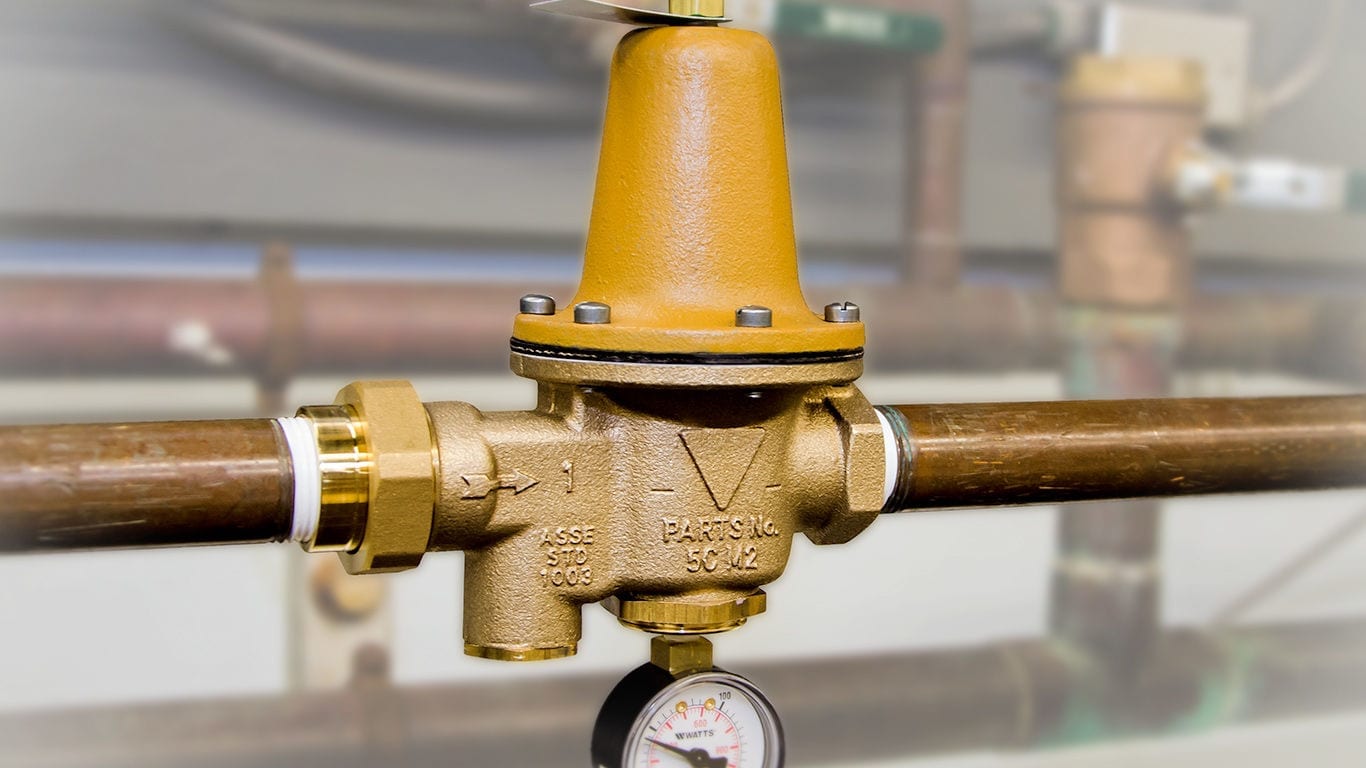
If your baseline pressure exceeds 80 psi, no expansion tank can function properly, no matter how new it is.
Install a Pressure Reducing Valve
A PRV regulates incoming water pressure and must be installed on the main water line before it branches to the rest of the house.
- DIY difficulty: High. Requires cutting the main line and soldering copper or using compression fittings for PEX.
- Recommendation: Hire a licensed plumber for this job.
- Sizing: Match the PRV to your home’s flow needs and pipe diameter.
Without this fix, the TPR valve will continue to leak, and other fixtures like your dishwasher and washing machine may suffer damage over time.
Prevent Future Leaks with Routine Maintenance
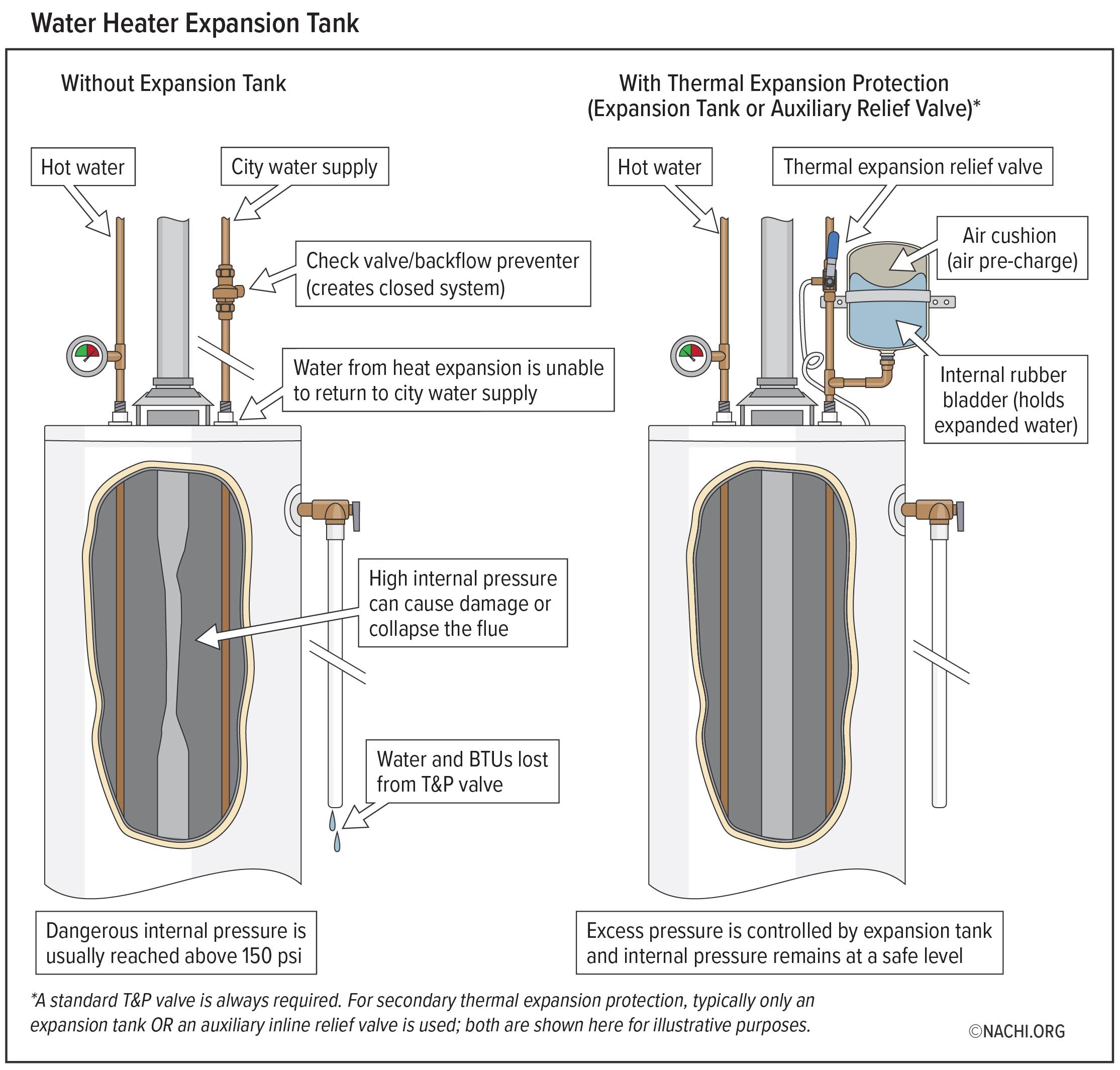
A leaking TPR valve is often preventable with simple annual checks.
Annual Expansion Tank Inspection
Once a year, take a few minutes to:
- Test the Schrader valve for air.
- Recharge the air pressure to match your household water pressure.
- Tap the tank to confirm the proper hollow-then-solid sound.
This quick check extends the life of your water heater and prevents emergency relief events.
Replace Old TPR Valves Proactively
Even if it is not leaking, a TPR valve older than 9 to 10 years should be replaced. Sediment buildup and seal degradation reduce reliability over time. Use a permanent marker to write the installation date directly on the new valve so you know when to replace it next.
Confirm the Discharge Pipe Is Safe
The TPR valve must have a discharge pipe that:
- Runs to a floor drain or outside the home.
- Matches the diameter of the valve outlet.
- Has no valves, T-fittings, or flexible connectors.
- Ends in a location where scalding water cannot reach people or damage materials.
Danger: A blocked or improperly routed discharge pipe can cause steam explosions if the valve activates under high pressure.
Case Study: Leak After Long Showers
Symptom: The water heater drips from the TPR valve after a 20-minute shower. The dripping stops if the drain valve is opened.
Diagnostic Results:
* Valve rating: 150 psi (correct)
* Water temperature: 125°F (safe)
* Static pressure: 65 psi (normal)
* Surge pressure: 148 psi (near trigger point)
* Expansion tank Schrader valve: no air, solid tap sound
Root Cause: The expansion tank failed due to waterlogging.
Resolution: Replacing the expansion tank stopped the leak permanently. The TPR valve was working correctly all along. The system, not the valve, needed the repair.
Frequently Asked Questions About Water Heater Pressure Relief Valve Leaks
Why is my water heater pressure relief valve leaking after a shower?
This is a classic sign of thermal expansion in a closed plumbing system. When you use a lot of hot water, the heater refills with cold water and heats it rapidly. If your expansion tank is failed or missing, the expanding water has nowhere to go, and pressure spikes trigger the TPR valve.
Is a leaking TPR valve dangerous?
Yes, it can be. The valve itself is a safety device, but the underlying cause (excessive pressure or temperature) can damage your plumbing, water heater, and fixtures. Never ignore a leaking TPR valve, and never cap or plug it to stop the drip.
How much does it cost to replace a pressure relief valve?
A new TPR valve typically costs less than $15. The repair is accessible for most DIYers with basic tools. However, if the root cause is a failed expansion tank or high municipal pressure, those repairs may require a licensed plumber.
How do I know if my expansion tank is bad?
Check the Schrader valve on top of the tank. Press the pin briefly. If water comes out, the bladder is ruptured. If nothing comes out and the tank sounds completely solid when tapped, it is waterlogged. Both situations mean the tank needs to be replaced.
Can I replace a TPR valve without turning off the water heater?
No. You must shut off power (electricity or gas) and close the cold water supply before replacing the valve. You also need to drain a few gallons from the tank to lower the water level below the valve location. Skipping these steps is unsafe and can cause scalding or flooding.
Final Checklist for Stopping the Leak for Good
Use this summary to work through your diagnosis in order:
- Confirm the TPR valve is rated 150 psi and 210°F
- Test hot water temperature. It should be below 210°F
- Measure static pressure. It must be below 80 psi
- Check surge pressure. Spikes near 150 psi indicate a thermal expansion issue
- Inspect the expansion tank. No water at the Schrader valve and air pressure matched to the house
- Replace the TPR valve if it is over 9 years old or still leaks after system fixes
- Ensure the discharge pipe is safe, direct, and unobstructed
A leaking pressure relief valve is not a minor drip to ignore. It is a warning sign that your system is under dangerous stress. By following this guide, you will not only stop the leak but protect your home from potential water damage or worse, a ruptured water heater. Address the root cause, not just the symptom, and your system will run safely for years to come.