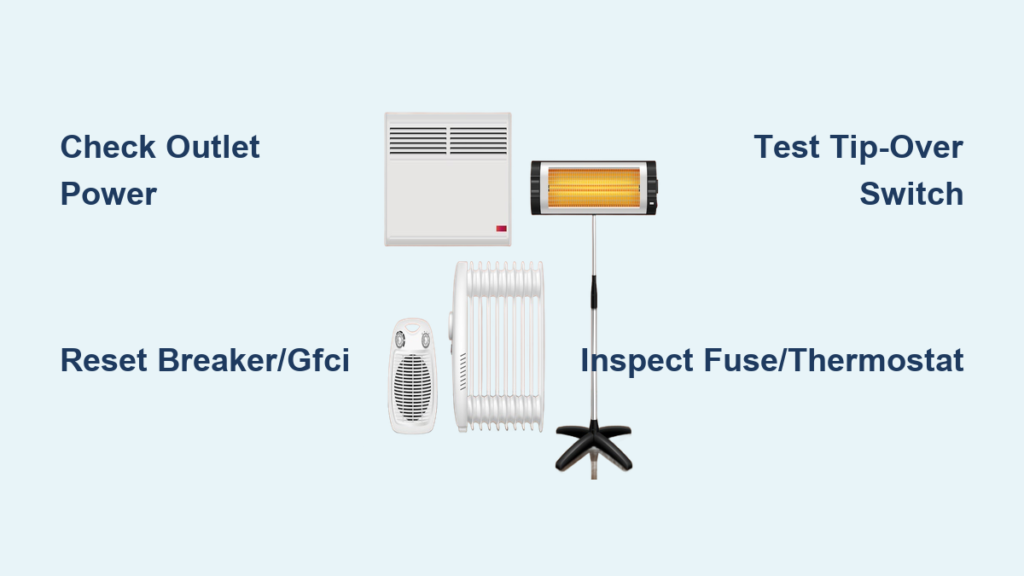
You flip the switch, press the button, or turn the dial. Nothing happens. No light, no fan, no heat. Your space heater is completely dead, and the cold is creeping in. If your space heater won’t turn on, you are not alone. This frustrating issue affects thousands of users every winter, but the good news is that most problems have simple, DIY-friendly fixes.
This guide walks you through every major cause, from dead outlets to blown fuses, and shows you exactly how to diagnose and repair your heater. You will learn how to safely test your power supply, reset safety switches, inspect internal components, and decide whether repair or replacement makes more sense. Most issues can be resolved in under 30 minutes with basic tools.
Power Source Not Delivering
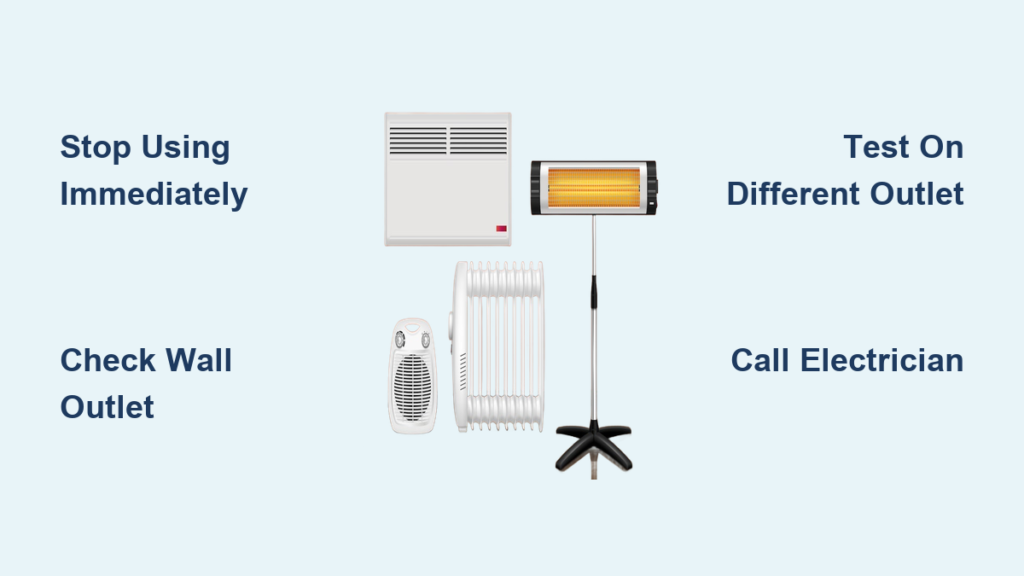
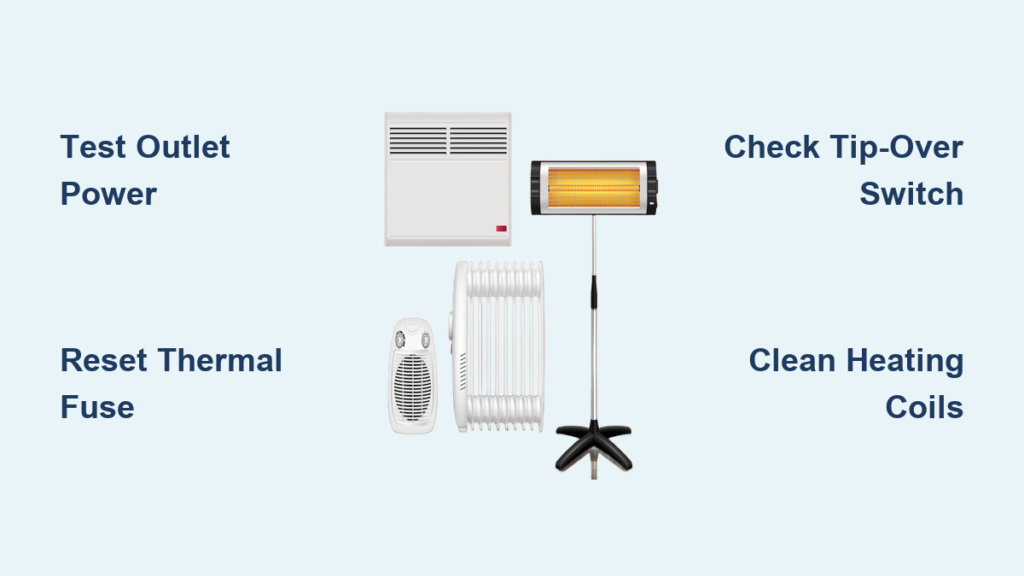
Before opening your heater, confirm it is actually receiving power. Many dead units are simply starved of electricity due to overlooked outlet or circuit issues. This step takes two minutes and saves unnecessary disassembly.
Test the Wall Outlet First
Plug a working device into the same outlet your heater uses. A lamp, phone charger, or hair dryer works well. If that device does not power on, the outlet is dead. Never assume an outlet works just because it looks fine.
Use a device with an immediate visual or audible response. A nightlight or radio is perfect for this test. If the test device fails, try a different room. A working outlet elsewhere confirms the problem is localized to that specific receptacle.
Reset Tripped Circuit Breakers
:max_bytes(150000):strip_icc()/reset-a-tripped-breaker-4134193-hero-c5f5257dd0474f2dbb6745beef15acd5.jpg)
Walk to your home electrical panel and check for tripped breakers. A tripped switch sits in the middle position or points toward off, not fully aligned with the others.
To reset a breaker, follow these steps:
- Flip the breaker fully to the off position
- Push it firmly back to the on position
- Listen for a satisfying click
If the breaker trips again immediately, stop resetting it. This indicates a short circuit, ground fault, or overloaded circuit. Unplug all devices on that circuit and call an electrician. Breakers protect against fire, and bypassing them risks serious danger.
Check GFCI Outlets
Bathrooms, kitchens, garages, and basements often have GFCI outlets with Test and Reset buttons. These safety outlets cut power during ground faults, sometimes without any visible indication.
Press the Reset button firmly. You should hear a distinct click. Now plug in your heater and try to turn it on. If the GFCI trips the moment you plug in the heater, the unit likely has an internal ground fault. Do not bypass GFCI protection. Have the heater inspected professionally or replace it.
Avoid Extension Cords and Power Strips
Most space heaters draw 750 to 1500 watts, far exceeding the capacity of standard power strips or thin extension cords. Using undersized cords causes voltage drop that prevents startup, creates serious overheating and fire risk, and can melt plugs or insulation.
Only plug directly into a wall outlet. If you must use an extension cord, use 14 AWG or thicker wire, choose heavy-duty outdoor-rated cords typically bright orange in color, and keep the cord as short as possible. Never use a power strip or surge protector with a space heater unless explicitly rated for 1500 watts or more.
Safety Switches Preventing Startup
Modern heaters have automatic shutoff systems designed to prevent fires. If triggered, these switches block power even if the heater appears perfectly upright and cool. Understanding these safety mechanisms is essential for accurate diagnosis.
Fix a Triggered Tip-Over Switch
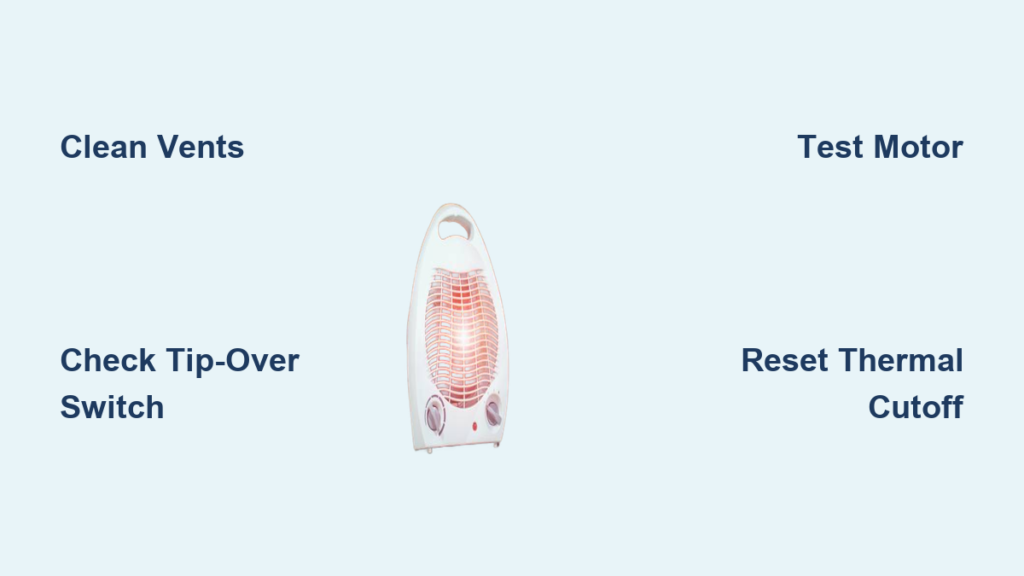
Every space heater has a tip-over safety switch, usually a small plunger on the base. If the unit tilts more than 10 to 15 degrees, it cuts power immediately. This switch triggers when placed on thick carpet or uneven floor, when bumped or nudged during operation, or when dust blocks the switch mechanism.
To test this, move the heater to a hard, level surface like tile, wood, or concrete. Plug it in and try to turn it on. If it works now, the soft surface was the issue. For diagnosis only, you can temporarily tape the switch down. If the heater powers on with the switch taped, the switch itself is faulty. Never operate the heater with a taped switch. This disables a critical safety feature and creates fire risk.
Reset Overheat Protection
If the heater overheats, a thermal cut-off switch shuts it down. This can happen even when the room feels cold to you. Common triggers include blocked air intake or exhaust, dust buildup inside the unit, and placement too close to curtains, furniture, or bedding.
The reset procedure is simple:
- Unplug the heater completely
- Wait 30 to 60 minutes for full cooldown
- Plug back in and try to power on
Some models reset automatically. Others require manual intervention. If it still will not turn on after cooling, the thermal fuse may be blown and need replacement.
Internal Components That Fail
If power and safety systems check out, the problem lies inside the unit. Always unplug and cool the heater for at least 30 minutes before opening the casing. This prevents shock and burn injuries.
Replace a Blown Internal Fuse
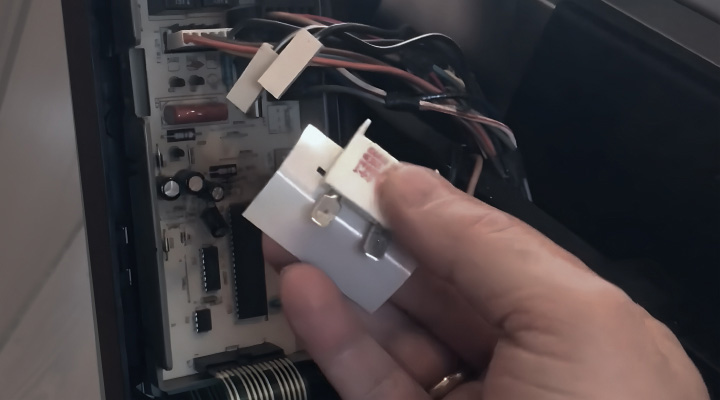
Many heaters contain a 10 to 15 amp thermal fuse near the power cord or control board. A blown fuse stops all power flow, leaving the unit completely dead.
To diagnose this, open the casing with a screwdriver, locate the fuse which looks like a small glass or ceramic tube, and use a multimeter to test continuity. No beep means the fuse is blown. Replacement fuses cost just $2 to $3 and are available on Amazon, eBay, and appliance parts websites. Match the exact amperage and temperature rating when purchasing a replacement.
A blown fuse sometimes signals a deeper issue like a short circuit. Replacing it without diagnosing the root cause could lead to repeated failure or fire.
Diagnose a Faulty Thermostat
If the heater will not respond to temperature settings, the thermostat may be the culprit. Watch for these symptoms: no response when turning the knob, heater works only on high setting, or unit powers on but produces no heat.
To test, turn the thermostat to its maximum setting and try to power on. If it still shows no response, the thermostat is likely faulty. Order a replacement using your model number. This repair requires basic wiring skills. Some thermostats are soldered to the circuit board, in which case professional help may be needed.
Check the Heating Element
In fan or radiant heaters, the heating element generates the warmth. If it fails, the unit may not start at all.
Signs of failure include visible breaks, sagging, or burn marks on the coil, no glow in visible-coil models, and no warmth after ten minutes or more of operation.
Test the element with a multimeter by disconnecting power, removing the element leads, and testing for continuity. No continuity means an open circuit and a failed element. For PTC ceramic models, replacement is often not possible. In that case, replace the entire unit.
Inspect Power Cord and Plug
Even when the cord looks fine externally, internal wire breaks can stop power flow completely.
Check for fraying, kinks, or pinching, discoloration showing brown or black marks, and loose or melted plug prongs.
Test continuity by setting your multimeter to continuity mode, testing from plug to heater end, and wiggling the cord while testing. Intermittent breaks may only show under movement. Replace the cord if damaged. Some units allow user replacement. Others require professional rewiring.
Model-Specific Fixes
Different heater types fail in different ways. Knowing your model helps you diagnose faster and avoid wasting time on irrelevant checks.
Oil-Filled Radiator Won’t Start

These heaters have no fan or exposed coil. They rely on convection for heat distribution. If your oil-filled radiator won’t turn on, check the outlet, breaker, and tip-over switch first. Ensure the thermostat is set above room temperature.
Internal thermal fuse or control board failure is the most likely cause. Oil level does not affect power. Low oil is not a real issue with these units. Because they often lack user-replaceable parts, replacement is usually better than repair if the fuse or board is dead.
Ceramic PTC Heater Dead
PTC heaters use self-regulating ceramic plates. Common issues include clogged air filters or vents, dust buildup that blocks airflow and triggers overheat protection, tip-over or thermal switch problems, and rare PTC module failure.
Clean the heater with compressed air and check the safety switches. For replacement, the FH105A PTC model costs $20 to $25 and is known for reliability, safety, and easy maintenance.
Clean It Right: Dust Kills Performance
Dust is a silent killer of space heaters. It blocks airflow, triggers overheat protection, and insulates components, causing them to overheat and fail prematurely.
Step-by-Step Cleaning Guide
Follow these steps to clean your heater properly:
- Unplug and cool the heater for at least 30 minutes
- Remove the front grill using a screwdriver if needed
- Use compressed air or a soft brush to clean heating coils, fan blades, air intake and exhaust vents, and thermostat housing
- Blow air for 3 to 5 minutes to remove deep dust
- Reassemble and test
Never use water or liquid cleaners. Moisture can short circuit electronics and cause shock or fire.
Maintenance Schedule
Clean your heater every 1 to 3 months during use. Inspect the cord monthly for damage. Vacuum around the base and vents weekly in dusty environments. Store the heater in a dry, cool place when not in use.
When to Repair vs. Replace
Not every heater is worth fixing. Use this guide to make the right decision.
DIY Repair Works If
You can handle replacing a fuse, thermostat, or switch, cleaning internal dust, and testing continuity with a multimeter. You will need a screwdriver and multimeter. Replacement parts cost $2 to $25. This approach works best for simple, low-cost fixes on newer models.
Risks include shock, fire, and voiding your warranty. Only proceed if you are experienced with electrical appliances.
Call a Pro or Replace If
You face soldered or sealed components, oil-filled radiator internal faults, no replacement parts available, or the unit is still under warranty.
The cost-benefit rule is simple. Heater cost under $50? Replace it. High-end or whole-room model? Consider professional repair. As one expert noted, space heaters are cheap, and the parts inside them are cheap. Replacement is often safer and cheaper.
Choose a Better Replacement Heater
If repair is not viable, upgrade to a safer, more reliable model.
Best Pick: PTC Ceramic Heater
The FH105A PTC model costs $20 to $25 and offers energy efficiency, self-regulating heat, cool-touch housing, built-in tip-over and overheat protection, and lightweight portability.
What to Look for in Any New Heater
Choose a heater with safety certifications like UL, ETL, or CSA listing. Essential safety features include tip-over and overheat protection and cool-touch exterior. Look for adjustable thermostat, 1500-watt maximum for full-room heating, oscillation for even heat distribution, and timer for optional convenience.
Avoid heaters without safety certifications or with flimsy cords.
Stay Safe While Troubleshooting
Electric heaters carry real risks. Follow these rules without exception.
Critical Safety Rules
Always unplug before inspection. Wait 30 to 60 minutes for cooldown. Never bypass safety switches. Keep three feet from flammables during testing. Do not use in bathrooms or near water. Never leave the heater unattended while it is on.
Red Flags: Stop Use Immediately
If you notice burning smell, melted plastic or discoloration, sparking or buzzing, or frequent breaker trips, unplug immediately and do not reuse the heater. Replace it.
Prevent Future Failures
Keep your heater working for years with simple habits.
Maintenance That Matters
Clean every 1 to 3 months. Inspect the cord monthly. Store covered in a dry place. Replace every 5 to 10 years.
Use It Right
Place the heater on a hard, level floor, never on carpet or bed. Maintain three feet clearance from furniture, curtains, and paper. Plug directly into a wall outlet with no power strips. Turn off when leaving or sleeping. Use the thermostat instead of max setting all day.
Final Thoughts on Fixing Your Space Heater
If your space heater won’t turn on, start with the simplest causes first. Check the outlet and circuit breaker. Test the GFCI reset button. Verify the heater sits on a level surface. These steps solve roughly 90 percent of all startup failures.
Only open the unit if you are experienced with electrical work. Internal inspection involves real risks. When in doubt, replace the heater entirely with a certified, modern PTC heater. The investment in safety, efficiency, and reliability is worth every penny. Stay warm and stay safe this winter.
Frequently Asked Questions About Space Heaters That Won’t Turn On
Why is my space heater completely dead with no lights or response?
Your heater may not be receiving power due to a dead outlet, tripped breaker, blown fuse, or triggered safety switch. Start by testing the outlet with another device. Check your circuit panel for tripped breakers. Verify the heater sits on a level surface to avoid tip-over switch activation.
Can a dusty space heater refuse to turn on?
Yes. Dust accumulation blocks airflow, causes overheating, and can trigger the thermal cut-off switch. Clean your heater every 1 to 3 months during use. Use compressed air to clean the heating coils, fan blades, and vents. Never use water or liquid cleaners inside the unit.
How do I reset my space heater after it overheats?
Unplug the heater and wait 30 to 60 minutes for complete cooldown. The thermal cut-off switch should reset automatically. Plug it back in and try to turn it on. If it still will not start, the thermal fuse may be permanently blown and require replacement.
Should I try to repair my space heater or just replace it?
For heaters under $50, replacement is usually more cost-effective. Simple repairs like fuse or thermostat replacement cost $2 to $25 and work for newer models. If the heater is old, has sealed components, or shows signs of serious damage, replace it entirely.
Is it dangerous to use a space heater that keeps tripping the breaker?
Yes. Frequent breaker trips indicate a serious electrical problem, possibly a ground fault or short circuit. Stop using the heater immediately. Do not keep resetting the breaker or try to bypass safety features. Have the heater inspected professionally or replace it.