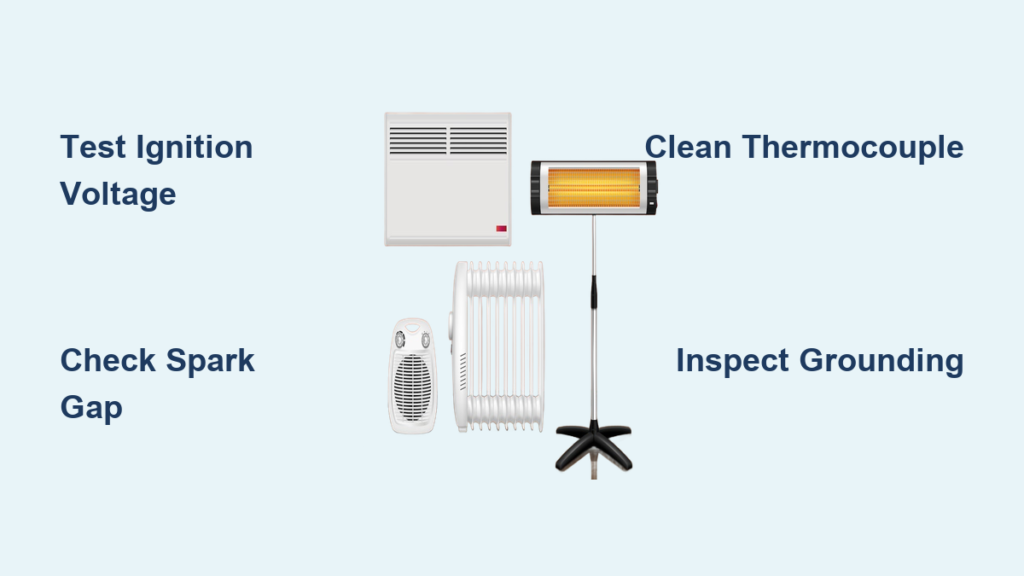
You flip the switch, the fan kicks on, but no spark. Your space heater refuses to ignite, leaving you in the cold. If you’re dealing with a space heater igniter not working, you’re not alone. This is one of the most common issues with propane and kerosene forced-air heaters, especially popular models like Mr Heater. The good news is that most problems are fixable in under an hour with basic tools and a systematic diagnostic approach.
The root cause usually lies in the ignition system: a failed module, dirty or misaligned igniter, faulty thermocouple, or grounding issue. While it might seem like a complicated electrical puzzle, a step-by-step test can pinpoint the exact problem. In this guide, you’ll learn how to diagnose, test, and repair your heater using proven methods. You’ll discover why your heater isn’t sparking, how to verify if the ignition module is dead, and what to do when the pilot lights but won’t stay lit.
Decode Ignition Failure Symptoms
No Spark and No Clicking Sound
If your heater’s fan runs but you hear no clicking sound and see no spark, the issue is likely in the ignition module or power delivery. The clicking noise comes from the module sending high-voltage pulses to the igniter. Silence means no signal is being sent.
This is the most common failure point in propane space heaters, especially units over five years old. Moisture, voltage spikes, or internal component wear can kill the module. Before replacing it, confirm power reaches the module and that wiring isn’t damaged.
Pro Tip: If the unit works intermittently, sparking once every few tries, it may not be the module. Look for loose grounding or corroded connections first.
Fan Runs but Heater Won’t Light
A running fan confirms power is reaching the unit, so the issue is isolated to the ignition or fuel system. Since the fan is tied to the same circuit, this rules out total power failure.
Focus on these areas:
- Whether the igniter sparks
- If fuel is reaching the burner
- Whether the flame sensor allows gas to stay open
Many users assume a non-lighting heater means a bad igniter, but often the spark is fine. It’s the thermocouple or photocell preventing sustained ignition. Always observe the full startup cycle before concluding.
Pilot Lights Then Goes Out
When the pilot lights only while you hold the ignition button but dies within 30 to 60 seconds after release, the igniter isn’t the problem. Instead, the thermocouple in propane models or photocell in kerosene/diesel heaters isn’t signaling flame presence.
The thermocouple generates a small voltage when heated, telling the gas valve to stay open. If it’s weak or dirty, the system thinks there’s no flame and shuts off fuel. This symptom is frequently misdiagnosed as an igniter issue.
Fix First: Clean the thermocouple tip with emery cloth and retest.
Test the Ignition System

Check Voltage at the Igniter
The definitive test for diagnosing space heater igniter failure is measuring voltage at the igniter terminal. This tells you whether the ignition module is working or not.
Tools Needed:
- Digital multimeter set to AC voltage
- Safety gloves and eye protection
Steps:
- Turn off fuel and disconnect power.
- Access the igniter and disconnect the red wire from the ignition module.
- Reconnect power and turn the heater on.
- Place red probe on the red wire terminal and black probe on a clean metal part of the chassis.
- Observe the reading.
| Result | Diagnosis |
|---|---|
| 0 V | Ignition module is faulty |
| ~120 V AC | Module works, igniter is likely defective |
| Low or fluctuating voltage | Wiring issue or failing module |
Most systems output 120 V AC. Anything less indicates a problem. This test prevents wasted money on unnecessary igniter replacements.
Inspect and Adjust Spark Gap
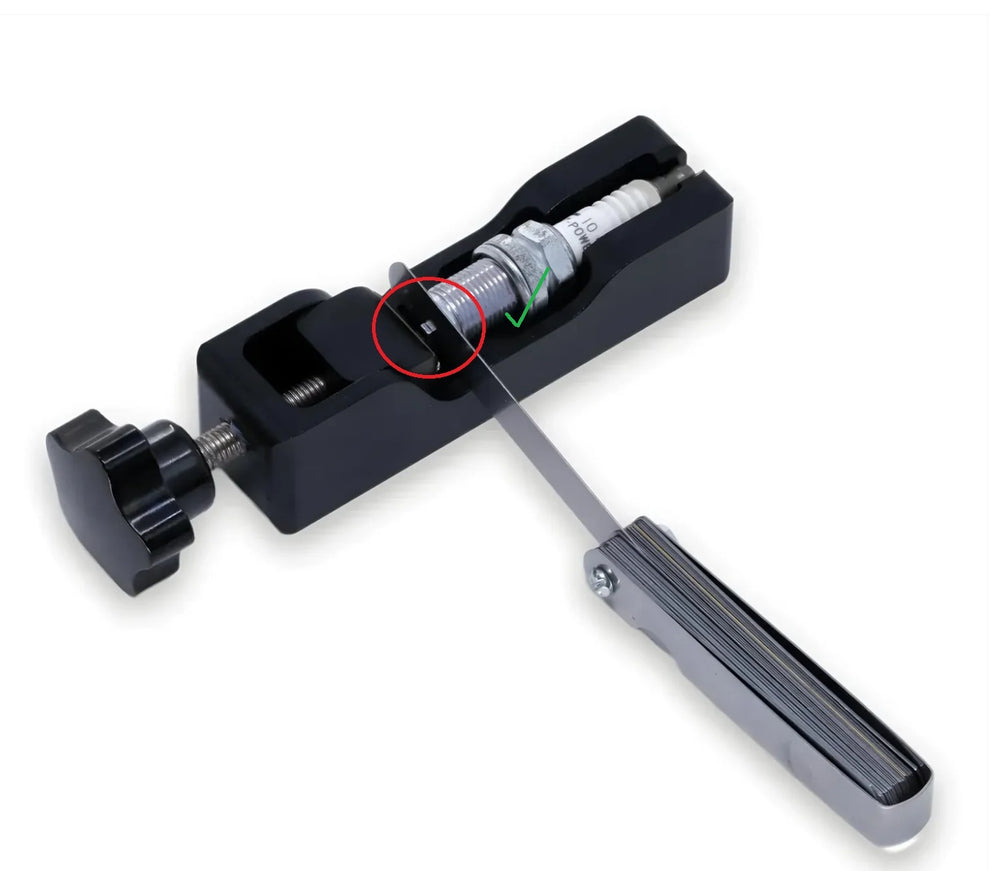
Even with proper voltage, a misaligned spark gap can prevent ignition. The standard gap is 1/8 inch, though some models require 3/16 inch.
How to Adjust:
- Remove the igniter.
- Use a feeler gauge to measure the gap between the center electrode and ground strap.
- Gently bend the ground strap to adjust.
- Reinstall and reconnect.
Also check for:
- Cracked ceramic insulator
- Carbon buildup on the tip
- Electrode erosion
Clean fouled igniters with isopropyl alcohol and a soft brush. Replace if damaged. Spare igniters cost around $3.
Pro Tip: Always verify gap specs in your model’s manual or data plate.
Verify Grounding and Wiring
Many ignition failures stem from poor grounding, especially in Mr Heater 80CVX models. These use a single-wire ignitor that relies on the heater body for circuit return. Plastic threads can break electrical contact over time.
Common Issues:
- Loose internal grounding wire
- Corroded mounting surface
- Pinched or frayed red wire
Fix for Mr Heater 80CVX:
- Remove the ignitor.
- Inspect the internal wire inside the plastic threads.
- If loose, solder it directly to the base for permanent contact.
- Reinstall securely.
Users report this resolves intermittent sparking in over 80% of cases.
Diagnose Flame Sensor Issues
Test the Thermocouple
The thermocouple keeps the gas valve open after ignition. If it fails, the pilot lights only while you hold the button.
Testing Steps:
- Set multimeter to mV DC.
- Connect probes to thermocouple terminals.
- Manually light the pilot if possible.
- Wait 30 seconds and check voltage.
| Reading | Action |
|---|---|
| 25 to 30 mV | Thermocouple is good |
| Below 15 mV | Replace thermocouple |
Universal replacements cost $10 to $15 and are available at Home Depot, Lowe’s, or Amazon. Match the length, thread size, and terminal type.
Cleaning the thermocouple tip often restores function. Try this before replacing.
Clean the Photocell
In diesel or kerosene heaters, the photocell detects flame via light. If the lens is covered in soot, it won’t see the flame and shuts down the fuel pump.
Cleaning Steps:
- Power off and cool the unit.
- Locate the photocell near the burner.
- Gently wipe the lens with a soft swab dampened with isopropyl alcohol.
- Reassemble and test.
Do not scratch or abrade the lens. This ruins its sensitivity.
Replace Faulty Components
Replace the Ignition Module
If voltage test shows 0 V, the ignition module is dead. Replacement costs about $40 for an OEM Mr Heater unit.
Steps:
- Remove bottom plate.
- Press side clips and remove mounting nut. This also grounds the module.
- Take a photo of wiring before disconnecting.
- Loosen and remove red wire connector.
- Disconnect all wires.
- Transfer to new module using your photo as reference.
- Reinstall spacer and screw.
- Secure ground nut and connectors.
Ensure the red wire is fully seated. A loose connection causes repeat failures.
Swap Out the Igniter
If voltage is present but no spark, replace the igniter.
Steps:
- Disconnect power.
- Remove mounting screw or screws.
- Pull out old igniter.
- Insert new one with correct depth and alignment.
- Reconnect wire.
- Verify gap is 1/8 inch.
Use OEM or compatible replacement. Some aftermarket igniters fail under 120 V AC.
Clear Fuel and Safety Systems
Unclog Pilot and Burner Jets
A clogged pilot orifice can prevent ignition even with perfect spark. Spiders, debris, and soot are common culprits.
Cleaning Steps:
- Shut off gas.
- Use compressed air to blow out pilot tube and burner jets.
- Use a fine wire or needle to gently clear blockages.
- Avoid enlarging the orifice.
Ensure propane tank pressure is 11 inches WC, about 0.4 psi. Low pressure mimics ignition failure.
Test with soapy water on connections to check for leaks.
Test the Overheat Sensor
The overheat sensor is a normally closed thermal switch. If it fails open, it cuts power even when the unit is cool.
Test for Continuity:
- Power off and cool the heater.
- Remove sensor wires.
- Use multimeter in continuity mode.
- Cold sensor should show closed circuit.
If no continuity, replace the sensor.
Quick Diagnostic Bypass:
- Temporarily jumper the two wires.
- If heater starts, the sensor is faulty.
Never permanently bypass. This disables a critical safety feature.
Maintain for Long-Term Reliability
Clean and Inspect Annually
Regular maintenance prevents most ignition issues. At the start of each heating season:
- Clean the igniter with isopropyl alcohol.
- Check spark gap.
- Inspect wiring for damage.
- Clean thermocouple or photocell.
- Blow out fuel passages with compressed air.
Also clean intake and discharge air filters. Restricted airflow causes overheating.
Lubricate Fan Motor Bearings
Some models use sealed bushings that dry out over time. Apply a small dab of light oil or grease to the front shaft bearing during servicing.
Do not lubricate the rear bushing if inaccessible. Reassemble carefully to avoid fan imbalance.
Store Properly Off-Season
- Drain fuel from kerosene/diesel models.
- Store in a dry, covered area.
- Cover to prevent dust and spider nests.
- Remove batteries if applicable.
Key Takeaways for Fixing Your Space Heater Igniter
A space heater igniter not working is rarely a mystery when you test systematically. Start with voltage at the igniter to determine if the problem is the module or the igniter itself. Check the spark gap, grounding, and flame sensors as part of your diagnostic workflow. Most fixes take less than 30 minutes and cost under $40. Replace the ignition module if you get 0 V during testing, or replace the igniter if you have proper voltage but no spark. For pilot lights that won’t stay lit, clean or replace the thermocouple. By following this guide, you’ll restore reliable heat safely and affordably.
Frequently Asked Questions About Space Heater Igniter Not Working
Why does my space heater have no spark when the fan works?
If the fan runs but there’s no spark and no clicking sound, the ignition module is likely faulty. This is the most common failure point in propane space heaters. Test the voltage at the igniter to confirm. If you read 0 V, replace the module.
How do I test if my igniter is getting power?
Disconnect the red wire from the ignition module, then reconnect power and turn on the heater. Place your multimeter probes on the red wire terminal and a grounded metal surface. You should see approximately 120 V AC if the module is working.
What causes intermittent sparking in my heater?
Intermittent sparking is usually caused by poor grounding, especially in models like Mr Heater 80CVX with plastic-threaded ignitors. The internal grounding wire becomes loose from vibration. Solder it directly to the base for permanent contact.
Why does the pilot light but then go out immediately?
This indicates a failing thermocouple in propane models or a dirty photocell in kerosene models. The flame sensor isn’t detecting flame presence, so it shuts off gas flow. Clean the thermocouple tip or photocell lens first before replacing.
Can I replace just the igniter or do I need the whole module?
It depends on your voltage test result. If you have 120 V AC at the igniter terminal, the module is working and you only need to replace the igniter. If you have 0 V, the module is dead and needs replacement.
How much does it cost to repair a space heater igniter?
Ignition modules cost about $40, while spare igniters cost around $3. Universal thermocouples run $10 to $15. Most repairs cost under $40 total, making DIY repair far more economical than replacement.