Every winter, thousands of households turn to space heaters for extra warmth, but many do not realize the hidden danger lurking in plain sight. Despite their small share of home heating systems, space heater fires are shockingly common and disproportionately deadly. While they account for only 3% of home heating fires, they cause 41% of fatal home heating fires, according to data from 2017 to 2019. Even more alarming, the National Fire Protection Association reports that space heaters are responsible for 79% of home heating fire deaths.
These devices are involved in about 32,200 home heating fires annually, leading to 190 deaths, 625 injuries, and $442 million in property damage. This article breaks down exactly how common these fires are, why they are so dangerous, and what you can do to stay safe, because understanding the risk is the first step in preventing tragedy.
High Fatality Rate of Space Heater Fires
Why 3% of Fires Cause 79% of Deaths
It seems counterintuitive. How can space heaters cause nearly 8 out of 10 home heating fire deaths while accounting for only a tiny fraction of total fires? The answer lies in how and where these devices are used, and how quickly things go wrong.
Unlike central heating systems or wood stoves, which are often installed in controlled environments, portable space heaters are frequently placed in high-risk areas. They are commonly used overnight or while unattended, increasing the chance that a fire goes unnoticed until it is too late.
Key factors that make space heater fires so deadly include:
- Placement in bedrooms and living rooms near flammable materials
- Operation while occupants sleep
- Lack of modern safety features in older models
- Rapid fire spread once ignition occurs
Winter Months See the Most Heater Fires
Space heater fires peak between December and February, when demand for supplemental heat is highest. During these months, home heating equipment is involved in nearly half of all reported home fires.
The U.S. Fire Administration notes that over half of all home heating fires occur in the evening or overnight, precisely when occupants are sleeping and least able to respond. This seasonal spike underscores a critical point: increased use equals increased risk.
Top Causes of Space Heater Fires
Electrical Overload from High Wattage
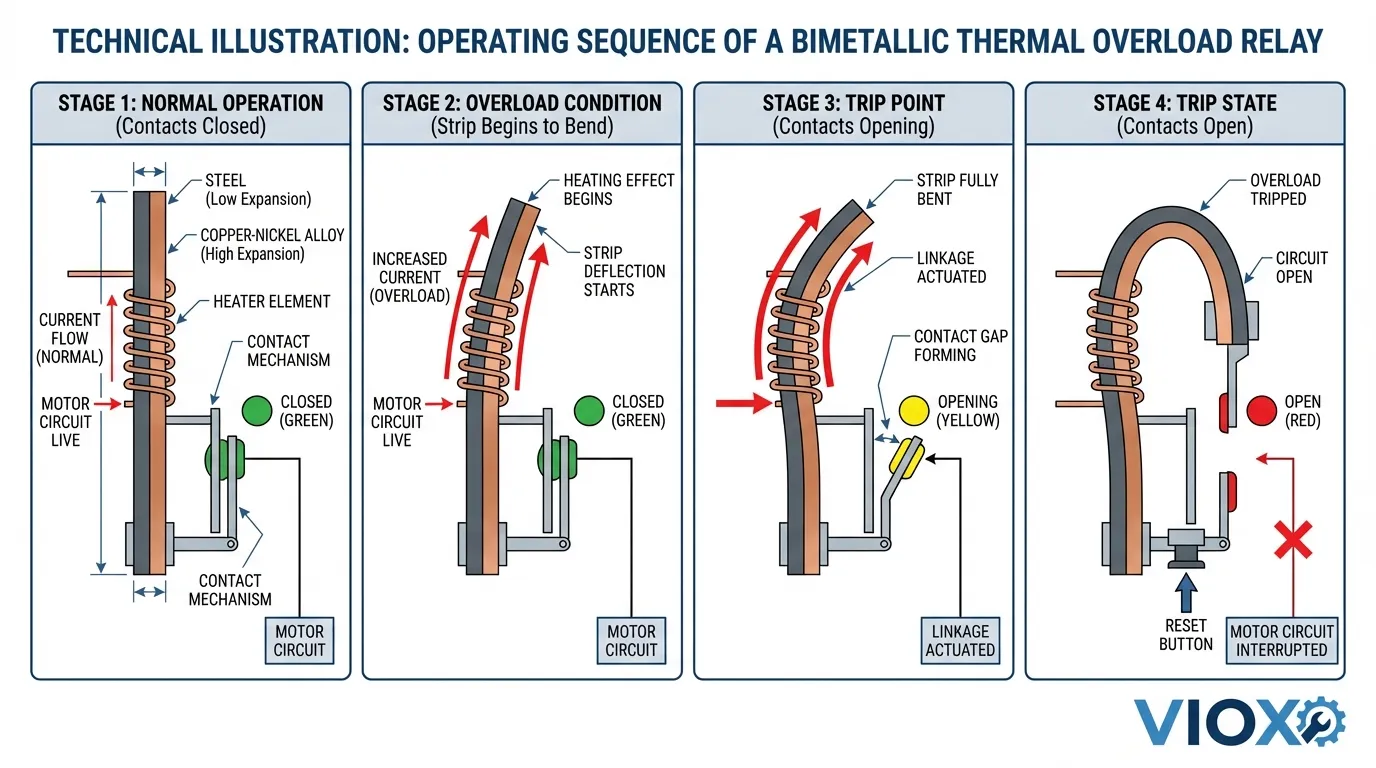
Most portable electric space heaters draw 1,500 watts on high settings, which is close to the maximum capacity of a standard 15-amp household circuit. When other appliances share the same circuit, the total load can exceed safe limits.
When circuits are overloaded, the following can occur:
- Wires overheat inside walls
- Insulation melts, exposing live conductors
- Sparks can ignite surrounding materials
Warning signs include flickering lights, buzzing outlets, or warm faceplates. If your breaker trips repeatedly when using a space heater, stop immediately.
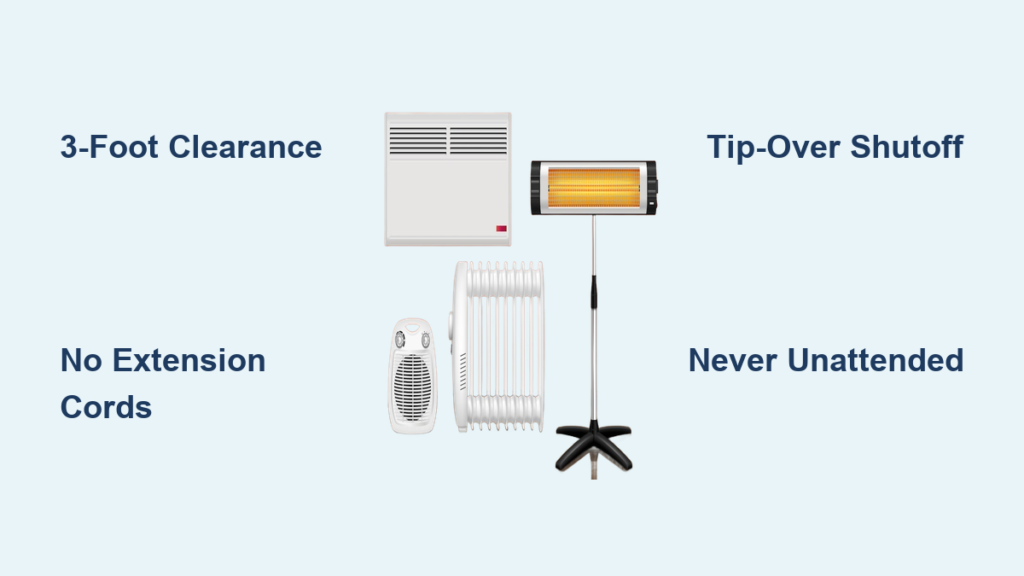
Never Use Extension Cords or Power Strips
Despite clear warnings, many people plug space heaters into extension cords or power strips. This is one of the most dangerous mistakes you can make.
Standard extension cords are not designed for sustained high-current use. The internal wiring creates resistance, which generates heat, especially if the cord is coiled or covered by a rug. That heat can build up fast, melting insulation and igniting nearby materials.
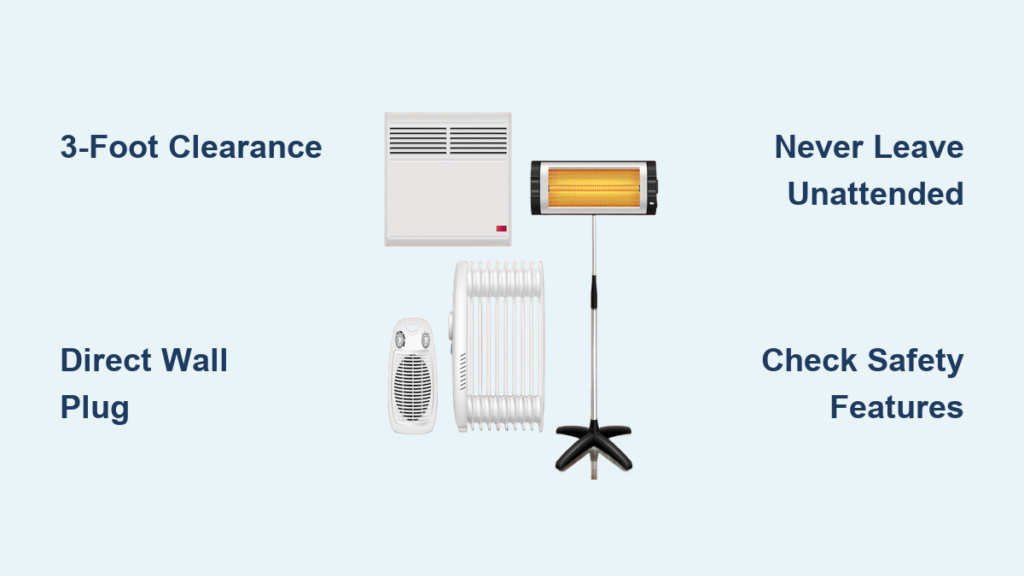
The only safe way to power a space heater is directly into a wall outlet.
Three-Foot Clearance Rule Violations
The number one cause of space heater fires is proximity to combustibles. Curtains, bedding, furniture, clothing, and paper can ignite within seconds if within three feet of a heater is surface.
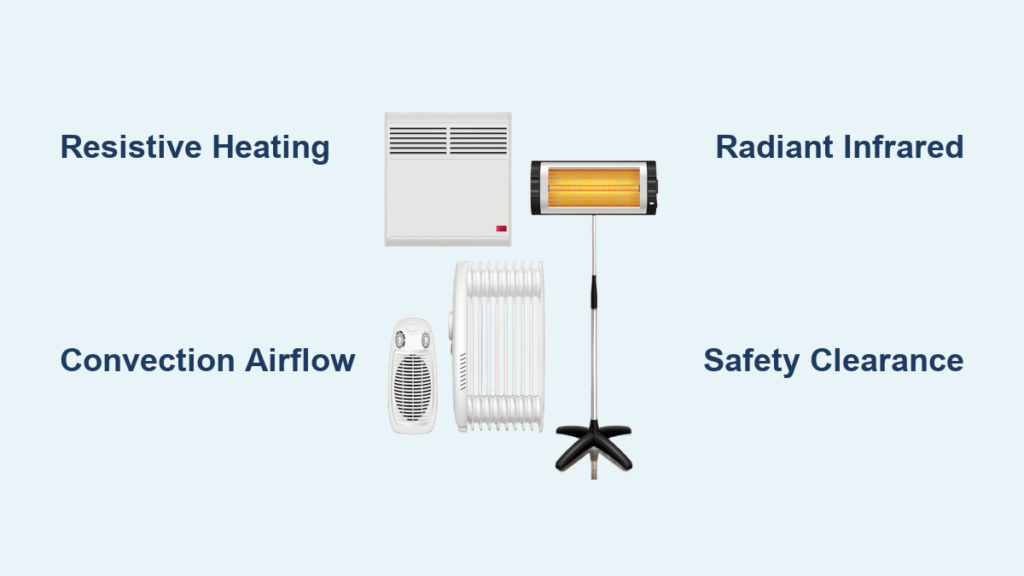
Radiant heaters emit intense directional heat. Convection models circulate hot air but still have hot exteriors. Both types can reach surface temperatures exceeding 250 degrees Fahrenheit, well above the ignition point of many household materials.
Critical Safety Features to Look For

Must-Have Protections in Every Heater
Not all space heaters are created equal. To reduce risk, only buy models with UL-listed safety certifications and these essential features:
- Tip-over shutoff: Automatically cuts power if the unit falls over
- Overheat protection: Shuts off if internal temperatures exceed safe levels
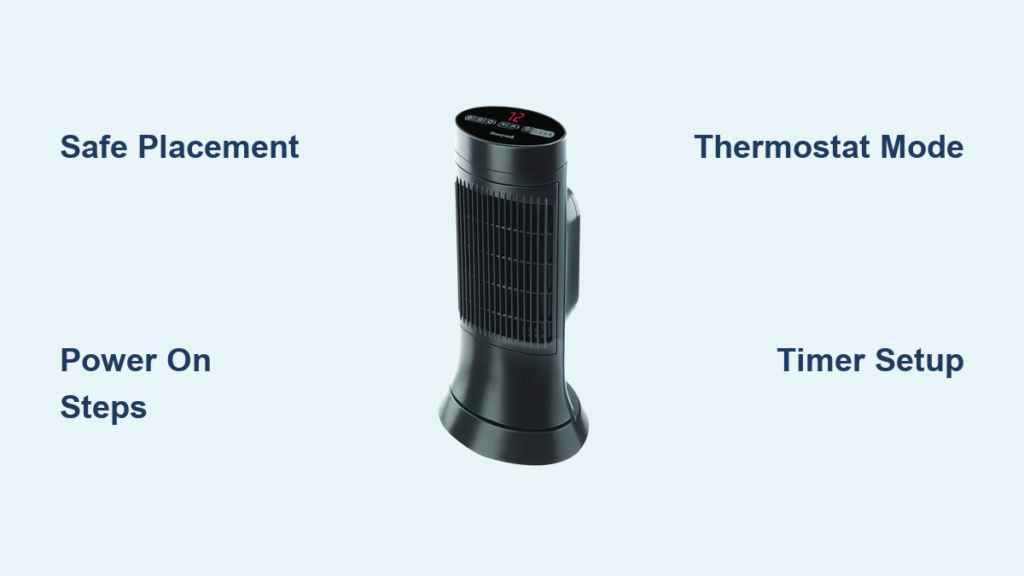
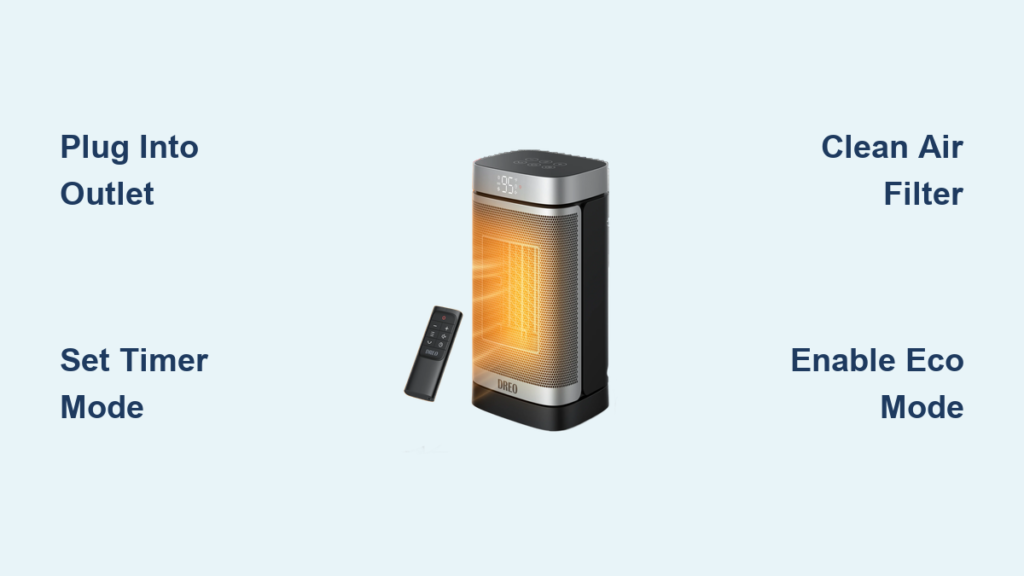
- Thermostat control: Prevents unnecessary prolonged operation
- Cool-touch exterior: Reduces burn risk, especially around children
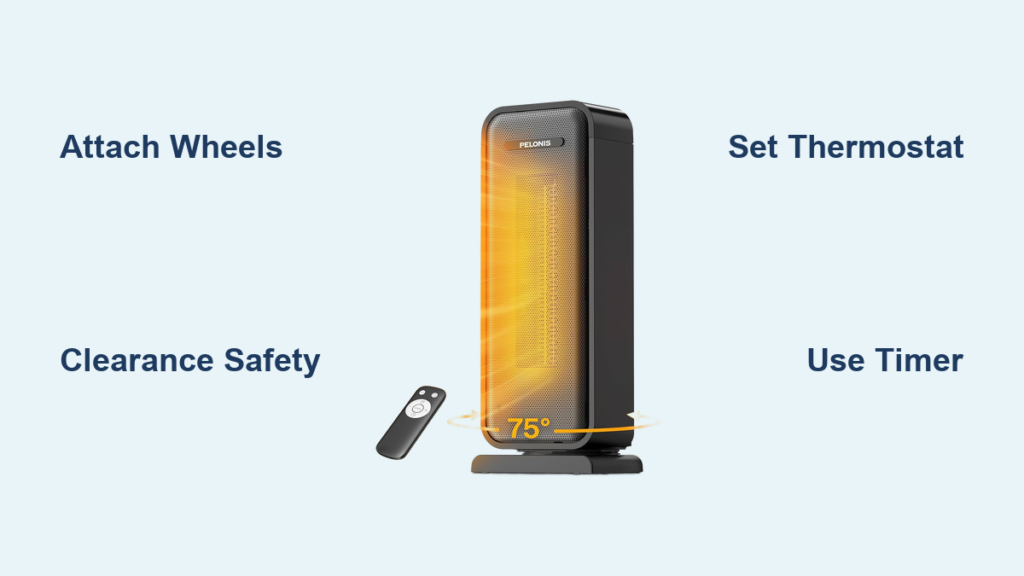
- Automatic timer: Turns off after set hours, ideal for bedtime use
Heaters without these features should be avoided entirely, especially if used in bedrooms or homes with children.
Avoid Outdated or Damaged Units
Older heaters, especially those over five to ten years old, often lack modern safeguards. Even if they still work, internal components degrade over time.
If your heater has any of the following signs, stop using it immediately:
- Frayed power cords
- Discolored plugs
- Strange odors when running
- Intermittent power
Replace it with a new, safety-certified model.
Safe Operation Practices
Plug Directly Into Wall Outlets
This cannot be overstated: never use an extension cord or power strip with a space heater. Always plug directly into a grounded wall outlet.
Look for outlets labeled 120V, 15A or 20A. These are built to handle high loads. If the plug does not fit snugly, or the outlet feels warm during use, that is a fire hazard. Have a licensed electrician inspect and replace damaged outlets.
Use a Dedicated Circuit If Possible
For maximum safety, run your space heater on a dedicated 20-amp circuit. This ensures no other devices compete for power, eliminating the risk of overload.
Signs you need a dedicated circuit include:
- Breakers trip when heater turns on
- Lights dim throughout the house
- Outlet or wall feels warm
Install AFCI Protection
Arc-fault circuit interrupters are life-saving devices that detect dangerous electrical arcs, which are common precursors to fires. Unlike standard breakers, AFCIs can sense small, intermittent sparks before they ignite.
The NFPA recommends AFCI protection in all living areas and bedrooms, where space heaters are most commonly used.
Placement and Environment Rules
Keep Heaters on Hard, Level Surfaces
Always place your heater on a level, hard, nonflammable surface like tile, hardwood, or stone. Never place it on rugs, carpets, furniture, or unstable platforms.
Heaters can tip easily if placed on soft or uneven surfaces. Even with tip-over protection, it is better to prevent falls than rely on automatic shutoffs.
Avoid High-Traffic Areas
Place heaters away from foot traffic, doorways, and hallways. A simple bump from a child, pet, or passerby can knock a unit over, especially if cords are stretched across walkways.
Keep cords fully uncoiled and out of walkways to prevent tripping and overheating. Never run cords under rugs or furniture.
Do Not Use in Bathrooms Unless Rated for It
Bathrooms are high-moisture environments. Using a standard space heater near water increases the risk of electrical shock or short-circuiting.
Only use heaters labeled bathroom-safe or IPX4-rated in wet areas.
Who Is Most at Risk?
Elderly, Children, and Mobility-Limited Households
Certain groups face higher risks during space heater use. Elderly individuals may forget to turn off heaters or have slower reaction times. Young children may touch hot surfaces or knock over units. People with mobility issues may struggle to escape quickly in a fire.
Fire death rates are highest among adults over 65. Many use space heaters to save on heating bills, often placing them too close to bedding or using outdated models.
Homes With Poor Insulation or Old Wiring
Space heaters are often used in remodeled attics, garages, basements, or sunrooms. These areas typically lack proper insulation and may have older, undersized electrical systems.
Before using a heater in such spaces, have an electrician inspect the circuit and consider permanent heating solutions instead.
Safer Alternatives to Portable Heaters

Ductless Mini-Split Heat Pumps
For long-term, efficient heating, ductless mini-split systems are far safer and more cost-effective. These units provide zoned heating without exposed elements, use 30 to 50% less energy than electric resistance heaters, and operate quietly and safely.
Smart Thermostats and Zone Heating
Instead of cranking up the thermostat, use a programmable or smart thermostat to lower overall temperatures and heat only occupied rooms. Pair with ceiling fans to circulate warm air, door draft stoppers, and window insulation kits.
Radiant Floor Heating
For renovations or new builds, radiant floor heating offers even, safe warmth without exposed coils or fans. It is energy-efficient, invisible, and eliminates fire risks entirely.
Maintenance and Long-Term Safety
Inspect Before Each Season
Before winter hits, check for frayed cords or cracked casings. Clean dust from grilles and vents because dust burns easily. Test tip-over and overheat shutoffs.
A quick inspection can prevent a catastrophic failure.
Replace Old Units Every 5 to 10 Years
Even if it still works, replace space heaters every five to ten years. Safety mechanisms degrade over time, and newer models offer better efficiency and protection.
Store Properly When Not in Use
Store heaters in a dry, covered location, not in damp basements or garages. Wrap cords loosely to prevent wire damage.
Frequently Asked Questions About Space Heater Fires
How Many Space Heater Fires Occur Each Year?
Approximately 32,200 home heating fires involve space heaters annually, resulting in 190 deaths, 625 injuries, and $442 million in property damage.
Why Are Space Heater Fires So Deadly?
Space heaters account for only 3% of home heating fires but cause 41% of fatal home heating fires. This is because they are often placed near flammable materials, used while occupants sleep, and lack modern safety features.
What Is the Three-Foot Rule for Space Heaters?
The three-foot rule requires keeping all space heaters at least 36 inches away from curtains, bedding, furniture, clothing, and other combustible materials.
Can Space Heaters Be Left Running Overnight?
No. Space heaters should never be left unattended or operated while sleeping. Over half of all home heating fires occur in the evening or overnight.
Are Newer Space Heaters Safer Than Older Models?
Yes. Newer models typically include tip-over shutoff, overheat protection, thermostat control, and cool-touch exteriors. Heaters over five to ten years old should be replaced.
Do Space Heaters Save Money on Energy Bills?
No. Cornell University research found that running a 1,500-watt space heater costs approximately 52 cents per day, while lowering your thermostat by 10 degrees saves only 50 to 80 cents per day. Net savings are negligible or nonexistent.
Key Takeaways on Space Heater Fire Risk
Space heater fires are far more common and deadly than most people realize. While they make up just 3% of home heating fires, they cause 79% of heating-related fire deaths. The risks, including electrical overload, proximity to combustibles, and outdated equipment, are serious and often underestimated.
The minimal energy savings that space heaters offer do not justify the danger. A Cornell University study found that running a 1,500-watt heater costs about 52 cents per day, while lowering your thermostat saves only slightly more, making the net benefit negligible.
The safest choice is to avoid space heaters altogether. If you must use one, always plug directly into a wall outlet, maintain three-foot clearance from all combustibles, choose UL-listed models with tip-over and overheat protection, and never leave the heater unattended or running overnight. Your warmth should not come at the cost of your safety.