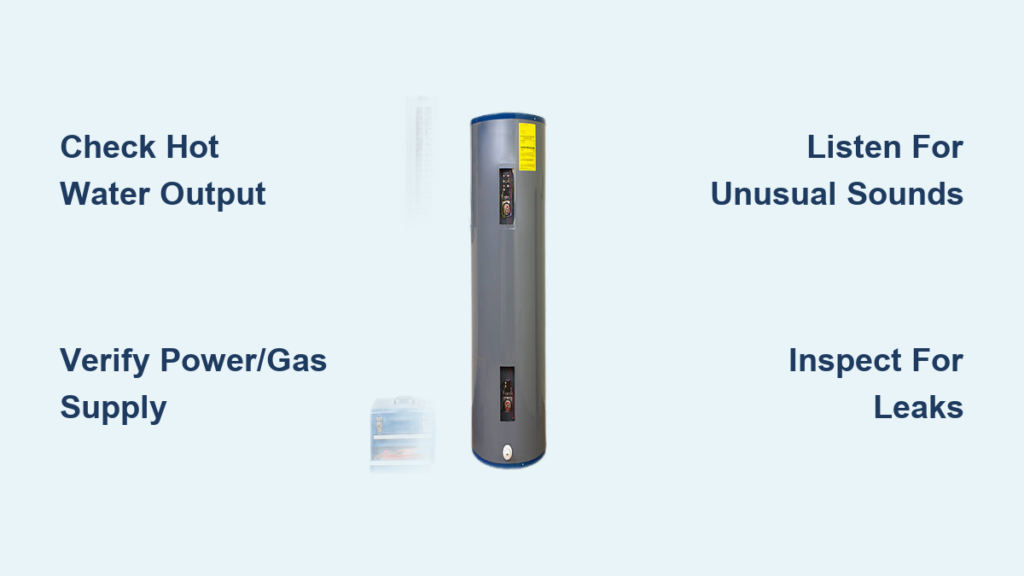
Your morning shower turns cold halfway through. The kitchen tap delivers nothing but lukewarm water. You’re not sure if the heater is even running anymore. Knowing how to tell if water heater is working can save you from cold mornings and costly emergency repairs. Most units show warning signs weeks or months before complete failure, giving you time to act.
You don’t need plumbing experience to spot early trouble. A few quick checks at the tap, a listen for odd sounds, and a glance at the unit can reveal whether your heater is healthy or struggling. This guide walks you through the most reliable diagnostic steps for electric, gas, and tankless systems, plus when to call a professional for help.
Test Hot Water Output at the Tap

The fastest way to confirm heater status is to check what comes out of your faucets.
Run Multiple Faucets for 2–3 Minutes
Turn on hot water in the kitchen, bathroom, and laundry. Let each run for several minutes.
- No hot water anywhere points to a central unit problem.
- Cold water at only one faucet usually means a localized issue like a clogged aerator or faulty mixing valve.
Start with the faucet farthest from the heater. Long pipe runs often reveal weak heating first.
Measure the Actual Temperature
Don’t trust your hand. Fill a glass and use a cooking thermometer.
- Ideal range: 120°F to 140°F.
- Below 110°F means the heater isn’t reaching target temperature.
- Above 140°F creates a scalding risk and wastes energy.
If water never warms up, move on to fuel-specific checks.
Verify Power and Gas Supply

Your heater cannot function without its energy source. Confirm supply before troubleshooting internal parts.
Electric Units: Check the Circuit Breaker
A tripped breaker is the top reason electric heaters stop working.
- Open your main electrical panel.
- Find the double-pole breaker labeled “water heater” (typically 30–50 amps).
- A tripped switch sits in the middle position.
Flip it fully OFF, then back ON. If it trips again right away, stop. That signals a short circuit or grounded heating element, which requires an electrician.
Gas Units: Confirm the Pilot Light
Gas heaters need a steady flame to ignite the burner.
- Look through the viewing window near the base.
- A healthy flame is steady and blue.
- A yellow, flickering, or absent flame signals trouble.
If the pilot is out, relight it following the label on your unit. Turn the gas knob to “Pilot,” press and hold it, then press the igniter button. Keep holding for 30–60 seconds after ignition before releasing.
If the pilot won’t stay lit, the thermocouple (the sensor that detects flame) may be faulty. Never smell for gas. If you notice a rotten egg odor, evacuate and call your gas company from outside.
Listen for Unusual Sounds
Strange noises often point to specific problems you can address before they worsen.
Rumbling or Popping
These sounds usually mean sediment buildup at the tank bottom. Minerals from hard water settle and trap water underneath. When the burner fires, trapped water boils and bursts through the sediment layer.
Sediment insulates water from the heat source, lowering efficiency and overheating the tank. Drain and flush the tank annually to prevent this.
Hissing or Crackling
- On electric units, scale on heating elements causes localized boiling.
- On gas units, condensation may drip onto the burner, or gas could be escaping without ignition.
If hissing comes from near the gas valve and you smell gas, leave the home immediately and call for help.
Banging in Pipes (Water Hammer)
Sudden pressure changes when water shuts off create shockwaves. This often happens after the heater cycles off. Installing water hammer arrestors or checking pipe supports usually solves it.
Inspect for Leaks and Water Quality Changes

Visual cues often reveal hidden problems early.
Check Around the Base for Moisture
Puddles near the heater can come from several sources:
- Loose pipe connections: Tighten with a wrench.
- Heating element gaskets: Require draining and gasket replacement.
- Pressure relief valve: Leaks from the discharge pipe mean the T&P valve may be stuck open. Test it by lifting the lever briefly. Water should flow then stop. If it drips continuously, replace the valve right away. Never cap it.
If water seeps from the tank body itself, the unit is failing and needs replacement.
Watch for Rusty or Smelly Water
Rusty or brown water is often the first sign of internal tank corrosion. It usually means the sacrificial anode rod is spent and the steel tank is beginning to rust. If your heater is over 8–10 years old, this may signal end-of-life.
A rotten egg smell comes from sulfate-reducing bacteria reacting with the anode rod. To fix it:
- Flush the tank with hydrogen peroxide (1–2 pints per 40-gallon tank).
- Raise the temperature to 140°F for a few hours to kill bacteria, then return it to 120°F.
- Replace the magnesium anode rod with an aluminum-zinc version.
Test Internal Components by Heater Type
Once basic checks are done, move to component-level diagnostics.
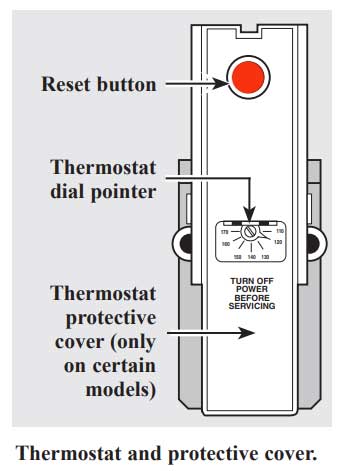
Electric: Reset the High-Limit Switch
This safety button cuts power when water overheats.
- Turn off power at the breaker.
- Remove the upper access panel near the thermostat.
- Look for a red button behind the insulation.
- Press it until you hear a click.
- Restore power.
If it trips again, suspect a faulty thermostat or shorted heating element.
Electric: Test the Heating Elements
Most electric heaters have two elements (upper and lower).
- Upper element failure: No hot water at all.
- Lower element failure: Hot water runs out quickly.
To test with a multimeter:
- Turn off power.
- Disconnect wires from the element.
- Set the multimeter to ohms (Ω).
- Touch the probes to the element screws.
- A reading between 10–16 ohms means the element is good. No reading means it needs replacement.
Also inspect the rubber gasket. If cracked, it will leak when reinstalled.
Gas: Inspect the Burner Flame
After relighting the pilot, turn the knob to “On” and watch the burner.
- Healthy flame: Blue with small yellow tips, steady.
- Bad flame: Yellow, floating, or noisy.
Common causes of poor flame include blocked burner ports (clean with a wire brush), a dirty air intake screen (vacuum debris), or venting issues (check the flue for obstructions).
Evaluate Performance Over Time
Some problems show up through patterns rather than sudden failure.
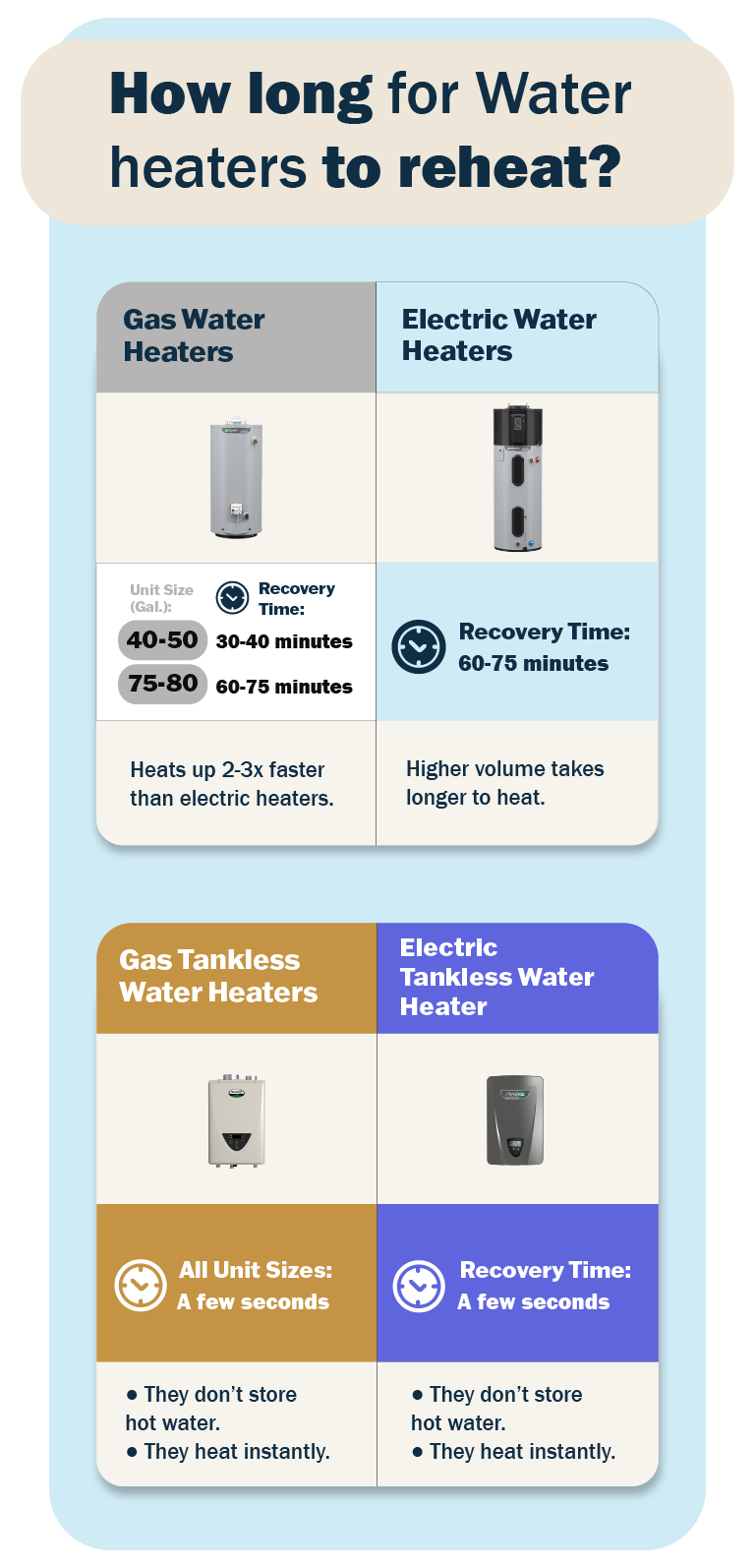
Recovery Time Is Too Slow
How long does it take to get hot water after heavy use?
- Gas tank heaters should reheat in 30–40 minutes.
- Electric tank heaters take 60–90 minutes.
Slower recovery can mean sediment buildup, failing heating elements, a weak burner flame, or a thermostat set too low.
Water Temperature Fluctuates During Use
If your shower swings from hot to cold mid-use, likely causes include a failing lower heating element, a malfunctioning thermostat, or sediment disrupting heat distribution.
Test the thermostat with a multimeter to check continuity. If it’s stuck open or closed, replace it.
Review Maintenance History
Skipped upkeep is a leading cause of early heater failure.
Has the Tank Been Flushed Recently?
Sediment is the enemy of efficiency. Annual flushing prevents rumbling noises, reduced heating capacity, and premature element or tank failure.
To flush:
- Turn off power or gas and the cold water supply.
- Attach a hose to the drain valve.
- Open a hot water tap to break the vacuum.
- Open the drain valve and let the tank empty.
- Refill, then restore power.
In hard water areas, flush every 6 months.
Inspect the Anode Rod
This rod corrodes itself to protect the tank. Check it every 1–2 years. If more than 50% consumed, replace it to prevent smelly or rusty water.
Recognize When Replacement Is the Best Option
Even well-maintained heaters don’t last forever.
Age Over 10 Years
Most water heaters last 8–12 years. Beyond 10, expect more frequent issues. If repairs keep stacking up, replacement is usually more cost-effective.
Signs of Imminent Failure
- Rust spots on the tank exterior.
- Leaks from the tank body (not fittings).
- Consistently poor performance despite fixes.
- Discolored or foul-smelling water.
Tankless models offer longer life (15–20 years) and endless hot water, but require proper sizing and annual descaling in hard water areas.
Follow Safety Protocols Every Time
Never skip safety steps when troubleshooting.
Turn Off Power and Water First
Before any inspection:
- Electric units: Shut off the breaker.
- Gas units: Turn the control to “Pilot” or “Off.”
- Water: Close the cold inlet valve if draining.
Hot water under pressure can cause scalding or flooding.
Never Ignore Gas Smells
If you smell sulfur or rotten eggs:
- Do not flip switches or use phones indoors.
- Evacuate everyone immediately.
- Call your gas provider or 911 from outside.
Frequently Asked Questions About Water Heater Function
What Is the First Thing to Check When There Is No Hot Water?
Start with the power or gas supply. For electric units, check the circuit breaker. For gas units, verify the pilot light is lit. These are the most common causes and the easiest to fix.
How Long Should a Water Heater Take to Recover?
Gas tank heaters typically recover in 30–40 minutes. Electric tank heaters take 60–90 minutes. If recovery takes significantly longer, sediment buildup or a failing component is likely.
What Does It Mean If My Water Heater Makes a Rumbling Noise?
Rumbling usually means sediment has built up at the bottom of the tank. Water trapped under the sediment boils and bursts through, creating the sound. Flushing the tank annually prevents this issue.
Is a Small Leak from the Pressure Relief Valve Normal?
No. A T&P valve should only release water when manually tested. Continuous dripping means the valve is failing or pressure is too high. Replace the valve promptly and never cap the discharge pipe.
Can a Water Heater Last 20 Years?
Standard tank heaters typically last 8–12 years. Tankless models can reach 15–20 years with proper maintenance, including annual descaling in hard water areas.
When Should I Call a Professional Instead of DIY?
Call a licensed technician if the breaker keeps tripping, you smell gas, the pilot won’t stay lit, the T&P valve fails repeatedly, or you notice a leak from the tank body. These issues involve gas, high voltage, or pressurized systems that require specialized tools and training.
Final Thoughts on Diagnosing Water Heater Problems
Knowing how to tell if water heater is working puts you in control. Start with the simplest checks: hot water output, breaker status, and pilot light. Listen for unusual sounds, inspect for leaks, and test water quality. Pay attention to recovery time and temperature consistency, since these patterns reveal gradual decline.
Schedule annual flushing and anode rod inspections to prevent most common failures. Address small issues early, before they turn into cold showers or flooded floors. When basic troubleshooting doesn’t solve the problem, or you detect gas, electrical faults, or tank corrosion, contact a licensed technician. With regular attention, your water heater can deliver reliable hot water for years to come.