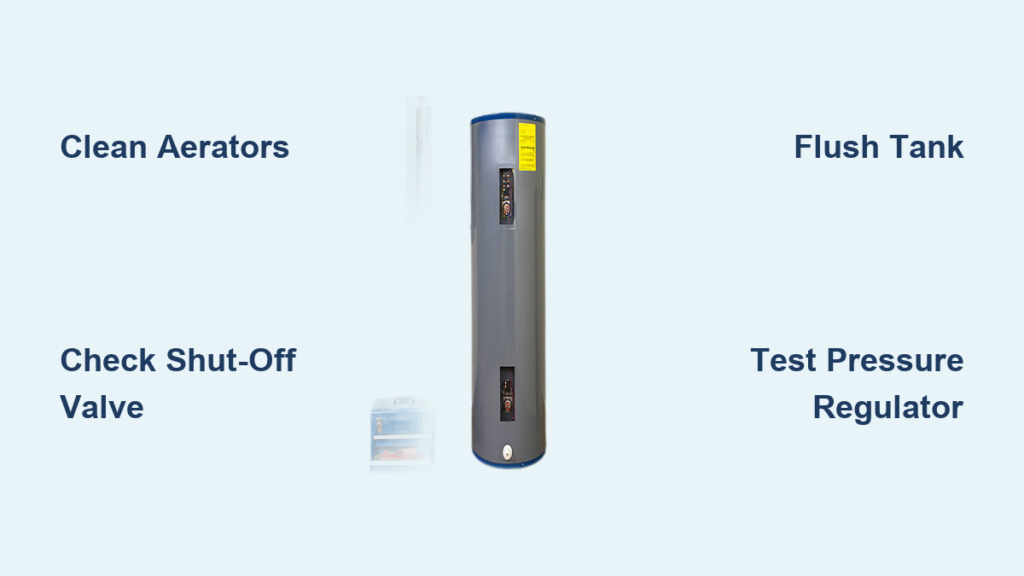
Low water pressure from your hot water heater is a common household frustration. You turn on the tap expecting a strong flow of hot water, only to be met with a weak dribble. This issue can affect showers, sinks, and appliances, making daily routines longer and less comfortable. The root cause often lies not with the water heater itself but with related components in the system. Understanding how to diagnose and resolve hot water heater low pressure can save time, money, and unnecessary repairs.
This guide walks you through the most frequent causes of low pressure in hot water systems. You’ll learn how to identify blockages, test for sediment buildup, inspect valves, and determine if fixtures or pipes are at fault. Each step is designed to be simple, safe, and effective, requiring basic tools and minimal plumbing experience. Whether you’re dealing with a single faucet or whole-house low pressure, this article gives you the knowledge to fix it fast.
Check Faucets and Showerheads First

Before assuming the water heater is the culprit, inspect the outlets where low pressure occurs. Often, the issue isn’t with water delivery but with clogged fixtures.
Clean Aerators and Nozzles
Mineral deposits from hard water accumulate in faucet aerators and showerhead nozzles, restricting flow. To test:
- Unscrew the aerator from the faucet or remove the showerhead.
- Soak it in white vinegar for 1 to 2 hours.
- Use an old toothbrush to scrub away residue.
- Rinse thoroughly and reinstall.
If pressure improves, the fix was simple and localized. Repeat for all affected fixtures. This step takes under 10 minutes per fixture and resolves many low pressure complaints.
Compare Hot and Cold Flow
Run both hot and cold water at the same fixture. If only the hot side has low pressure, the problem is in the hot water system. If both sides are weak, the issue may be broader, such as a home-wide pressure problem or pipe blockage.
Pro Tip: Perform this test at multiple fixtures. A single weak shower may point to a clogged hose, while consistent low hot water pressure across sinks and tubs suggests a system-wide issue.
Inspect the Hot Water Shut-Off Valve
The shut-off valve controls water entering the heater. If partially closed, it restricts flow and causes low pressure throughout the house.
Locate and Fully Open the Valve
Find the valve on the cold water supply line leading into the top of the water heater. It’s usually a round knob or lever-type valve.
- Turn clockwise to close.
- Turn counterclockwise to open.
Ensure the handle turns freely and is aligned with the pipe for lever valves. A stuck or corroded valve may not open fully, limiting water flow even if it appears open.
Warning: Never force a stiff valve, as it could break and cause a leak. Apply penetrating oil and gently work it back and forth before turning.
Flush the Water Heater Tank
Sediment buildup inside the tank is a top cause of reduced hot water pressure and efficiency.
Remove Sediment Buildup
Over time, minerals settle at the bottom of the tank, narrowing the outlet and disrupting flow. Flushing clears this debris.
What You’ll Need:
- Garden hose
- Bucket or floor drain
- Wrench (if valve is tight)
- Safety gloves and goggles
Steps:
- Turn off the power (electric) or gas supply.
- Shut the cold water inlet valve.
- Attach a hose to the drain valve at the base of the tank.
- Open a hot water faucet in the house to prevent vacuum lock.
- Open the drain valve and let water flow until clear (10 to 20 minutes).
- Close the valve, remove the hose, refill the tank, then restore power.
Time Estimate: 45 to 60 minutes. Perform annually to maintain performance.
After flushing, test hot water pressure. Improved flow confirms sediment was the issue.
Test for Pipe Corrosion or Blockage

Older homes with galvanized steel pipes are prone to internal rust and scale, especially in hot water lines.
Identify Corroded Supply Lines
Signs include:
– Brownish water when first turning on hot
– Gradual decline in pressure over years
– Popping sounds in walls when heating water
If only hot water is affected, corrosion likely exists in the hot line or near the heater outlet.
Replace Galvanized Pipes
For lasting results, replace corroded sections with copper or PEX piping. While this requires more labor, it eliminates recurring blockages.
DIY Alternative: Install flexible stainless steel supply lines between the heater and main pipes. These resist corrosion and improve flow.
Examine the Pressure Regulator (If Installed)
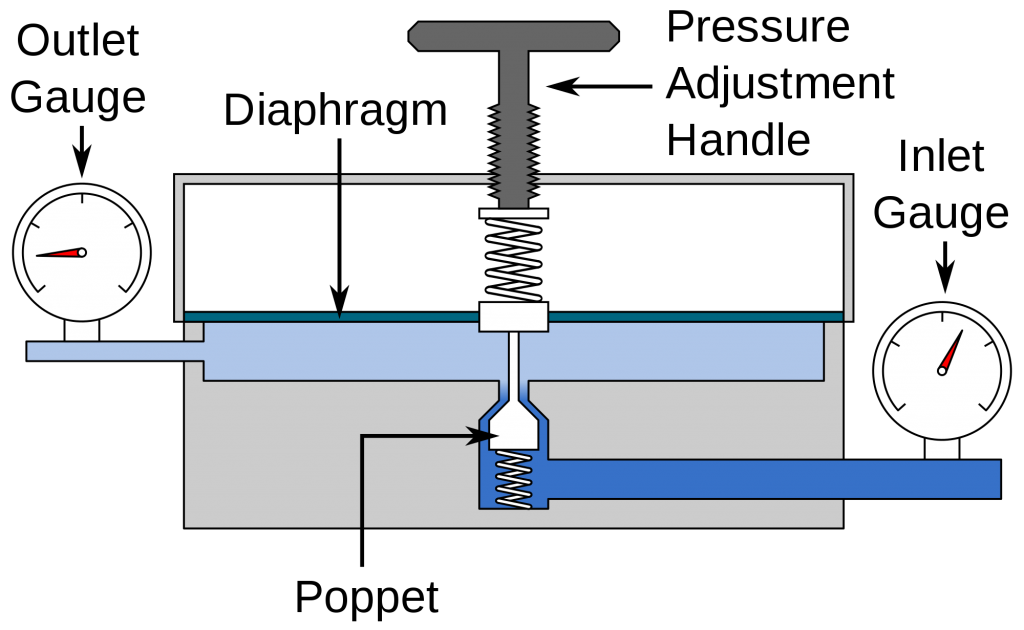
Some homes have a pressure-reducing valve (PRV) near the main water line. If malfunctioning, it can restrict overall pressure, including hot water.
Check PRV Function
The regulator is a bell-shaped device with an adjustment screw. Normal household pressure is 40 to 80 psi.
To test:
1. Attach a water pressure gauge to an outdoor spigot.
2. Run water and check the reading.
3. If below 40 psi, adjust the PRV by turning the screw clockwise (half turn at a time).
If pressure doesn’t improve, the regulator may be faulty and need replacement.
Caution: High water pressure (above 80 psi) damages plumbing. Always verify after adjustments.
Look for Cross-Connected Lines
A mixing valve or faulty faucet can allow cold and hot lines to interfere with each other.
Diagnose Cross-Linking
Symptoms:
– Hot water pressure drops when cold water runs
– Warm water from cold taps
– Fluctuating temperatures
This often happens after DIY plumbing work or worn cartridge valves in single-handle fixtures.
Isolate the Mixing Valve
Shut off the water heater and open both hot and cold lines separately at a faucet. If hot water flows when only the cold is open, there’s a cross-connection.
Replace faulty cartridges or install check valves to prevent backflow.
Consider Water Heater Age and Condition

If your unit is over 10 to 15 years old, internal deterioration may be reducing output.
Assess Tank and Dip Tube
- Failing dip tube: Breaks apart and clogs outlets.
- Corroded tank lining: Causes scale and flow restriction.
- Failed heat exchanger (tankless): Mineral clogs reduce hot water volume.
For tankless models, flush with descaling solution per manufacturer instructions.
Replacement Tip: Units older than 12 years may cost more to repair than replace. Upgrade to a high-efficiency model for better pressure and savings.
Prevent Future Low Pressure Issues
Avoid recurring problems with regular maintenance and smart upgrades.
Install a Whole-House Filter
Hard water accelerates buildup. A sediment filter on the main line protects the heater and fixtures.
Use Thermal Expansion Tank
When water heats, it expands. Without room to expand, pressure builds and damages valves. An expansion tank stabilizes system pressure and prolongs life.
Schedule Annual Maintenance
Have a plumber inspect:
– Valves
– Anode rod
– Venting (gas units)
– Flue passages
Preventive care keeps pressure steady and avoids emergencies.
Frequently Asked Questions About Hot Water Heater Low Pressure
Why is my hot water pressure low but cold water pressure is fine?
This usually points to a problem specific to the hot water system. Common causes include a partially closed shut-off valve, sediment buildup in the tank, or a clogged faucet aerator on the hot side. Start by checking the valve position and cleaning the aerator.
Can a water heater cause low water pressure throughout the house?
Yes, if the shut-off valve is partially closed or sediment has severely restricted the tank outlet. Corroded pipes connected to the heater can also reduce flow to multiple fixtures. Flushing the tank or replacing faulty valves typically restores pressure.
How often should I flush my water heater to prevent low pressure?
Flushing once a year is recommended for most households. Homes with hard water may benefit from flushing every six months. Regular flushing removes sediment before it accumulates and restricts flow.
Is low hot water pressure a sign I need a new water heater?
Not always. Age-related issues like a failing dip tube or corroded tank lining can cause low pressure, but these are only common in units over 10 years old. Try simpler fixes first, such as flushing and valve inspection, before considering replacement.
Can a pressure-reducing valve affect hot water pressure?
Yes. A malfunctioning PRV can lower pressure for the entire home, including hot water lines. Test your home’s pressure with a gauge and adjust the PRV if readings fall below 40 psi.
Key Takeaways for Fixing Hot Water Heater Low Pressure
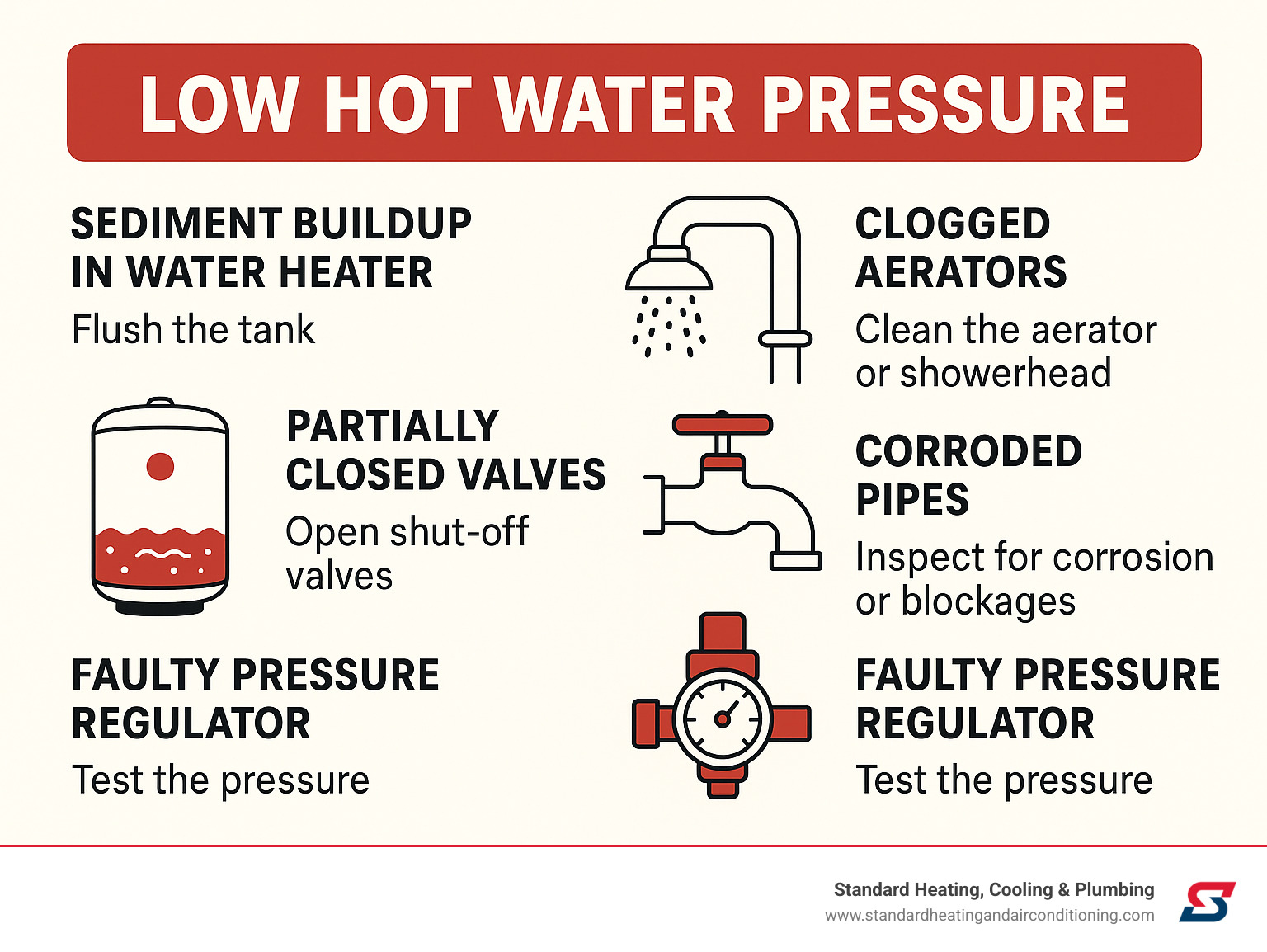
Low pressure from your hot water heater is rarely a single-issue problem. By systematically checking fixtures, valves, pipes, and the tank itself, you can pinpoint and resolve the cause. Start simple by cleaning aerators and verifying valve positions before moving to flushing or pipe replacement.
Most fixes are DIY-friendly and restore full flow in under an hour. For persistent issues, consult a licensed plumber to assess hidden line blockages or structural concerns. With proper care and annual maintenance, your hot water system should deliver strong, reliable pressure for years to come.