
You turn on the shower expecting a steady stream of hot water, but get lukewarm flow or ice-cold output instead. If your tankless water heater is not getting hot, you are not alone. This common issue affects homes everywhere, especially in regions with hard water or aging units. The good news is that many causes are fixable without replacing the entire system.
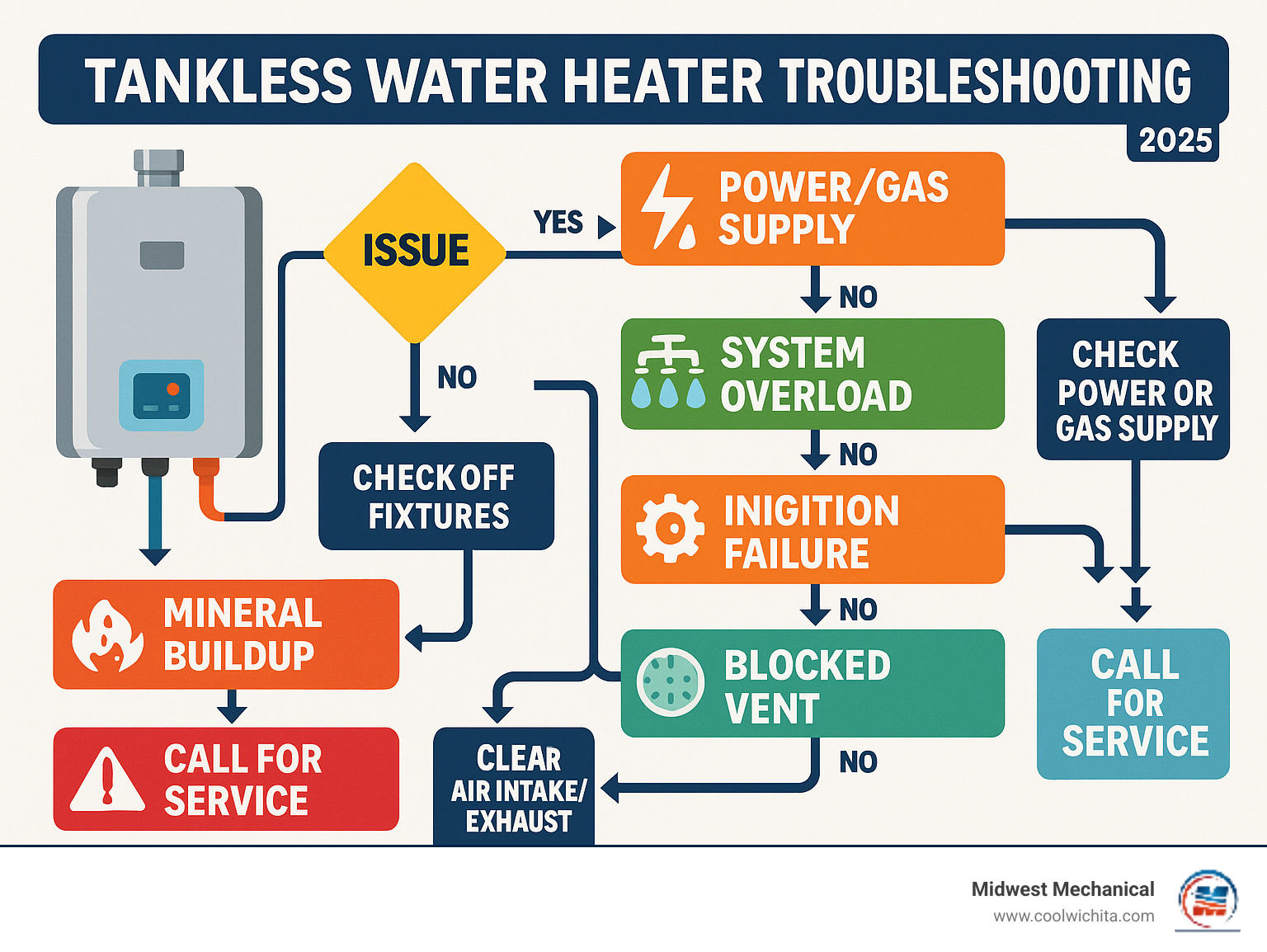
The most frequent culprit is mineral scaling inside the heat exchanger, particularly in gas and electric tankless models used in hard water regions. Other issues like a clogged inlet filter, gas supply problems, electrical faults, or failed sensors can also prevent proper heating. Some fixes take minutes and cost nothing, while others require a licensed technician.
In this guide, you will learn how to quickly identify why your tankless water heater is not heating, what steps to take immediately, and when to call a pro. Whether you have a Rinnai, Navien, Rheem, or another brand, these diagnostics apply universally.
Check Power and Breaker First
Before diving into complex repairs, verify the basics: is your unit actually getting power?
Electric Units: Reset the Breaker
Electric tankless heaters draw significant current and often trip breakers during peak usage.
– Go to your electrical panel and locate the double-pole breaker labeled for the water heater.
– If it is in the middle position or switched off, flip it fully off, then back on.
– Wait 1 to 2 minutes for the system to reboot.
Pro Tip: If the breaker trips again immediately, there may be an internal short or wiring fault. Call an electrician right away.
Gas Units: Confirm Electrical Supply
Even gas-powered units need electricity for ignition and control systems.
– Ensure the unit is plugged in if it uses a standard outlet.
– Check that the circuit breaker has not tripped.
– Look for display panel lights. No power means no ignition.
Reset the unit using its internal reset button if equipped, usually found behind a front panel.
Clean the Inlet Water Filter
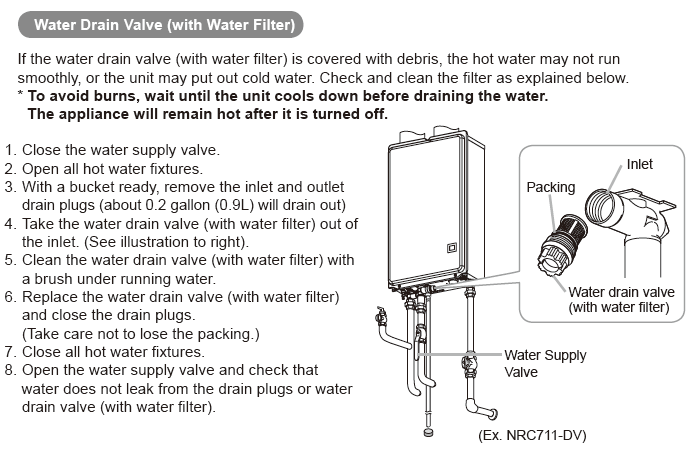
A clogged inlet filter is one of the top reasons for reduced or lukewarm water output.
Why It Matters
The inlet filter blocks sediment from entering the system. Over time, especially in hard water areas, it becomes restricted and lowers water flow. The heater senses low demand and does not fire at full capacity.
How to Clean the Filter
- Turn off power to the unit at the breaker.
- Shut off the cold water supply valve leading to the heater.
- Open a hot water tap nearby to relieve pressure.
- Locate the filter, typically at the cold water inlet on the bottom or side of the unit.
- Remove the filter screen carefully using a wrench if needed.
- Rinse under hot water and scrub with a soft brush. Never use chemicals.
- Reinstall securely, restore water, close the faucet, and power up.
Maintenance Tip: Clean every 6 months, or every 4 months in hard water zones.
Flush Out Mineral Scale (Descaling)
If cleaning the filter does not help, limescale buildup in the heat exchanger is likely the cause.
How Scaling Stops Heating
Hard water leaves calcium and magnesium deposits inside the heat exchanger. These minerals insulate the heating elements in electric units or the burner chamber in gas units, preventing efficient heat transfer. Even if the burner runs, water exits cold or tepid.
When to Descale
- Every 12 months for standard maintenance
- Every 6 to 8 months in hard water areas like Texas, Arizona, and the Midwest
- Immediately if you notice reduced flow, fluctuating temperatures, or error codes
DIY Descaling Steps
- Turn off power and water supply.
- Connect a recirculating pump to the service valves using two hoses.
- Fill a bucket with 4 to 5 gallons of food-grade descaling solution like white vinegar or commercial CLR-based fluid.
- Run the pump for 45 to 60 minutes, circulating the solution through the system.
- Flush with clean water for 5 to 10 minutes to remove residue.
- Restore connections, power, and water.
Warning: Gas units may require vent disassembly. If unsure, hire a pro.
Pro Tip: Install a whole-house water softener to prevent future scaling and extend unit life.
Fix Flow Rate Issues and Cold Water Sandwiches
What Is a Cold Water Sandwich?
You get hot water, then a sudden burst of cold, followed by hot again. This happens due to:
– Residual hot water clearing from pipes
– Delay in heater ignition after flow stops
– Flow rate below the unit’s minimum threshold
Solve Low Flow Problems
Tankless heaters have a minimum flow requirement, usually 0.5 to 0.8 GPM. If flow is too low, the heater will not activate.
Common causes:
– Low-pressure fixtures
– Clogged aerators or showerheads
– Partially closed valves
– Simultaneous use exceeding capacity
How to Fix
- Clean aerators and showerheads since mineral buildup reduces flow.
- Avoid running multiple hot water devices at once, such as a dishwasher and shower together.
- Check unit specs. If your demand exceeds the heater’s GPM rating, consider upgrading.
Example: A 7 GPM heater cannot handle two showers at 2.5 GPM each plus a washing machine at 3 GPM. Total demand of 8 GPM will result in cold water.
Diagnose Gas Supply and Ignition Failure (Gas Units)

If your gas tankless heater is not firing, the issue may be fuel-related.
Check Gas Valves and Supply
- Ensure the main gas shut-off valve is fully open.
- Verify the unit’s gas valve is on.
- For propane systems, check tank levels since empty tanks mimic heater failure.
Test for Low Gas Pressure
Symptoms of low pressure include:
– Weak flame
– Intermittent heating
– Error codes like “FL” for flame failure
Cause: Undersized gas line, regulator failure, or utility supply drop.
Solution: Only a licensed plumber should test gas pressure and inspect lines.
Safety Alert: Never attempt DIY repairs on gas lines. If you smell gas, evacuate, ventilate, and call your gas provider immediately.
Inspect Ventilation and Air Intake
Blocked vents prevent proper combustion and trigger safety shutdowns.
Common Blockages
- Bird nests
- Ice buildup in winter
- Debris in outdoor intake or exhaust pipes
How to Check
- Locate the intake and exhaust vents, usually on an exterior wall or roof.
- Visually inspect both ends for obstructions.
- Clear debris gently without damaging the pipes.
If the unit displays a vent blockage code such as “VC” or “E7,” cleaning may resolve it.
Critical: Poor ventilation risks carbon monoxide exposure. Always ensure proper venting.
Troubleshoot Temperature Settings and Sensors
Verify Thermostat Setting
Many “no hot water” calls stem from incorrect settings.
– Check the digital display or control panel.
– Default setting is usually 120°F.
– Increase to 125 to 130°F if needed, but do not exceed 140°F due to scald risk.
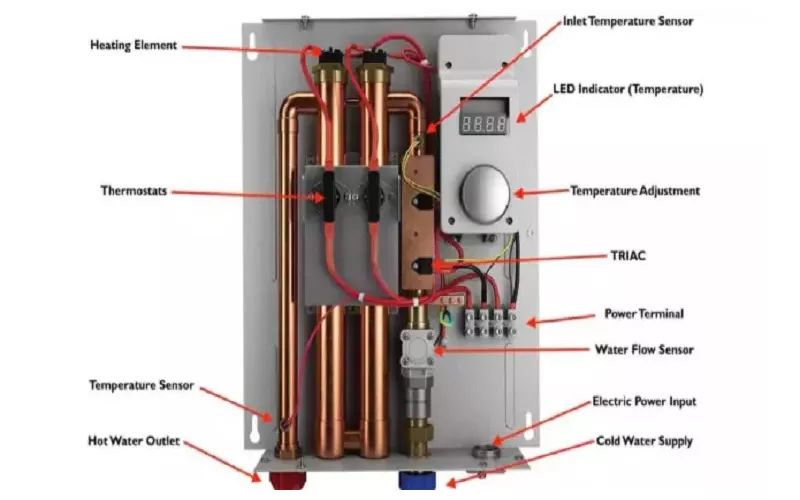
Test for Failing Thermistors
Thermistors monitor water temperature and send data to the control board.
Signs of failure:
– Inaccurate temperature readings
– Erratic heating
– Error codes like “TE” or “TH”
A failed thermistor makes the system think water is hot when it is not, so heating stops prematurely.
Fix: Requires multimeter testing and part replacement by a technician.
Evaluate Control Board Failure

The control board is the brain of the system.
Symptoms of Failure
- Unit powers on but does not heat
- Frequent error codes
- Random shutdowns
- No response to temperature changes
Causes
- Water intrusion
- Power surges
- Age-related wear
- Poor ventilation causing overheating
Repair vs. Replace: Control board replacements cost $300 to $600. If the unit is over 15 years old, replacement may be more cost-effective.
Prevent Frozen Pipes in Winter
In cold climates, frozen water lines or internal components block flow.
Signs of Freeze
- No water at all
- Unit error code related to flow or freeze protection
- Visible frost on pipes
Thawing Steps
- Keep faucets slightly open to allow melting water to escape.
- Use a hair dryer or space heater to warm frozen sections. Never use open flames.
- Insulate exposed pipes and the unit if outdoor-rated.
Prevention: Drip faucets during sub-freezing weather and install freeze protection kits.
Know When to Replace the Unit
Even well-maintained tankless heaters have a lifespan.
Expected Lifespan
- Gas models: Up to 20 years
- Electric models: Around 10 years
Replacement Signs
- Repeated descaling does not restore performance
- Multiple component failures including valves, sensors, and board
- Repair costs exceed 50% of replacement value
- Unit is over 15 years old
Average Costs
- Repair: $220 to $960, with an average of $590
- Replacement: $1,800 to $3,500 including installation
If your electric unit is 10 or more years old and failing, replacement is usually the smarter investment.
Quick Diagnosis Checklist
| Symptom | Most Likely Cause | Action |
|---|---|---|
| No hot water, no sound | Power off or tripped breaker | Reset breaker, check outlet |
| Lukewarm water in hard water area | Heat exchanger scaling | Descale system |
| Cold water bursts between hot | Flow rate issues or sensor | Clean filter, reduce usage |
| Gas unit won’t ignite | Closed valve or empty tank | Check gas supply and valves |
| Error code on display | Sensor, vent, or ignition | Consult manual, inspect vents |
| No water in winter | Frozen pipes | Thaw gently, insulate |
| Old unit with frequent issues | End of life | Evaluate replacement |
Frequently Asked Questions About Tankless Water Heater Heating Problems
Why is my tankless water heater running but not getting hot?
The most common cause is mineral scale buildup inside the heat exchanger, especially in hard water areas. Scale acts as an insulator and prevents heat from transferring to the water. Cleaning the inlet filter and descaling the system typically resolves this issue.
How often should I descale my tankless water heater?
In standard conditions, descale once every 12 months. In hard water regions like North Texas, Arizona, or the Midwest, descale every 6 to 8 months. Areas with extremely hard water may require even more frequent service.
Can a clogged filter cause no hot water?
Yes. A clogged inlet filter restricts water flow, and the unit’s sensors interpret low flow as low demand. This causes the heater to throttle back or not fire at all. Cleaning the filter every 4 to 6 months prevents this issue.
What does it mean when my tankless heater keeps cycling between hot and cold?
This “cold water sandwich” effect usually indicates low flow rate, a dirty filter, or a failing temperature sensor. Cleaning the filter and reducing concurrent hot water usage often helps. Persistent cycling may require professional sensor diagnosis.
Is it safe to troubleshoot gas line issues myself?
No. Gas line repairs, pressure testing, and valve replacement should only be performed by a licensed professional. If you smell gas, evacuate immediately, ventilate the area, and contact your gas supplier before calling a plumber.
When should I replace my tankless water heater instead of repairing it?
Consider replacement if the unit is over 15 years old, repair costs exceed 50% of replacement value, or multiple components have failed. Electric units typically last about 10 years, while gas units can last up to 20 years with proper maintenance.
Key Takeaways for Restoring Hot Water to Your Tankless Heater
Start with the simplest fixes first: check the breaker, clean the inlet filter, and verify your temperature setting. If those do not resolve the issue, descaling is the next step, particularly if you live in a hard water area. For gas units, confirm fuel supply and valve positions before assuming a component failure.
Call a licensed technician for any gas line work, control board replacement, thermistor diagnosis, or persistent ignition failures. Attempting these repairs without proper training creates serious safety risks.
Schedule annual maintenance to prevent future breakdowns. Descaling, filter cleaning, and vent inspections take little time but dramatically extend your unit’s lifespan. With consistent care, your tankless water heater can deliver reliable hot water for 15 to 20 years.