If your hot water smells like rotten eggs, you’re not alone, and it is not your imagination. That sulfur odor is caused by hydrogen sulfide gas, typically produced inside your water heater by sulfate-reducing bacteria. The good news? This is a fixable issue, and the problem usually lies within your hot water tank, not your water supply. When only the hot water smells, the culprit is almost always the interaction between your anode rod, water temperature, and bacterial growth. Ignoring it will not make it go away; this smell can persist for months or even years if left untreated.
The most effective solution involves a combination of chemical treatment and mechanical upgrades. Simply flushing the tank might offer temporary relief, but without addressing the root cause (usually a magnesium anode rod), you are likely to see the odor return. This guide walks you through a proven, step-by-step process to eliminate the smell for good, including replacing the anode rod, using hydrogen peroxide and bleach treatments, and preventing future outbreaks. Whether you have a gas or electric heater, use well water or municipal supply, these methods work across systems. By the end, you will know how to kill the bacteria, remove the source of the problem, and keep your hot water smelling clean.
Diagnose the Source of the Smell
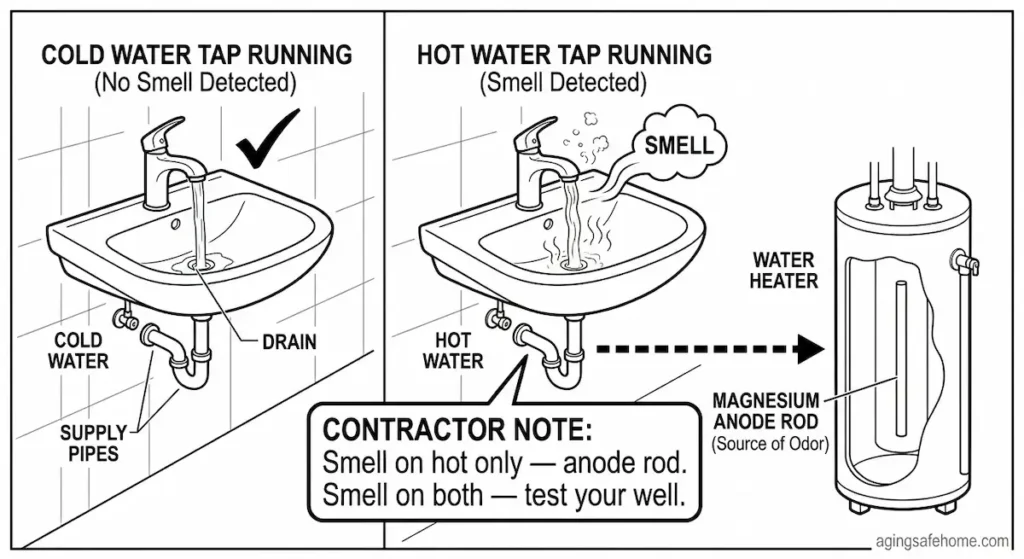
Before treating your water heater, confirm the smell is coming from the tank and not your water source. This step saves time and ensures you are applying the right fix.
Check Cold vs. Hot Water
Run the cold water tap for 30 seconds. If it smells like sulfur, the problem originates outside the heater, likely in your well or municipal line. But if only the hot water smells, the issue is internal. Sulfate-reducing bacteria thrive in the warm, oxygen-poor environment of your tank, especially when fed by a magnesium anode rod. This distinction is critical: external source issues require whole-house filtration, while internal problems can be resolved with tank treatment and anode replacement.
Perform a Flush Test
Drain 3 to 5 gallons from the bottom of the tank using the drain valve. Let the tank refill and reheat, then test the hot water again. If the odor persists or returns quickly, bacterial colonies are still active. If you notice black, cloudy water during the flush, that is a strong sign of bacterial buildup and corrosion byproducts. This visual clue confirms the need for a full disinfection and anode rod inspection.
Inspect the Anode Rod
The anode rod is the heart of the problem in most cases. Located at the top of the tank, this sacrificial rod prevents tank corrosion, but magnesium rods accelerate hydrogen sulfide production. To inspect:
– Shut off power and water supply.
– Use a socket wrench to remove the rod (it may be stuck due to corrosion).
– If it is magnesium, that is your primary culprit. Replace it immediately.
– If it is heavily corroded aluminum, it is also time for a new one.
Pro Tip: Replacing the rod is often the single most effective long-term fix you can make.
Replace the Anode Rod

Swapping out the anode rod eliminates the chemical reaction that feeds odor-causing bacteria. This is not just a repair; it is a prevention upgrade.
Choose the Right Replacement
Not all anode rods are equal. Your choice determines whether the smell comes back:
– Aluminum/Zinc Rod: Best for odor control. Zinc inhibits bacterial growth. Ideal for homes with well water or septic systems.
– Powered (Electric) Anode: Uses a 120V current to protect the tank without corrosion. Eliminates the food source for bacteria. Users report immediate odor elimination, even after decades of problems.
– Avoid Magnesium Rods: They react aggressively with sulfates, making the smell worse.
Powered anodes cost more but last longer and require no replacement, making them a smart investment for chronic issues.
Install the New Rod
- Remove the old rod using a 1-1/16″ socket and breaker bar (expect resistance).
- Insert the new rod and tighten securely to prevent leaks.
- For powered anodes:
– Ensure the unit is plugged into a GFCI outlet.
– If your tank lacks a threaded opening, you may need to install a pipe coupler (professional help recommended for modifications).
A properly installed aluminum/zinc or powered rod can stop the smell at its source.
Use Hydrogen Peroxide Treatment
Hydrogen peroxide is a powerful, non-toxic way to destroy bacterial biofilms inside the tank. It works better than bleach alone for deep-seated colonies.
Add Peroxide to the Tank
After replacing the anode rod:
1. Close the drain valve and keep the cold water shut off.
2. Pour 1 gallon of medical-grade hydrogen peroxide into the anode opening.
3. Briefly open the cold water inlet for about 1 minute to mix the solution.
4. Reinstall the anode rod loosely or fully, depending on your plan.
No need to heat the water; just let the peroxide work.
Let It Sit for 24 Hours
Do not use hot water during this time. The extended dwell allows peroxide to penetrate sludge and kill bacteria hiding in biofilms. This step is crucial: shorter treatments may miss deep colonies. After 24 hours, drain the tank completely to flush out dead bacteria and residue.
Follow With a Bleach Rinse (Optional)
For maximum disinfection, follow the peroxide treatment with a bleach shock:
– Add ½ gallon of household bleach (or 1 quart per 50 gallons of tank size).
– Refill partially and let sit for 4 to 6 hours.
– Open all hot water faucets until you smell bleach, ensuring the solution reaches every pipe.
– Drain and flush until water runs clear and odor-free.
This dual-action approach removes both live and dead bacteria effectively.
Flush the Entire Plumbing System

Treating the tank is not enough; bacteria can hide in your home’s hot water lines. A full system flush ensures complete elimination.
Circulate Treatment Through Pipes
After adding bleach or peroxide to the tank:
1. Start at the faucet farthest from the heater.
2. Open the hot water tap and let it run until you detect the chemical smell.
3. Repeat for all other hot water outlets (showers, sinks, washing machine).
This ensures the disinfectant reaches every corner of your plumbing.
Dwell and Flush Completely
Let the solution sit in the pipes for at least 20 minutes (up to 6 hours for bleach). Then:
– Drain the tank fully.
– Refill and open all hot water faucets.
– Run water until it is clear and free of chemical odor.
Expect black or cloudy water at first; this is the dead bacteria and sludge leaving your system. Keep flushing until it clears.
Adjust Water Temperature

Heat kills bacteria, but safety matters. Use temperature strategically to prevent regrowth.
Raise to 160°F Temporarily
Set the thermostat to 160°F (71°C) and let it run for 6 to 8 hours. This thermal shock kills any remaining bacteria. Warning: Water at this temperature causes severe burns in seconds. Do not use it for washing or bathing.
Install a Mixing Valve
If you use high-heat treatments regularly, install a tempering valve at the heater outlet. It blends hot and cold water to deliver safe 120°F water to fixtures while storing water at 160°F. This lets you sanitize safely and prevent future odors.
Maintain 140°F for Prevention
After treatment, set the thermostat to 140°F. This is hot enough to discourage bacterial growth but reduces scalding risk. If you have small children or elderly residents, keep it at 120°F but perform annual bleach shocks to compensate.
Prevent Future Odors

Once the smell is gone, keep it that way with regular maintenance and smart upgrades.
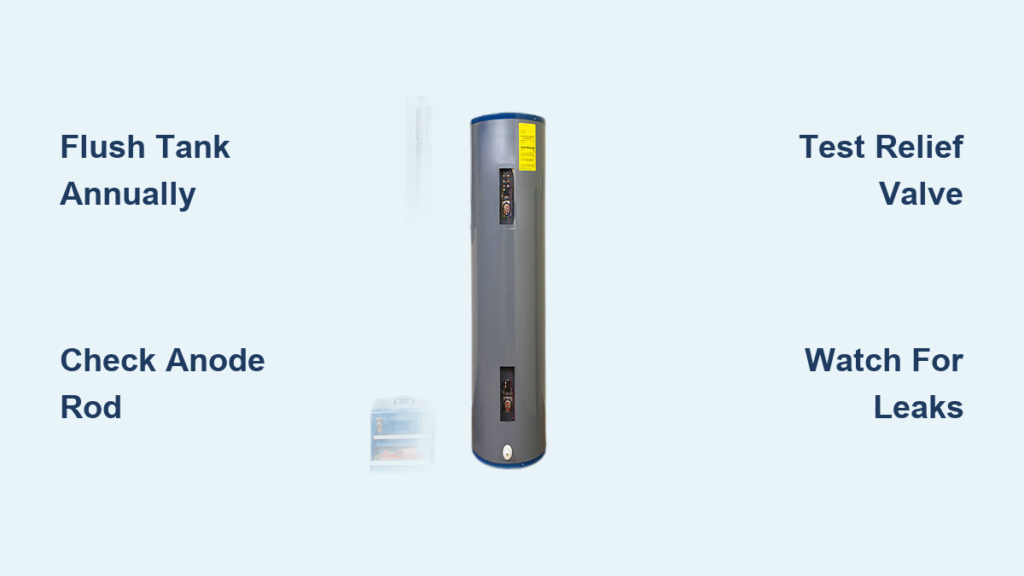
Flush the Tank Annually
Sediment buildup shelters bacteria. Flush your tank every 6 to 12 months:
1. Turn off power and water.
2. Drain the tank completely.
3. Refill and restore.
Homes on septic or with well water should flush twice a year.
Monitor the Anode Rod
Inspect the rod annually. Replace aluminum/zinc rods when 60% corroded. Powered anodes rarely need replacement; just check the power light.
Shock the System Yearly
Even with prevention, perform a mild bleach shock once a year:
– Add 1 to 2 cups of bleach to the tank.
– Run hot water until you smell it.
– Let sit 2 to 4 hours, then flush.
This keeps bacterial levels low.
Consider Whole-House Solutions
If the smell persists or affects cold water, the problem is in your source water. It is time for a point-of-entry system.
Install an Air Injection Filter
For well water with sulfur or iron, air injection systems (like Culligan Rustmaster) inject oxygen to oxidize hydrogen sulfide. The gas is vented, and solids are filtered out. These systems require zero daily maintenance and backwash automatically.
Use Chlorine Injection
For severe contamination, inject chlorine at the well head. It kills bacteria and oxidizes sulfur. Follow with a carbon filter to remove chlorine taste and odor before water enters your home.
Add a Water Softener
If you have hard water with iron or manganese, pair an air filter with a softener. This combo eliminates odor, scale, and staining, delivering clean, soft water throughout the house.
Special Cases and Troubleshooting
Some situations need extra steps. Know how to handle them.
Vacation Homes or Seasonal Use
If the heater sits unused for weeks, bacteria thrive. After winterizing:
– Refill and perform a full peroxide + bleach treatment.
– Consider a powered anode to prevent regrowth during idle periods.
Deep Well Water (400+ Feet)
Even odorless deep wells can develop hot water smells due to heating-induced reactions. Focus on anode replacement and tank disinfection, not source treatment, unless cold water is also affected.
Persistent Smell After Treatment
If the odor returns:
– Double-check the anode rod. Did you install magnesium by mistake?
– Repeat the system flush, ensuring bleach reaches every faucet.
– Test cold water. If it smells, upgrade to a whole-house filter.
Frequently Asked Questions About Sulfur Smell in Hot Water Heaters
Why does only my hot water smell like rotten eggs?
When only hot water has a sulfur odor, the problem is inside your water heater. Sulfate-reducing bacteria thrive in the warm tank environment, especially when a magnesium anode rod is present. The bacteria produce hydrogen sulfide gas, which creates the rotten egg smell.
Can I just use bleach to fix the sulfur smell?
Bleach alone can provide temporary relief, but it often does not address the root cause. For long-term results, combine bleach treatment with anode rod replacement (aluminum/zinc or powered). Hydrogen peroxide is also effective for breaking down stubborn bacterial biofilms.
How long does it take to remove the sulfur smell?
A complete treatment takes about 24 to 48 hours when using hydrogen peroxide and bleach. You should notice improvement immediately after flushing, but the full effect requires replacing the anode rod and disinfecting the entire plumbing system.
Is the sulfur smell dangerous?
The smell itself is unpleasant but generally not a direct health hazard. However, hydrogen sulfide gas can be harmful in high concentrations, and the bacteria indicate your water heater needs maintenance. Address the issue promptly to avoid corrosion damage to your tank.
How often should I flush my water heater to prevent odors?
Flush your tank every 6 to 12 months for standard maintenance. Homes with well water, septic systems, or known sulfur issues should flush twice a year. Pair this with an annual bleach shock for best results.
What is the best anode rod to prevent sulfur smells?
Aluminum/zinc rods and powered (electric) anode rods are the most effective options. Zinc inhibits bacterial growth, and powered anodes eliminate the sacrificial reaction that feeds bacteria entirely. Avoid magnesium rods, as they accelerate hydrogen sulfide production.
Key Takeaways for Eliminating Sulfur Smell from Your Hot Water Heater
Removing sulfur odor requires targeting the root cause: the anode rod and bacterial colonies inside your tank. Start by diagnosing whether the smell is isolated to hot water, then replace any magnesium anode rod with an aluminum/zinc or powered unit. Follow up with a hydrogen peroxide soak (24 hours) and a bleach shock (4 to 6 hours) to eliminate bacteria throughout the tank and plumbing lines. Flush the system thoroughly until water runs clear.
For long-term prevention, maintain your water temperature at 140°F, flush the tank annually, and perform a yearly bleach shock. If the smell persists or affects cold water, consider a whole-house air injection or chlorine injection system. With the right approach, your hot water will stay clean, safe, and odor-free for years to come.