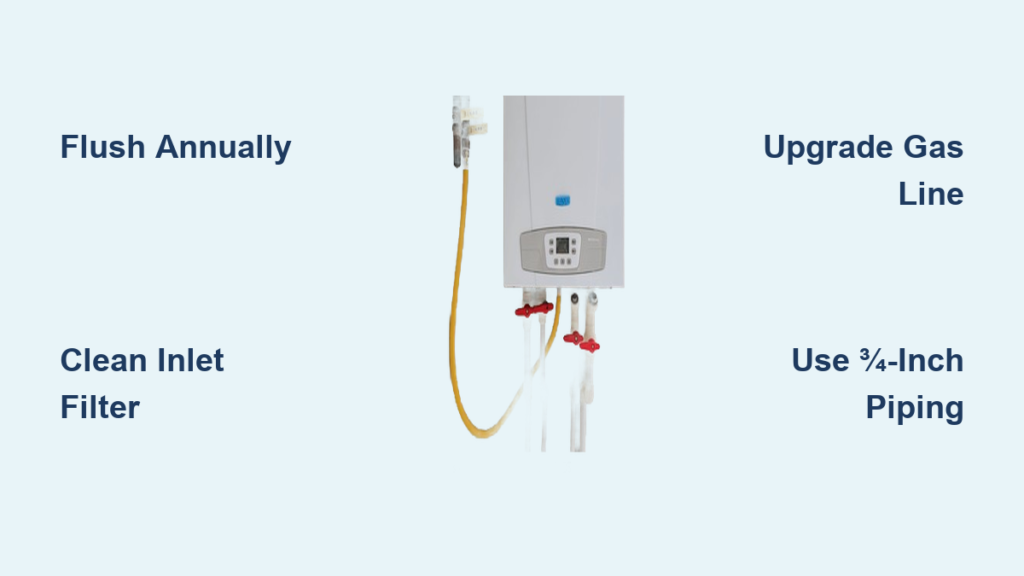
You step into a hot shower and finally relax, only for the water to turn cold the moment someone starts the dishwasher or runs a load of laundry. You invested in a tankless water heater expecting endless hot water, yet the flow sputters the second household demand rises.
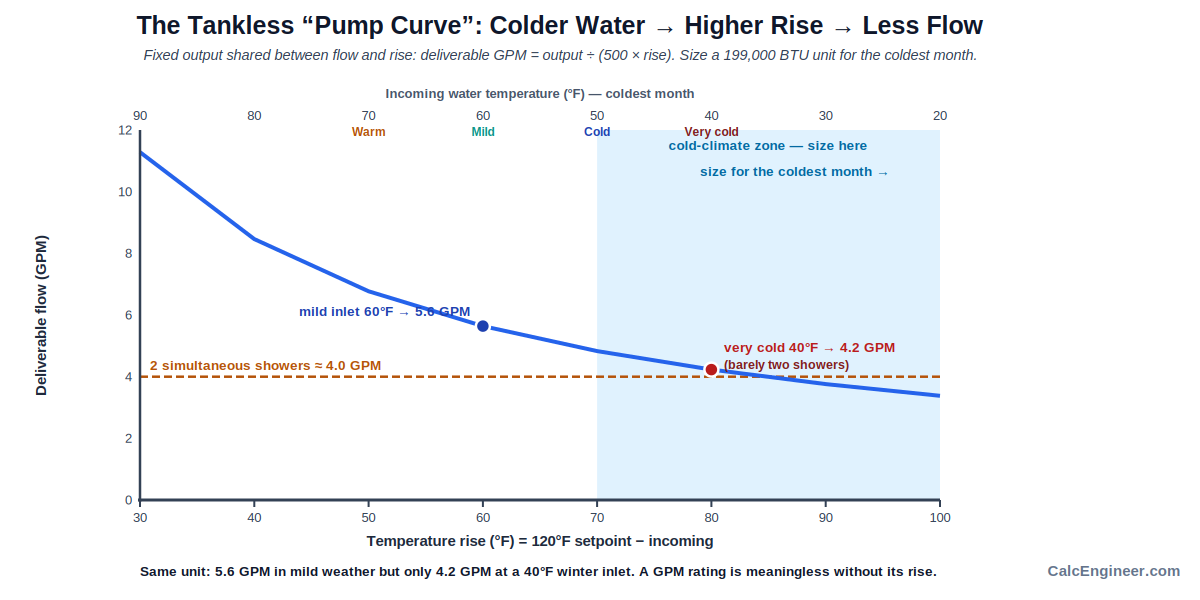
Here is the truth: tankless water heaters do not pump water; they heat it on demand. The real question is how to increase GPM (gallons per minute) output from your unit under real-world conditions. In cold-climate regions like Clatsop, Columbia, and Cowlitz counties, where groundwater temperatures dip to 45°F to 50°F, flow rates drop dramatically due to higher temperature rise demands.
At Precision Solar, with over a century of combined mechanical expertise, we have solved this issue hundreds of times. This guide reveals how to maximize GPM from your tankless system through maintenance, proper sizing, fuel upgrades, and advanced multi-unit setups. You will learn exactly what limits your flow, how to diagnose the bottleneck, and which solutions deliver real results without myths or guesswork.
Fix Flow at the Source
Before upgrading equipment, eliminate avoidable restrictions that choke your system’s performance.
Flush for Peak Efficiency
Mineral buildup is a silent GPM killer. Hard water leaves calcium and lime deposits inside the heat exchanger, narrowing passageways and insulating metal from water. Even a thin layer reduces heat transfer and forces the unit to slow flow to maintain temperature.
Solution: Perform an annual flush using food-grade vinegar or a commercial descaler. This restores internal diameter and thermal conductivity, often boosting flow by 1 to 2 GPM.
✅ Pro Tip: Use a submersible pump in a bucket to circulate the solution for 45 to 60 minutes. Always follow manufacturer instructions.
Clean the Inlet Filter
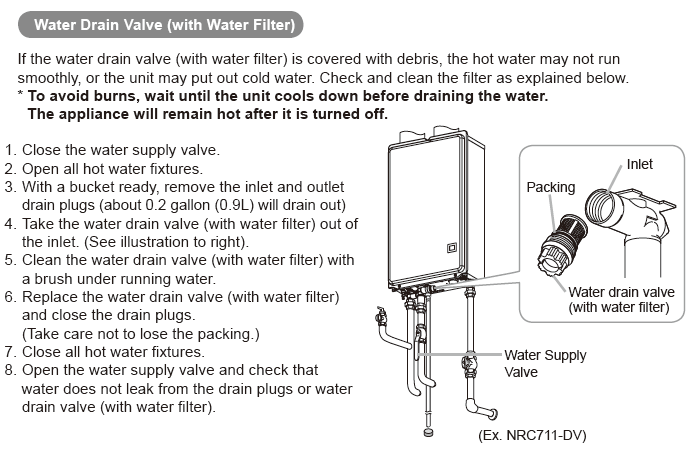
Most tankless units have a small mesh screen at the cold water inlet. Debris from well systems or municipal lines can clog it, creating a major flow restriction.
Check it every 6 months:
– Shut off water and power
– Close isolation valves
– Remove and rinse the filter under running water
– Reinstall and restart
A clogged filter can cut GPM in half, and this simple fix often resolves low pressure complaints.
Verify Proper Pipe Sizing
Using undersized piping strangles high-output heaters. A ½-inch line creates excessive friction loss when feeding a unit rated for 7+ GPM.
Rule of thumb:
– Units under 6 GPM: ½-inch supply may suffice
– Units over 6 GPM: Requires ¾-inch inlet and outlet piping
If your plumber used ½-inch copper throughout, upgrade to ¾-inch before blaming the heater.
Eliminate Fuel Starvation
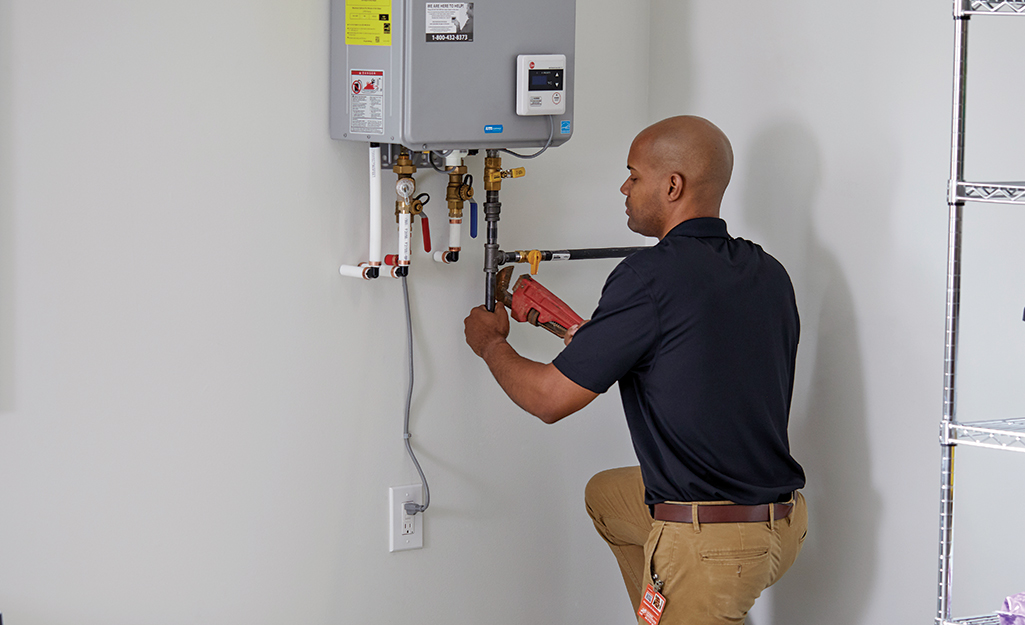
Tankless heaters need massive energy bursts. Without enough fuel, they throttle down water flow to avoid incomplete combustion or overheating.
Upgrade Gas Line Capacity
A 199,000 BTU heater demands a steady gas supply. Older homes often have ¾-inch or smaller gas lines that cannot deliver peak volume, especially if shared with a furnace or stove.
Signs of fuel starvation:
– Water starts hot, then cools during use
– Unit displays error codes intermittently
– Flame appears weak or yellow
Fix: Install a dedicated 1-inch gas line from the meter to the heater. Include a sediment trap and shutoff valve. This ensures full BTU delivery, allowing the unit to sustain maximum GPM during high demand.
⚠️ Warning: Only licensed plumbers should modify gas systems. Improper work risks explosion or carbon monoxide exposure.
Size for Real-World Demand
Many GPM issues stem from buying a unit too small for household needs, especially in cold climates.
Calculate Your Peak GPM Need
List all hot water devices likely to run simultaneously:
– Shower: 2.5 GPM
– Kitchen faucet: 1.5 GPM
– Washing machine: 2.0 GPM
– Dishwasher: 1.0 GPM
– Bathtub: 3.0 to 5.0 GPM
Example: Two showers plus a kitchen sink equals 6.5 GPM demand.
Now factor in temperature rise:
– Groundwater: 48°F
– Desired output: 120°F
– Required rise: 72°F
A unit rated for 10 GPM at a 40°F rise may only deliver 5.2 GPM at a 72°F rise, which is not enough for two showers.
Choose High-Capacity Models
Newer high-capacity tankless water heater models handle steep rises better through features like:
– Dual heat exchangers
– Modulating burners that adjust flame in 1% increments
– Higher BTU ratings up to 400,000 BTU
These maintain tankless water heater efficiency at high flow, avoiding drastic GPM drops when demand spikes.
Double Your Output

When one unit is not enough, combine two.
Install in Parallel
A parallel tankless installation connects two identical units side-by-side on the same cold and hot water manifolds.
Each unit shares the load:
– One unit handles 4.5 GPM at a 72°F rise
– Two units deliver 9.0 GPM at the same rise
Requirements:
– Equal pipe length to each unit
– Balanced flow with isolation valves
– Same model and firmware version
This setup works passively with no communication needed, but both units fire whenever hot water is called.
Use Cascade Systems
A tankless cascade system links units with a control cable so they coordinate intelligently.
- One is the Master, the other the Slave
- The Master senses flow and stages burners across both units
- This prevents short-cycling and maximizes efficiency
Advantages over parallel:
– Smoother modulation at low flows
– Longer lifespan due to load balancing
– Better performance with fluctuating demand
This setup is ideal for large homes in Tillamook or Pacific counties with jetted tubs, outdoor showers, or multiple bathrooms.
✅ Expert Note: Cascade systems require compatible models. Always check manufacturer specs before purchasing.
Debunk Recirculation Myths
Many believe installing a recirculation pump increases GPM.
Reality: It does not.
A recirculation system only delivers hot water faster to fixtures by keeping hot water circulating in the pipes.
Benefits:
– No waiting for hot water
– Less wasted water
– Improved comfort
But total flow rate remains unchanged. This system is best for homes with long pipe runs. Pair it with a timer or occupancy sensor to avoid energy waste.
Avoid Dangerous Shortcuts
Some online videos suggest removing flow restrictors to boost GPM.
Do not do this.
Removing Flow Restrictors Risks
Flow restrictors ensure water spends enough time in the heat exchanger to reach set temperature. Removing them causes:
– Incomplete heating and lukewarm output
– Thermal stress on the heat exchanger
– Voided warranty
– Potential scalding if the thermostat compensates erratically
The risk far outweighs any temporary gain.
✅ Safer alternative: Replace with a higher-capacity unit or add a second one.
Optimize for Long-Term Performance
Maximizing GPM is not a one-time fix; it requires ongoing attention.
Monitor Indicator Lights
Most units flash error codes when flow or heating issues occur:
– Flashing red light: Often indicates scale buildup
– Intermittent heat: May signal gas pressure problems
– Delayed ignition: Could mean vent blockage or sensor fault
Refer to your manual and act early.
Schedule Annual Maintenance
Create a maintenance calendar:
– Every 6 months: Inspect the filter
– Annually: Flush the system and check gas connections
– Every 3 years: Inspect the heat exchanger and venting
Regular care preserves both GPM and efficiency.
Consider Groundwater Temperature
If you are constantly battling low flow, consider:
– Installing a preheat system such as solar or heat recovery
– Using lower-temperature settings for laundry and dishwashing
– Staggering high-demand activities
Small behavioral changes reduce peak load.
Frequently Asked Questions About Tankless Water Heater GPM
Does a tankless water heater actually pump water?
No. Tankless water heaters do not pump water; they heat water on demand as it flows through a heat exchanger. The flow rate depends on the unit’s BTU capacity, the temperature rise required, and the condition of your plumbing.
Why does my GPM drop in winter?
Cold groundwater in winter, often 45°F to 50°F in the Pacific Northwest, requires a higher temperature rise to reach 120°F. Since higher temperature rise equals lower GPM, your flow rate drops significantly compared to warmer months.
Can removing the flow restrictor increase GPM?
Removing the flow restrictor may increase flow slightly, but it is dangerous. The restrictor ensures water stays in the heat exchanger long enough to reach the set temperature. Removing it risks lukewarm water, heat exchanger damage, and voided warranty.
How much GPM do I need for two showers at once?
Two showers require about 5.0 GPM at the fixtures. However, factoring in a 70°F to 75°F temperature rise common in cold climates, your tankless unit needs a rated capacity of at least 7 to 8 GPM to maintain that flow reliably.
Is a parallel or cascade installation better?
Parallel installations are simpler and cost less, while cascade systems offer smarter staging, smoother modulation, and longer unit lifespan. Cascade is ideal for large homes with fluctuating demand.
How often should I flush my tankless water heater?
Flush your tankless water heater once a year using food-grade vinegar or a commercial descaler. In areas with very hard water, consider flushing every 6 months to prevent scale buildup.
Key Takeaways for Maximizing Tankless Water Heater GPM

How can a tankless water heater pump more GPM? It cannot pump, but you can engineer the system to deliver more hot water per minute.
Key strategies:
– Flush annually to prevent scale-related flow loss
– Clean inlet filters every 6 months
– Use ¾-inch piping for high-output units
– Upgrade gas lines to prevent fuel starvation
– Size correctly for a 70°F+ temperature rise
– Install parallel or cascade systems for large households
– Avoid removing flow restrictors, since they protect your unit
For homes in cold-water regions, a single tankless unit is rarely enough. The real solution lies in system design, not just hardware.
At Precision Solar, we have helped hundreds of families in Clatsop, Cowlitz, and Columbia counties end the hot water battle. From descaling to dual-unit installations, we tailor solutions to your water, climate, and lifestyle.
Don’t settle for a trickle. Maximize your GPM safely, efficiently, and permanently.