
You’re sitting in your living room on a cold winter evening, watching flames flicker behind a glass door, feeling warmth radiate across the room. That cozy heat likely comes from a wood heater, but have you ever wondered exactly how it turns logs into consistent, controllable warmth? Understanding how a wood heater works goes beyond just lighting a fire. It involves smart design, airflow control, and heat transfer principles that turn simple combustion into efficient home heating.
A wood heater is an engineered system designed to burn wood safely, extract as much heat as possible, and release minimal smoke into the environment. Whether you own a traditional wood stove or a modern EPA-certified model, the core process remains the same: burn wood in a controlled way and distribute heat effectively through your space.
In this guide, you’ll learn the step-by-step process of how a wood heater operates, from ignition to heat distribution. You’ll discover the role of air intake, secondary combustion, heat exchange channels, and proper chimney drafting. You’ll also learn what makes modern wood heaters more efficient than open fireplaces, how to maximize performance, and common mistakes that reduce efficiency.
Inside the Firebox: Where Combustion Begins

The firebox is the heart of any wood heater. This insulated chamber holds the wood and contains the intense heat of the fire. Made from heavy steel or cast iron, it is built to withstand temperatures exceeding 1,000°F. When you load wood and ignite it, the burning process starts with primary combustion, the initial breakdown of wood into flames and gases.
As the wood heats up, it releases volatile gases like methane and carbon monoxide. These gases mix with oxygen and ignite, creating the visible flames you see. In older or inefficient stoves, these gases often escape up the chimney before fully burning, wasting energy and increasing pollution.
Modern wood heaters solve this problem with advanced combustion technology. They do not just burn wood; they burn the smoke too.
Control Airflow for Cleaner Burns
Air intake controls are critical to how a wood heater works. Most models have at least two air controls: primary and secondary. The primary air control feeds oxygen directly under the fire, supporting the initial burn of solid wood. It is used mainly during startup or when burning low-quality wood.
Once the fire is established, the secondary air control takes over. Preheated air is injected above the fire, mixing with escaping gases and reigniting them in a process called secondary combustion. This creates a hotter, cleaner burn and reduces creosote buildup in the chimney.
Too much air cools the fire; too little creates smoke. Finding the right balance ensures maximum efficiency.
Choose the Right Wood for Steady Heat
Not all wood works the same in a heater. Hardwoods like oak, maple, and ash burn longer and hotter than softwoods like pine or fir. Even more important than species is moisture content. Wood should be seasoned (dried) for at least six months to reach 20% moisture or less.
Wet or green wood produces less heat because energy goes into evaporating water instead of creating warmth. It also increases smoke and creosote, which can clog chimneys and create fire hazards.
Pro tip: Store firewood off the ground, covered at the top but open at the sides for airflow, to maintain dryness.
Secondary Combustion: Burn Smoke for Efficiency
One of the biggest advancements in wood heater technology is secondary combustion. Unlike old stoves or open fireplaces, modern units are designed to burn not just the wood, but also the smoke it produces.
When wood burns, it releases unburned hydrocarbons and gases. In a traditional fireplace, these escape as visible smoke. In an efficient wood heater, those gases are reignited in the upper part of the firebox using preheated secondary air.
This secondary burn can reach temperatures over 1,100°F, hot enough to break down pollutants and extract extra heat. The result is higher efficiency (often 70 to 80%), less air pollution, and fewer emissions.
Identify Signs of Good Combustion
How do you know if secondary combustion is working? Look for these visual cues:
• Bright, dancing flames in the upper firebox
• A clean glass door with minimal soot buildup
• Minimal smoke from the chimney after the fire is hot
• Ash that is light gray, not black or chunky
If your fire smokes heavily or the glass blackens quickly, airflow settings or wood moisture may be off.
Maintain Baffle Plates and Firebricks
Above the main fire lies the baffle plate, a heat-resistant barrier that slows down exhaust gases, giving them more time to combust. Many stoves also have firebricks lining the walls and floor, which absorb heat and protect metal components.
Over time, baffles and firebricks degrade. Cracks or missing pieces reduce efficiency and increase heat damage to the stove body. Inspect them annually and replace as needed.
Heat Transfer: Turning Flame Into Room Warmth

Burning wood creates heat, but getting that heat into your room efficiently is what sets a good wood heater apart. Modern stoves use three methods of heat transfer: radiation, convection, and sometimes fan-assisted circulation.
Radiant heat comes directly from the hot surfaces of the stove. You feel it when you stand near the unit, just like sunlight. Convection heat occurs when air around the stove warms, rises, and circulates naturally through the room.
Many stoves are designed with heat exchange channels, which are spaces between inner and outer walls where hot gases travel before exiting. As they move, they warm the metal, which then radiates heat longer, even after the fire dies down.
Use a Thermostatic Fan for Even Heating
Some wood heaters include a small thermostatic fan powered by the stove’s heat, requiring no electricity. When the surface reaches a certain temperature, the fan turns on and pushes warm air into the room.
This helps eliminate cold spots and improves comfort, especially in larger spaces. However, never use an electric fan unless it is rated for high heat and placed safely away from direct contact.
Avoid blocking airflow around the stove. Keep furniture and curtains at least 3 feet away.
Maximize Heat Retention with Mass
Stoves made from cast iron or soapstone store heat longer than thin steel models. Cast iron heats up slower but holds warmth for hours after the fire goes out. Soapstone, though expensive, has exceptional heat retention properties.
If you want steady heat over long periods, choose a stove with high thermal mass and operate it in a slow-burn mode using the air controls.
Chimney Draft: The Invisible Engine of Flow

A wood heater cannot work without proper chimney draft, the natural upward movement of hot gases that pulls fresh air into the fire. Draft is created by the temperature difference between the hot flue gases and the cooler outside air.
Think of it like breathing: the chimney exhales smoke, and the stove inhales air to feed the fire. Without strong draft, smoke can spill into the room or fail to burn cleanly.
Ensure Proper Chimney Height and Cleanliness
Chimney height affects draft strength. Most codes require at least 15 feet of vertical rise, with the top extending above the roofline to avoid wind-induced downdrafts.
A clean chimney is essential. Creosote, a sticky, flammable byproduct of incomplete combustion, builds up over time. If not removed, it can ignite and cause a dangerous chimney fire.
Have your chimney inspected annually and swept if needed, especially if you burn frequently or use damp wood.
Avoid Cold Starts and Downdrafts
Starting a cold chimney can be tricky. If the flue is full of cold air, it resists upward flow. To prevent this:
• Warm the flue by holding a lit newspaper near the open damper before lighting
• Open the air controls fully during startup
• Use dry kindling to get the fire going quickly
Downdrafts, when wind forces air down the chimney, can blow smoke into the room. A chimney cap with a wind-resistant design can help prevent this.
Efficiency vs. Open Fireplaces: Why Stoves Win

If you have ever sat by a traditional open fireplace, you know how dramatic it looks, but it is extremely inefficient. Most open fireplaces lose over 90% of their heat up the chimney, pulling warm indoor air out with the smoke.
Wood heaters, especially EPA-certified models, are engineered to retain heat and burn cleanly. They typically achieve 60 to 80% efficiency, meaning most of the energy in the wood ends up warming your home.
Key Advantages of Modern Wood Heaters
Modern wood heaters offer several features that open fireplaces lack:
• Controlled airflow for better combustion
• Secondary burn systems that reduce emissions
• Insulated fireboxes that maintain high temperatures
• Tight-fitting doors that prevent heat loss
• Advanced baffling to extend gas travel time
These features make modern stoves up to four times more efficient than open fireplaces.
EPA Certification Matters
In the U.S., the Environmental Protection Agency (EPA) sets emission standards for wood heaters. EPA-certified stoves emit 70% less pollution than older, non-certified models and are required to meet strict efficiency benchmarks.
When buying a wood heater, always check for EPA certification. It ensures cleaner operation, better performance, and compliance with local regulations.
Operating Tips for Optimal Performance
Getting the most from your wood heater is not just about loading logs and lighting a match. Smart operation improves efficiency, reduces maintenance, and extends stove life.
Start Fires from the Top
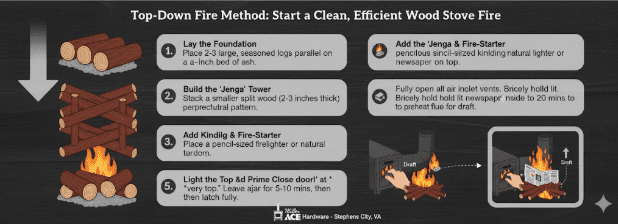
Traditional bottom-up fires create more smoke during startup. Top-down burning reverses the process: place kindling on top of larger logs and light from above.
Benefits include:
• Faster ignition
• Less smoke
• Better secondary combustion from the start
• Cleaner glass
This method is used by many high-efficiency stove owners and is recommended by manufacturers.
Maintain a Moderate Burn Rate
Avoid extreme burns, neither roaring fires nor smoldering embers. A moderate, steady burn keeps temperatures high enough for clean combustion without overheating the stove.
Smoldering fires produce more creosote and less heat. Roaring fires waste fuel and can damage components.
Set the air controls so the fire burns brightly but controllably, then reduce slightly once the room is warm.
Clean Ash Regularly
Ash insulates the firebed, reducing airflow and efficiency. Remove ash when it builds up to about 1 inch, but leave a thin layer to protect the firebox floor.
Dispose of ashes in a metal container and store them away from combustibles for at least a week. Ashes can retain heat for days.
Safety Essentials Every User Must Know
Wood heaters bring warmth, but they also carry risks if not used properly. Follow these safety rules to protect your home and family.
Maintain Clearance to Combustibles
All wood heaters require clearance from walls, furniture, and flooring. Check your owner’s manual for exact measurements, but typical clearances are:
• 36 inches from side walls
• 18 to 24 inches from rear wall
• Use a non-combustible floor pad if installed on wood floors
Never place anything flammable near the stove.
Install Carbon Monoxide and Smoke Detectors
Wood heaters produce carbon monoxide (CO), an odorless, deadly gas. Install CO detectors on every level of your home, especially near sleeping areas. Test them monthly.
Also install smoke detectors and clean the stove and chimney regularly to reduce fire risk.
Never Leave a Fire Unattended
While some stoves are designed for overnight burns, always ensure the fire is stable and the door is securely closed. Avoid leaving a blazing fire unattended for long periods.
Close the air controls to slow the burn before going to sleep or leaving the house.
Troubleshooting Common Issues
Even well-maintained wood heaters can develop problems. Here is how to diagnose and fix frequent issues.
Smoke Enters the Room
If smoke spills into the room when opening the door or during operation:
• Check if the damper is fully open
• Warm the flue before starting
• Ensure the chimney is clean and tall enough
• Verify no strong winds are causing downdrafts
A brief smoke alarm during startup is normal; persistent alarms mean a problem.
Glass Becomes Sooty
A blackened glass usually means poor combustion. Causes include:
• Wet wood
• Insufficient secondary air
• Overloading the firebox
• Burning too cool
Clean the glass with a damp ash paste or manufacturer-approved cleaner when cool.
Fire Dies Too Quickly
If your fire will not last:
• Check wood moisture with a moisture meter
• Ensure air controls are set correctly
• Avoid over-closing the damper
• Use properly sized logs (not too large or small)
Seasoned hardwoods in 16 to 18 inch lengths typically burn best.
Frequently Asked Questions About Wood Heaters
What is the most efficient way to burn wood in a heater?
The most efficient method is using seasoned hardwood with moisture content below 20%, combined with top-down lighting and proper airflow control. This approach maximizes secondary combustion and minimizes smoke.
How often should I clean my wood heater chimney?
Have your chimney inspected annually and swept when creosote buildup reaches 1/8 inch or more. Frequent burners may need cleaning every few months during heavy use seasons.
Can a wood heater heat an entire house?
Yes, depending on the stove’s size, your home’s insulation, and layout. Properly sized heaters can warm open-plan areas well, while multiple rooms may require fans or ducting to distribute heat evenly.
Why does my wood heater glass keep turning black?
Black glass typically indicates wet wood, insufficient secondary air, or burning at too low a temperature. Switching to seasoned wood and adjusting airflow usually solves this problem quickly.
Are EPA-certified wood heaters worth the investment?
Absolutely. EPA-certified models burn 70% cleaner, operate more efficiently, and often qualify for tax credits or rebates. They save money on fuel while reducing environmental impact over time.
How long does a cord of wood last in a wood heater?
A standard cord (128 cubic feet) typically lasts 6 to 12 weeks with daily winter use, depending on stove efficiency, home size, and thermostat settings. Higher-efficiency stoves stretch wood further.
Key Takeaways for Understanding How a Wood Heater Works
Wood heaters work by combining controlled combustion, efficient heat transfer, and proper ventilation to turn wood into reliable, radiant warmth. From the firebox to the chimney, every component plays a role in safe, clean, and effective operation. Modern designs with secondary combustion and EPA certification offer performance far beyond old fireplaces, making them a smart choice for efficient home heating.
To get the most from your wood heater: use dry, seasoned wood; master airflow controls; maintain your chimney; and follow safety guidelines. Start by checking your wood’s moisture content and inspecting your stove’s baffle and firebricks before the next burn season.