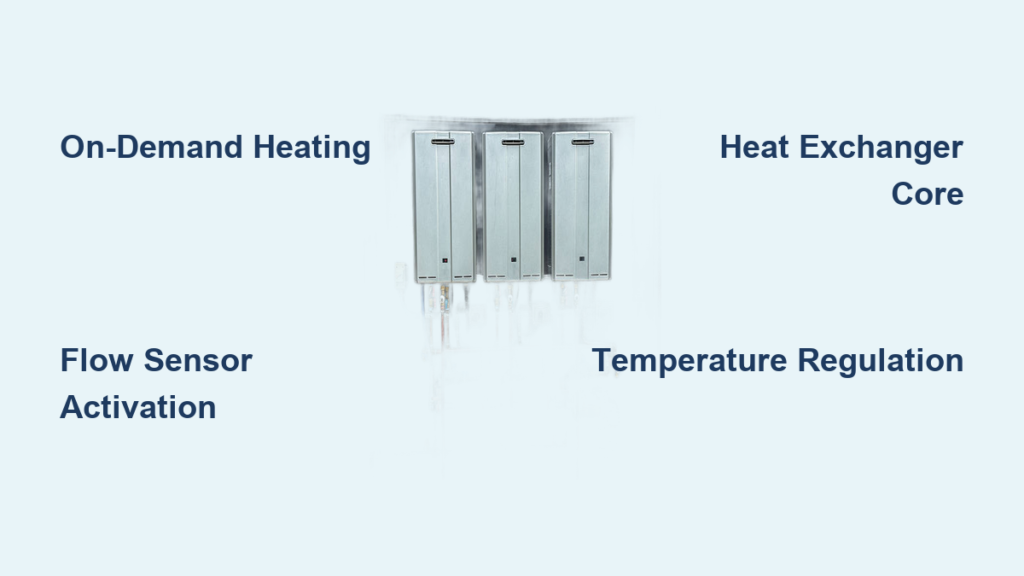
You’re tired of running out of hot water mid-shower. You’ve heard tankless water heaters are efficient and endless, but how do they actually work? Unlike traditional water heaters that store and constantly reheat 40 to 80 gallons of water, a tankless system heats water on demand, only when you need it. This not only saves space but also energy. In this guide, you’ll learn exactly how a tankless hot water heater works, from the moment you turn on the tap to when hot water flows through your pipes.
The Instant Heating Process Explained
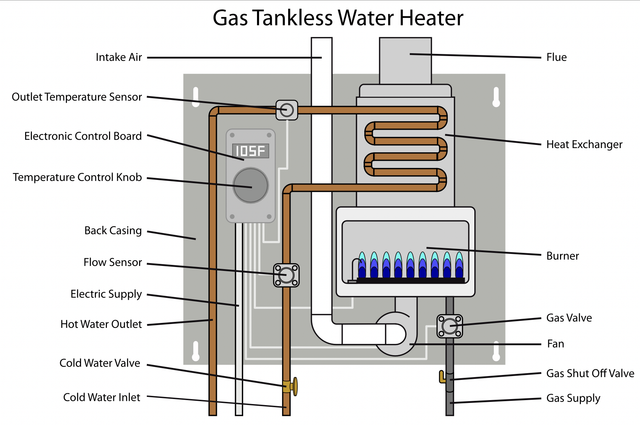
A tankless water heater operates on a simple principle: heat water only when needed. There’s no storage tank, no standby heat loss, and no waiting for a reservoir to refill. Understanding this process helps you appreciate why these systems are so efficient.
Cold Water Enters on Demand
When you open a hot water tap, cold water travels through a pipe into the unit. The flow triggers a sensor that activates the heating system. This is the first critical step: no flow, no heat. The system remains idle until demand is detected, making it energy-efficient by design.
Gas Burner or Electric Coil Activation
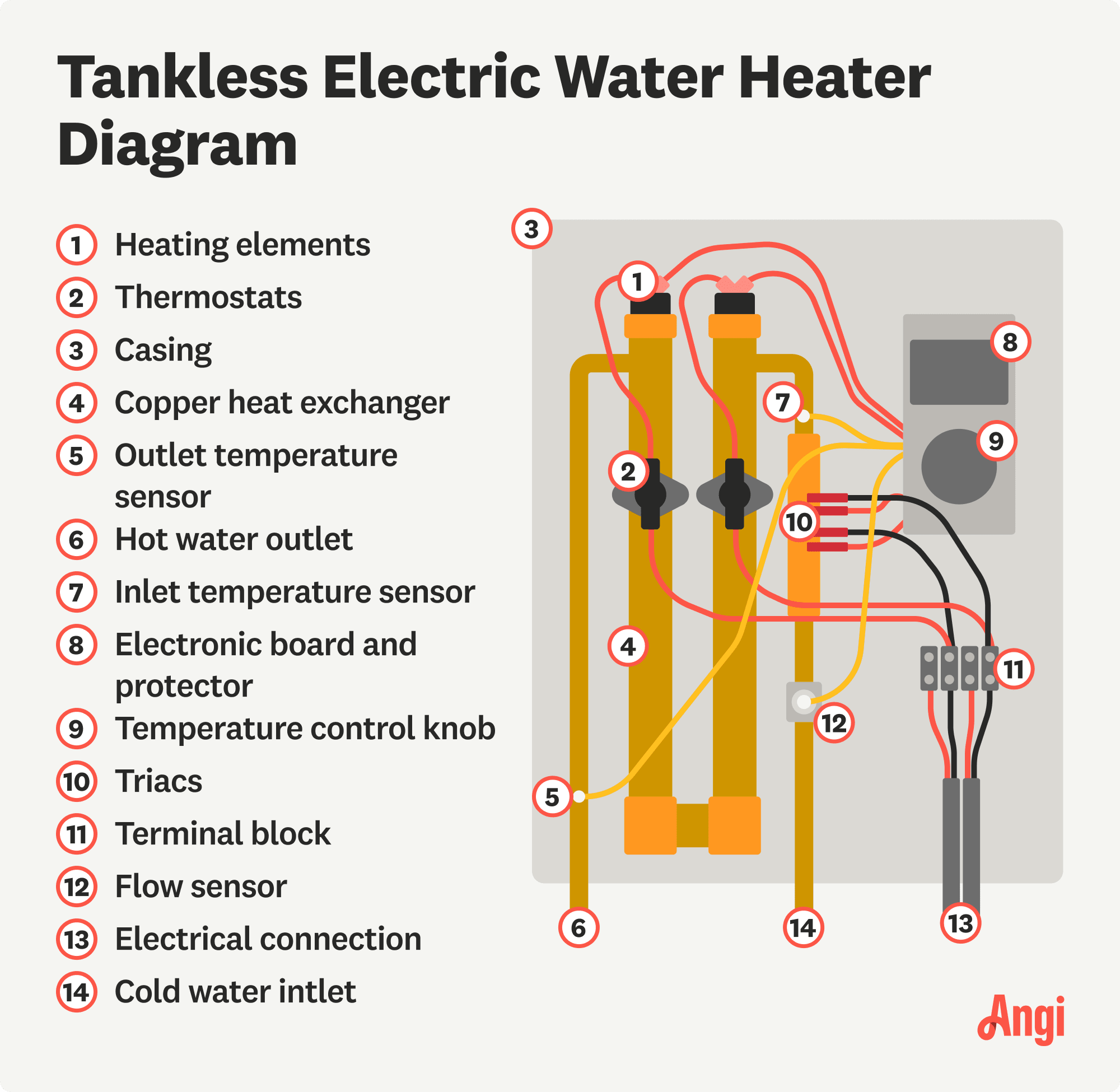
Depending on the model, heating is achieved via a high-powered gas burner or electric heating elements.
- Gas-powered units use a modulating burner that adjusts flame intensity based on water flow and incoming temperature.
- Electric models rely on multiple resistive coils that rapidly heat the water as it passes through.
The heater instantly raises the water temperature to your set point, typically between 100°F and 120°F, ensuring consistent output regardless of usage.
Heat Exchanger Transfers Energy
Inside the unit, a heat exchanger is responsible for transferring thermal energy to the water. In gas models, combustion gases pass through a coiled tube surrounded by water, heating it without direct contact. Electric models pass water around energized heating elements.
Modern heat exchangers are made from durable materials like copper or stainless steel to maximize thermal conductivity and resist corrosion. The water exits the exchanger hot and flows directly to your faucet, shower, or appliance, with no storage and no delay.
How Flow and Temperature Sensors Work
Tankless systems don’t just heat water. They regulate it precisely to match your needs and climate conditions. This precision is what sets them apart from traditional tanks.
Flow Sensor Triggers the System
A flow sensor detects when water moves through the unit. Most models require a minimum flow rate (usually 0.5 gallons per minute) to activate. This prevents unnecessary cycling and ensures efficiency.
If flow is too low, like a slow drip, the heater won’t turn on. This feature avoids energy waste and protects internal components from overheating during low-use scenarios.
Thermostat Maintains Set Temperature
Once activated, the built-in thermostat monitors incoming and outgoing water temperature. The system adjusts the burner or electrical output to maintain a consistent temperature, even if multiple fixtures are used simultaneously.
For example:
– In winter, incoming water is colder, so the heater works harder.
– In summer, less energy is needed due to warmer supply water.
Advanced models use modulating technology to fine-tune heat output, avoiding temperature spikes and ensuring comfort.
Digital Display for Precision
Many units include a digital display or remote control that lets you set and monitor the output temperature. You can adjust settings based on season, usage, or safety preferences, like lowering the temperature to prevent scalding in homes with children.
Types of Tankless Water Heaters
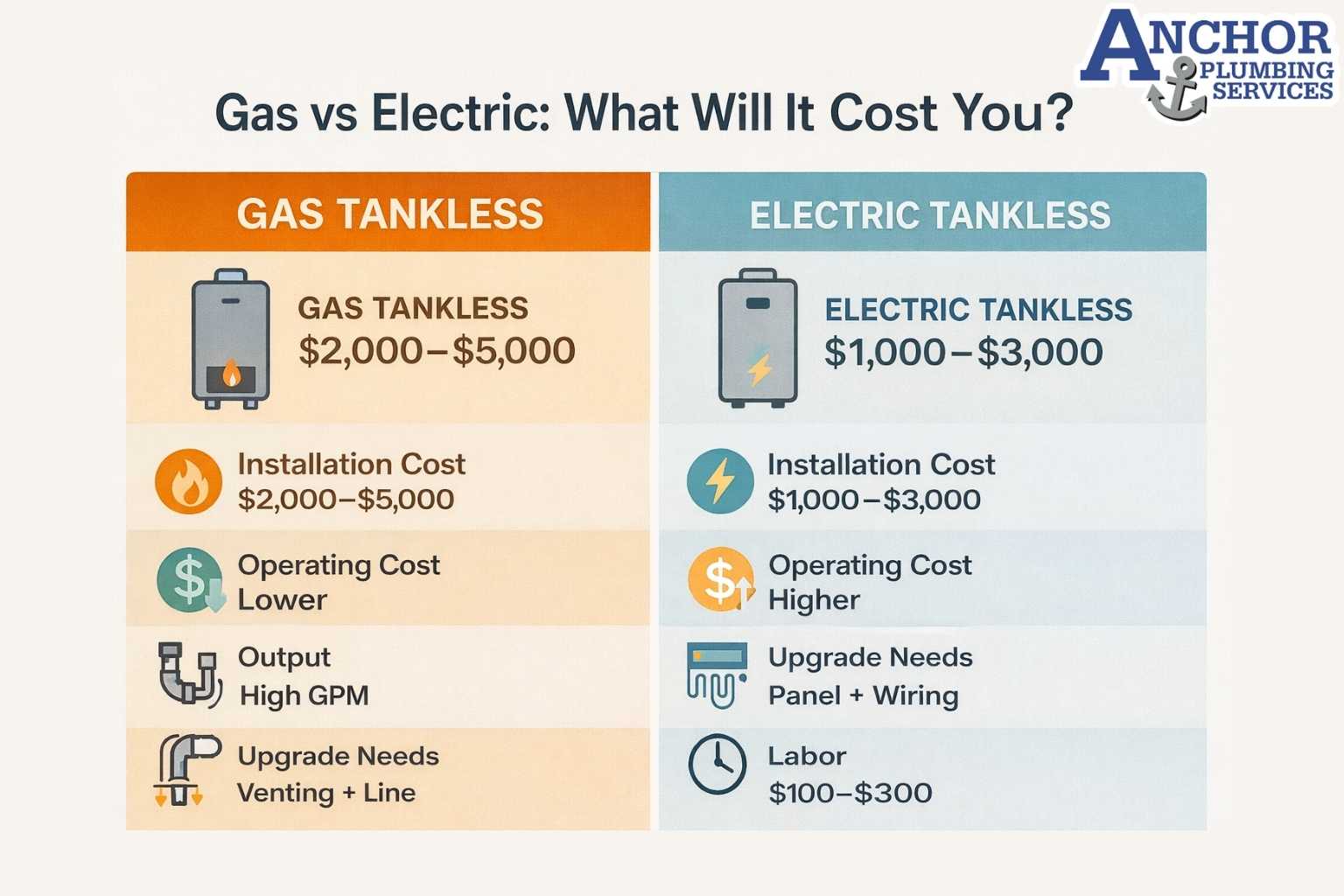
Not all tankless systems are the same. Choosing the right type depends on your home’s size, climate, and energy source. Here’s a breakdown of your main options.
Electric Tankless Units
Compact and easy to install, electric models are ideal for small homes, apartments, or point-of-use applications like under a sink.
- Pros: Lower upfront cost, no venting required, quiet operation
- Cons: High electrical demand, limited flow rate, less effective in cold climates
These units work best when heating water for a single fixture or in regions with mild groundwater temperatures.
Gas-Powered Tankless Systems
Powered by natural gas or propane, these deliver higher flow rates and are better suited for large households.
- Pros: Faster heating, higher output, works well in cold climates
- Cons: Requires gas line, venting, and professional installation
Gas models can supply hot water for multiple showers and appliances simultaneously, making them the go-to for whole-house setups.
Condensing vs Non-Condensing Models
Gas tankless heaters are categorized by how they handle exhaust gases.
- Non-condensing: Expels hot exhaust directly outdoors. Less efficient but simpler design.
- Condensing: Recaptures heat from exhaust, cools gases before release, and achieves higher efficiency (up to 98%).
Condensing units are more expensive but save significantly on energy bills over time.
Sizing Your Tankless Water Heater Correctly

Proper installation and sizing are critical to performance. A poorly sized unit can underdeliver, while an oversized one wastes energy. Follow these steps to get it right.
Calculate Your Peak Flow Rate
Determine your household’s peak hot water demand by adding the flow rates of fixtures likely to run at the same time.
Example calculation:
– Shower: 2.5 GPM
– Kitchen faucet: 1.5 GPM
– Washing machine: 2.0 GPM
– Total: 6.0 GPM
Choose a unit rated to handle this load at your region’s average groundwater temperature.
Factor in Groundwater Temperature
Heaters must raise water from its starting temperature to your desired output. In northern states, groundwater can be as cold as 40°F, requiring more energy than in southern areas where it might be 70°F.
A unit that delivers 6 GPM in Florida may only deliver 3 GPM in Minnesota. Always check performance ratings at realistic inlet temperatures.
Energy Efficiency and Cost Savings
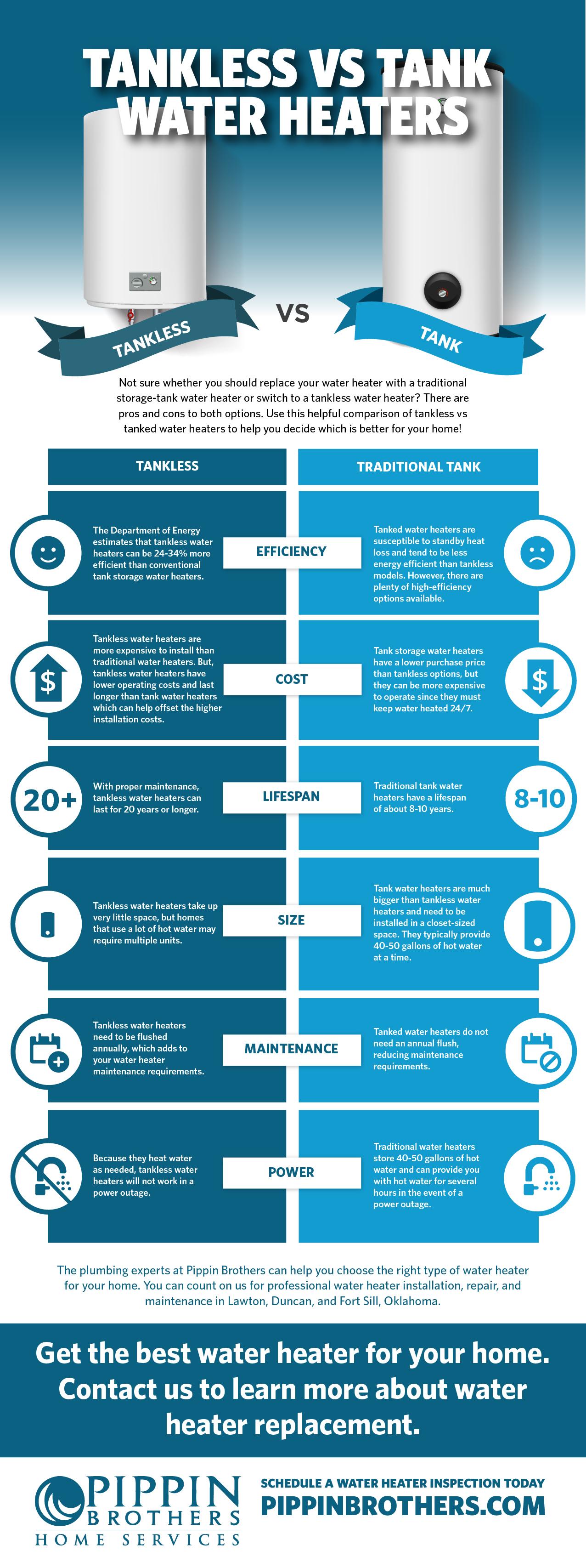
One of the biggest advantages of tankless water heaters is energy efficiency. Let’s look at the numbers behind the savings.
No Standby Heat Loss
Traditional tanks constantly reheat stored water, losing heat through the walls, a phenomenon known as standby loss. Tankless systems eliminate this by heating only when needed.
According to the U.S. Department of Energy, tankless heaters can be 24% to 34% more efficient than standard storage units for homes using 41 gallons or less of hot water daily.
Higher Initial Cost, Long-Term Savings
Tankless units cost more upfront, ranging from $800 to $3,000 including installation, but last longer (20+ years vs. 10–15) and reduce monthly energy bills.
Typical annual savings:
– Electric models: $20–$50 per year
– Gas models: $100–$200 per year
Payback period varies but often falls between 7 and 15 years, depending on usage and energy rates.
Maintenance Requirements for Tankless Heaters
To keep your tankless heater running efficiently, regular maintenance is essential. Skip these steps and you risk costly repairs down the road.
Annual Flushing Prevents Scale Buildup
Mineral deposits (scale) can clog the heat exchanger, especially in hard water areas. Manufacturers recommend annual descaling using a vinegar or citric acid solution.
Steps:
1. Shut off power and water supply
2. Connect a pump to the service valves
3. Circulate cleaning solution for 30–60 minutes
4. Flush with clean water
5. Reconnect and restart
This simple process restores efficiency and prevents premature failure.
Filter and Inlet Screen Cleaning
Some models have a water filter or screen at the inlet to catch debris. Check and clean it every 6–12 months to maintain proper flow.
A clogged filter can trigger error codes or reduce hot water output.
Common Issues and Quick Fixes
Even reliable systems can encounter problems. Knowing how to diagnose issues can save time and money.
Understanding Error Codes
Most digital units show error codes when problems occur.
Common codes include:
– E1 or Ignition Failure: Gas supply issue or dirty burner
– E5 or Overheat: Flow restriction or scale buildup
– E7 or Sensor Fault: Failed temperature sensor
Refer to your manual for specific meanings and reset procedures.
Fixing the Cold Water Sandwich
A “cold water sandwich” occurs when you get a brief burst of cold water between two hot streams, usually when switching fixtures.
Cause: The heater shuts off between demands and takes a few seconds to restart.
Solutions:
– Install a recirculation pump with a return line
– Use a buffer tank to store a small amount of hot water
– Choose a model with a modulating pump that maintains minimal flow
Frequently Asked Questions About Tankless Hot Water Heaters
Do tankless water heaters really provide endless hot water?
Yes, tankless heaters provide endless hot water as long as the unit is properly sized for your demand. They heat water on demand rather than from a finite tank, so you won’t run out during long showers. However, if multiple fixtures run simultaneously and exceed the unit’s flow capacity, you may notice temperature drops.
How long do tankless water heaters last?
Tankless water heaters typically last 20 years or more with proper maintenance, compared to 10–15 years for traditional tank models. Regular descaling and filter cleaning significantly extend their lifespan.
Can a tankless water heater run multiple showers at once?
Yes, but only if the unit is rated for the combined flow rate. Most whole-house gas models can handle two to three showers simultaneously. Electric models typically support only one fixture at a time due to their lower flow capacity.
Are tankless water heaters worth the investment?
For most households, yes. While the upfront cost is higher, tankless heaters save energy, reduce utility bills, and last longer than traditional tanks. Homes using 41 gallons or less daily can see 24% to 34% greater efficiency, making them cost-effective over time.
What size tankless water heater do I need for a family of four?
A family of four typically needs a unit that delivers 6 to 8 GPM, depending on your region’s groundwater temperature. Calculate your peak demand by adding the flow rates of fixtures used simultaneously, then choose a model that meets or exceeds that number.
Do tankless water heaters require electricity to work?
Yes, even gas-powered tankless units need electricity to operate the sensors, control board, and display. During power outages, gas models will not function unless connected to a battery backup.
Key Takeaways on How Tankless Hot Water Heaters Work
Tankless water heaters are a smart upgrade for energy-conscious homeowners. By heating water only when needed, they save energy, reduce bills, and provide endless hot water. Whether powered by gas or electricity, these systems rely on precise sensors, powerful heating elements, and efficient heat exchangers to deliver comfort on demand.
Proper sizing, professional installation, and annual maintenance ensure long-term performance. As technology advances and incentives grow, tankless heaters are becoming a standard in modern, efficient homes. Now that you know how they work, you’re ready to decide if one is right for your home.