
A propane heater can be a lifeline during winter power outages or in drafty workshops, but using the wrong one indoors can turn it into a silent killer. Not all propane heaters are safe for indoor use, even if they look identical. The difference lies in safety engineering, not in how hot they get or how quickly they warm a room. Only models with specific built-in safeguards should ever be used inside.
The primary danger is carbon monoxide (CO), a colorless, odorless gas produced when propane burns without enough oxygen. Without proper ventilation or safety controls, CO can build up to deadly levels in minutes. This guide breaks down exactly what makes a propane heater indoor-safe, which features matter most, and how to avoid fatal mistakes.
How Propane Heaters Work Indoors
Propane burns cleanly when conditions are ideal: plenty of oxygen, proper fuel-to-air mix, and consistent flame control. Complete combustion produces only heat, water vapor, and carbon dioxide, which are harmless byproducts. Indoors, however, oxygen levels can drop quickly, especially in small or tightly sealed spaces.
When oxygen runs low, incomplete combustion occurs and generates carbon monoxide. A heater without active monitoring cannot detect falling oxygen levels. It will keep burning, silently producing CO until it is too late. This is why propane heater indoor safety depends entirely on built-in safeguards, not on how the heater looks or performs under perfect conditions.
Critical Safety Features for Indoor Use

Not all propane heaters are built the same. Generic or outdoor-rated models may resemble indoor-safe units but lack essential protections. Here is what separates safe indoor heaters from hazardous ones.
Low Oxygen Sensor (ODS)
The low oxygen sensor is the most critical safety feature for any indoor propane heater.
- Monitors oxygen levels in real time
- Automatically shuts off the gas supply if oxygen drops below 18%
- Prevents incomplete combustion and CO formation
- Required by safety standards for indoor-certified units
The sensor works continuously, not just when the flame goes out. This proactive shutdown is what makes models like the Mr. Heater Buddy safe for enclosed spaces. Without an ODS, a heater can produce CO even with a steady flame. A glowing tile or infrared heat does not mean it is safe.
Tip-Over Protection
Accidental falls happen, especially in homes with kids or pets.
- Cuts off gas within seconds if the unit tilts more than 45 degrees
- Extinguishes both the main flame and pilot
- Prevents fires from spilled fuel or uncontrolled burning
This feature is standard on indoor-safe models but often missing on cheap imports or construction heaters.
Manufacturer Certification
Check the label before every use. If it does not explicitly say “Safe for Indoor Use” or “Indoor Certified,” do not use it inside.
- Look for certification from recognized testing labs such as CSA or UL
- Avoid “vent-free” claims unless backed by full safety systems
- Never modify an outdoor heater for indoor use
Many infrared heaters market themselves as efficient or clean-burning, but that does not override the need for certification. Design matters more than marketing claims.
Why Most Infrared Propane Heaters Are Not Safe Indoors
Infrared (IR) propane heaters are popular for instant, targeted warmth, but infrared technology alone does not make a heater safe indoors. Many generic or industrial IR heaters are designed for warehouses, garages, or outdoor patios, not bedrooms or living rooms.
Lack of Oxygen Monitoring
Most non-branded IR heaters rely only on a thermocouple, which is a basic safety device that stops gas flow if the flame goes out. The critical flaw is that a thermocouple cannot detect low oxygen, will not stop CO production, and only reacts after the flame fails. This means the heater can keep running in a low-oxygen environment, creating deadly CO while the flame stays lit.
No Tip-Over or Auto-Shutoff
Many budget IR heaters have no tip-over switch. If knocked over, they continue burning, posing a major fire and explosion risk near flammable materials.
Misleading Marketing
Some manufacturers claim “safe for indoor use” based on clean combustion under perfect conditions. Real-world use is never perfect. Drafts, closed doors, and high humidity can all affect combustion. Only heaters with active safety systems can adapt to changing conditions.
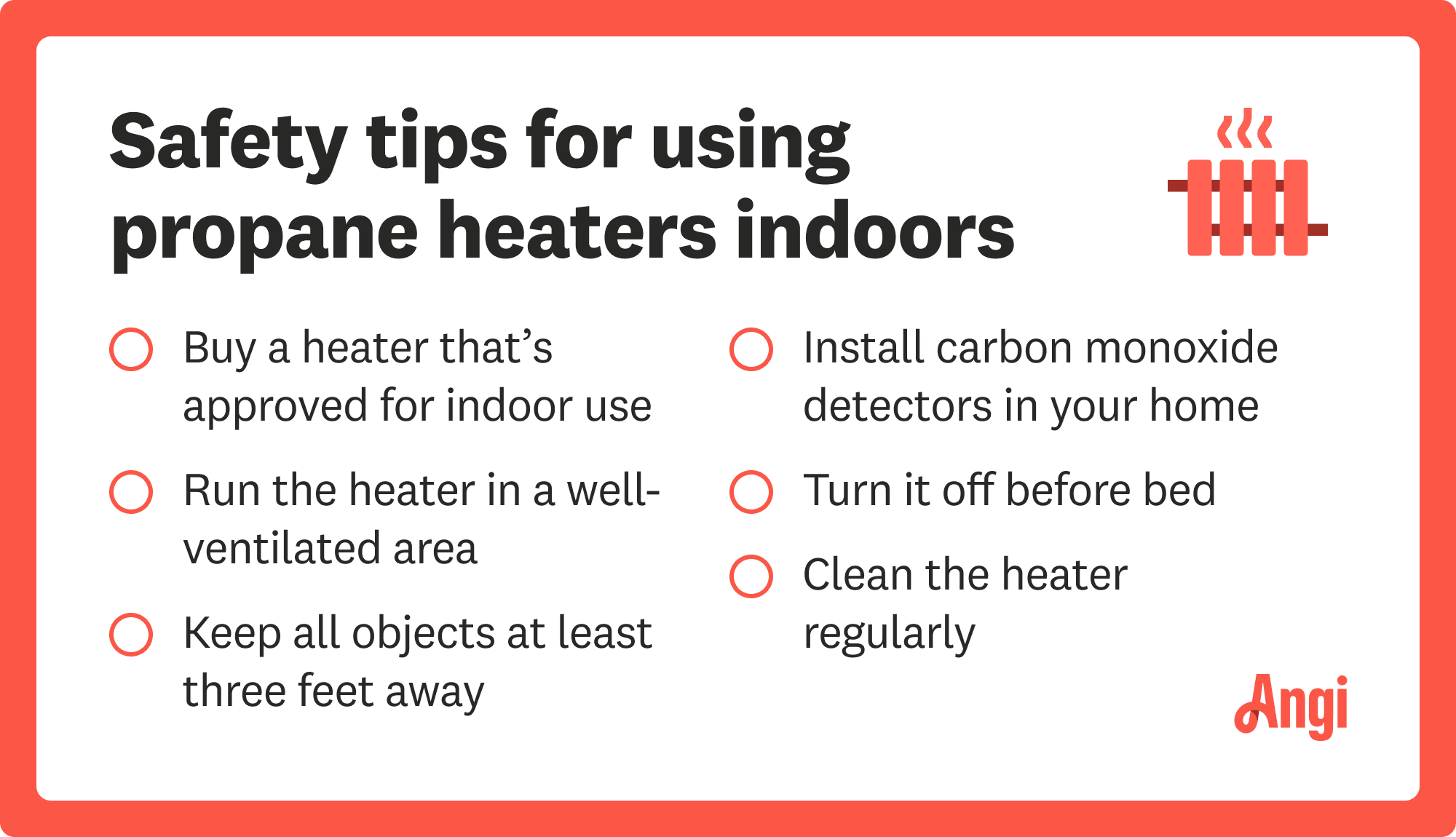
How to Use a Propane Heater Safely Indoors
Even with a certified indoor-safe model, you must follow best practices. Safety depends on both the heater and how you use it.
Ensure Proper Ventilation
Even the safest heater needs fresh air.
- Crack a window or door by at least 1 inch
- Allow airflow to replace consumed oxygen
- Use in rooms larger than 100 square feet per manufacturer guidelines
Ventilation reduces CO risk and prevents moisture buildup from combustion byproducts.
Install a Carbon Monoxide Detector
A UL-listed CO detector is non-negotiable.
- Place it within 10 feet of the heater
- Test monthly and replace every 5 to 7 years
- Never ignore alarms, even if the heater seems fine
A detector is your last line of defense if something goes wrong.
Verify Certification Before Use
Before lighting any propane heater indoors, read the label to confirm it says “Indoor Use.” Look for safety certifications from CSA, UL, or ANSI. Verify it has both an ODS and tip-over protection. When in doubt, do not use it.
Common Mistakes to Avoid
- Using a patio heater indoors, even with a fan or cover
- Running a heater while sleeping
- Using in small, sealed rooms like bathrooms, closets, or tents
- Ignoring annual maintenance on hoses and burners
Signs Your Heater Is Unsafe or Malfunctioning

Your heater should run quietly with a steady blue flame. Any deviation could signal danger.
Flame Color Changes
- Blue flame indicates clean, efficient combustion
- Yellow or orange flame indicates incomplete combustion and possible CO production
- Flickering or lifting flame indicates airflow issues or a clogged burner
A yellow flame is a red flag. Turn off the heater immediately and inspect.
Unusual Smells or Condensation
- Rotten egg smell may indicate a propane leak
- Musty or burning smell may signal overheating or dirty components
- Excessive moisture on walls or windows signals incomplete combustion or poor ventilation
If you notice any of these, stop using the heater and ventilate the area.
Warning Lights or Shutdowns
Modern heaters with sensors may flash lights or shut down automatically.
- Frequent shutdowns mean low oxygen, poor ventilation, or sensor issues
- Do not bypass safety features or block sensors
- Clean intake vents and reposition the unit if needed
Recommended Indoor-Safe Propane Heaters

Not all brands meet indoor safety standards. Stick with proven, certified models.
Mr. Heater Buddy Series
- Available in 4,000 to 18,000 BTU models
- Equipped with ODS and tip-over protection
- CSA-certified for indoor use
- Commonly used in tents, garages, and emergency shelters
Only the heater is indoor-safe, not the propane tank. Always use in well-ventilated areas and follow proper fuel storage guidelines.
Other Certified Options
- Desa International indoor propane heaters
- Heatstar radiant tube heaters with safety kits
- Suburban vent-free heaters for permanent installation
Always verify certification for your specific model and region before use.
What to Do in Case of CO Exposure
Carbon monoxide poisoning can be fatal. Know the signs and act fast.
Symptoms of CO Poisoning
- Headache
- Dizziness
- Nausea
- Confusion
- Shortness of breath
These symptoms mimic the flu but affect multiple people or pets at once.
Immediate Actions
- Turn off the heater
- Open windows and doors
- Evacuate the building
- Call 911 or emergency services
- Seek medical attention, even if symptoms improve
Do not re-enter until the area is cleared by professionals.
Long-Term Safety Tips
Safe heating is about consistent habits, not just one session.
Annual Maintenance
- Inspect hoses for cracks or leaks using a soapy water test
- Clean burner ports and reflectors
- Test safety sensors and the ignition system
A well-maintained heater runs cleaner and safer.
Storage Guidelines
- Store in a dry, well-ventilated area
- Disconnect and cap propane tanks
- Keep away from heat sources or direct sunlight
Never store a heater with a full tank attached.
Upgrade When Needed
Heaters older than 5 to 7 years may lack modern safety features. If yours does not have an ODS or tip-over switch, replace it. Technology has improved, so do not risk your safety on outdated gear.
Frequently Asked Questions About Propane Heater Indoor Safety
Can you use a propane heater indoors during a power outage?
Yes, but only if the heater is specifically certified for indoor use and equipped with a low oxygen sensor and tip-over protection. Always pair it with a working CO detector and ensure some ventilation.
What makes the Mr. Heater Buddy safe for indoor use?
The Mr. Heater Buddy includes a low oxygen sensor that shuts off the heater if oxygen drops below safe levels, plus tip-over protection that cuts gas flow if the unit tilts past 45 degrees. It is CSA-certified for indoor use.
Do infrared propane heaters produce carbon monoxide?
All propane heaters can produce CO if combustion is incomplete due to low oxygen. Infrared heaters without a low oxygen sensor pose a higher risk because they may continue burning in oxygen-depleted conditions.
How can I tell if my propane heater is indoor-safe?
Check the label for explicit “Indoor Use” language and certification marks from CSA, UL, or ANSI. Confirm the unit has both a low oxygen sensor and tip-over protection before using it inside.
What should I do if my CO detector goes off while using a propane heater?
Turn off the heater immediately, open windows and doors, evacuate everyone from the building, and call 911. Do not re-enter until emergency responders confirm it is safe.
Is it safe to sleep with a propane heater running indoors?
No. Always turn off any propane heater before sleeping, even if it is certified for indoor use. Unattended combustion always carries additional risk.
Key Takeaways for Propane Heater Indoor Safety
Propane heater indoor safety depends on technology, not assumption. Only use heaters with a low oxygen sensor, tip-over protection, and verified indoor certification. Always pair them with a working CO detector and maintain proper ventilation. Check your heater’s label and safety features today, and replace any unit older than 7 years or missing critical safeguards. Staying warm should never come at the cost of your safety.