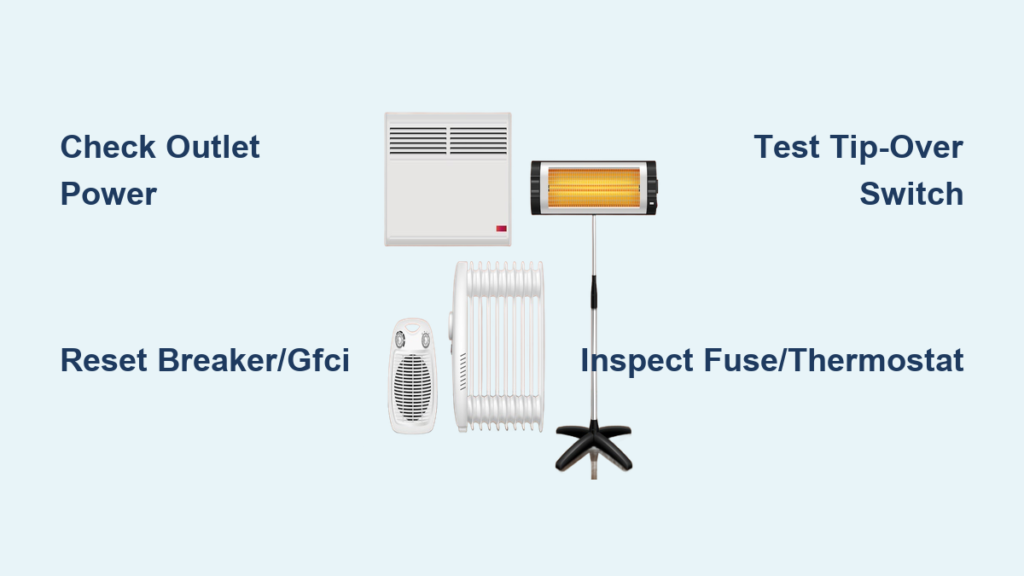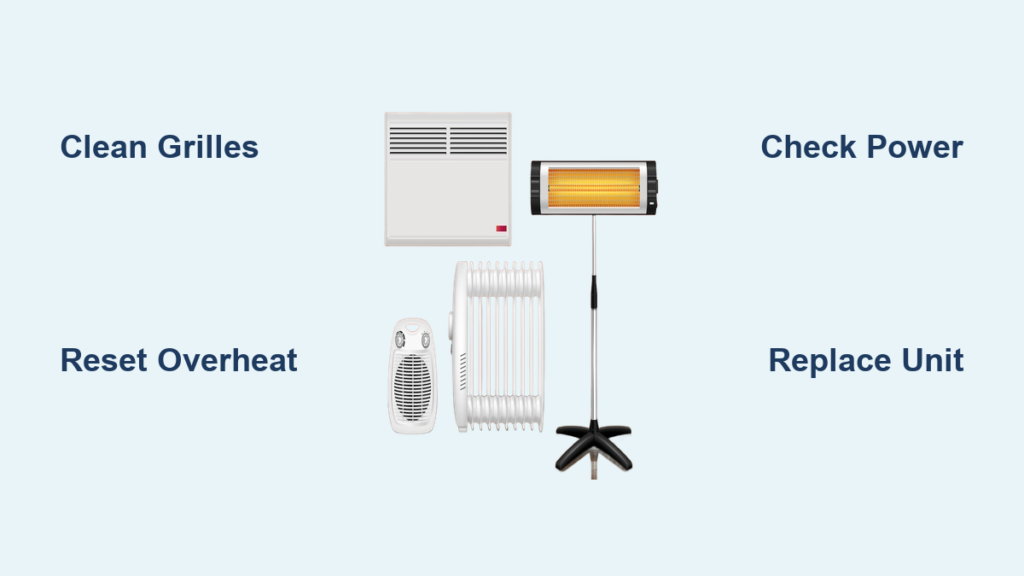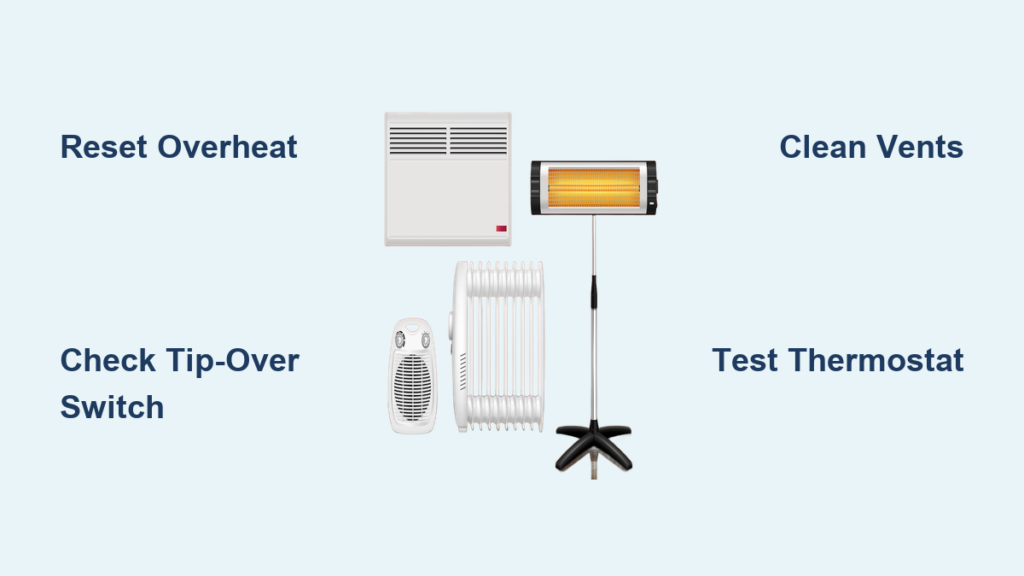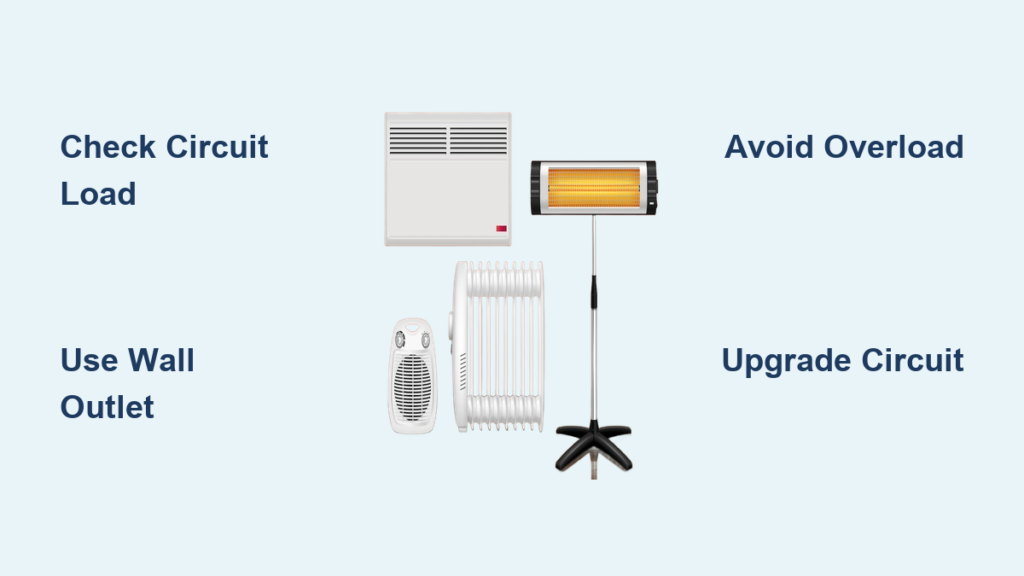

Is your portable heater not working the moment temperatures drop? You plug it in, expect warmth, and get nothing but cold air or silence. This frustrating scenario plays out in homes every winter, often right when reliable heat matters most. The good news is that most failures trace back to a handful of common causes you can check yourself. This guide walks you through every diagnostic step, from confirming your outlet works to testing internal components with a multimeter, so you can pinpoint the issue and decide whether to repair or replace.
Verify the Power Source First
Before assuming your heater is broken, rule out external electrical problems. Many “dead” units are simply not receiving power from the wall.
Test the Wall Outlet
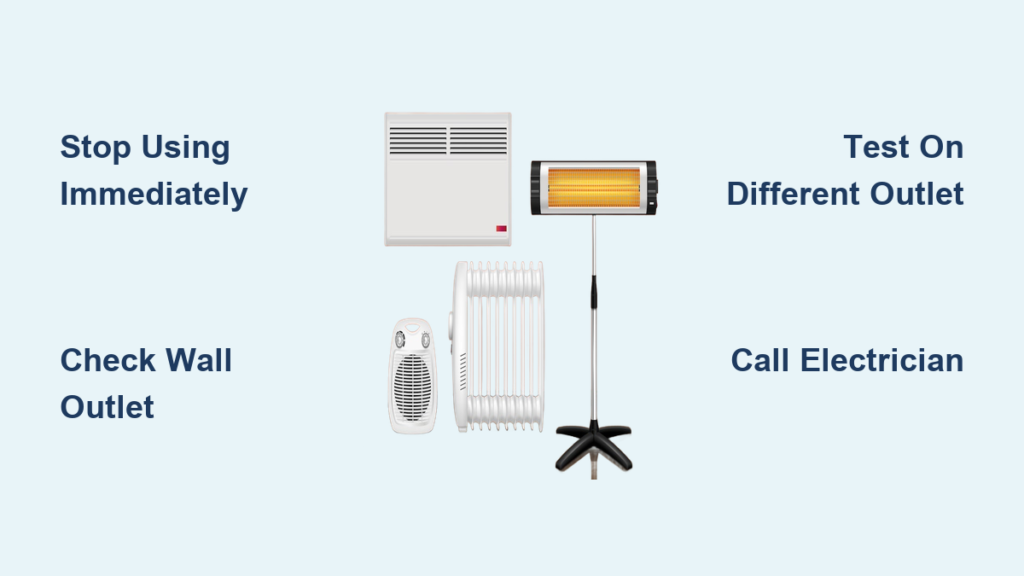
Plug a lamp or phone charger into the same outlet. If that device doesn’t power on, the problem is with your home’s wiring, not the heater. Try a different outlet before moving forward.
Bypass Power Strips and Extension Cords
Portable heaters draw 12 to 15 amps, which most power strips and extension cords cannot safely handle. These intermediaries often trip internal breakers or overheat. Always plug your heater directly into a wall outlet.
Check the Circuit Breaker
High-wattage heaters frequently trip breakers. Head to your electrical panel and look for any switch in the “off” position. Reset it, then retest the heater. If the breaker trips again immediately, stop and call an electrician. This signals a serious fault.
Inspect the Cord and Plug
Physical damage to the power cord is a leading cause of total failure and a major fire risk.
Look for Visible Damage
Examine the entire cord and plug head. Watch for fraying, exposed wires, discoloration, melting, or burn marks. Any of these signs means the unit is unsafe. Replace it immediately rather than attempting a repair.
Confirm a Secure Connection
Push the plug fully into the outlet. If it feels loose or falls out easily, the outlet itself may be worn. Have an electrician replace the outlet before using the heater again.
Diagnose No Power and No Lights
When your portable heater shows zero signs of life, the issue is a complete power interruption somewhere between the outlet and the internal circuitry.
Rule Out Overheat Protection
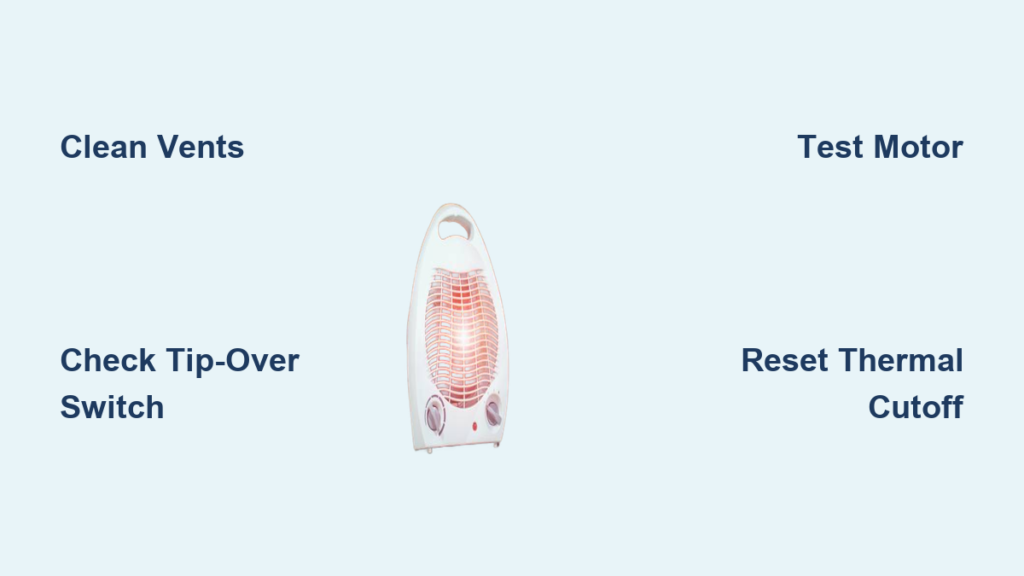
Safety cutoffs can engage even if the unit never powered on, especially after storage or transport. Unplug the heater and wait 30 to 60 minutes for internal components to cool. Plug it back in and try again. If it works now, the thermal cutoff was triggered and has reset.
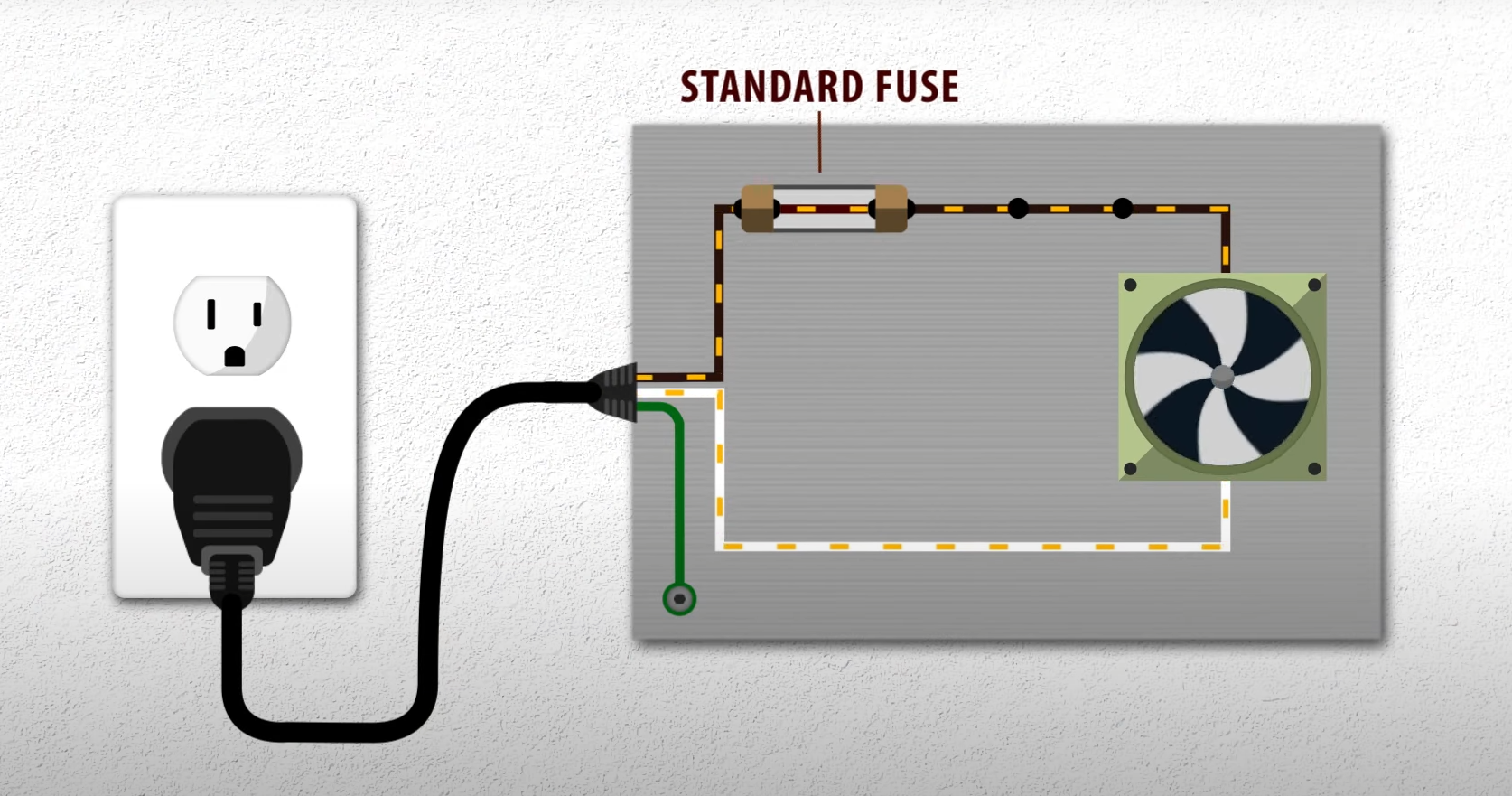
Check for Internal Fuse Failure
Most heaters contain an internal thermal fuse that blows during overheating or power surges, causing total power loss. Testing requires opening the unit while unplugged and using a multimeter to check continuity across the fuse. If the reading shows open, replace the fuse, but only after fixing the root cause such as blocked vents. Never bypass a fuse, as this disables critical safety protection.
Heater Runs But Produces No Heat
If the fan spins or indicator lights glow but no warmth comes out, power reaches the controls but never reaches the heating element.
Listen for the Thermostat Click
Turn the thermostat to its highest setting and listen closely. A distinct click or faint hum means the relay is engaging. No click suggests a failed thermostat or relay that cannot close the circuit.
Inspect the Heating Element
For radiant or fan-forced models, unplug the unit and remove the front grill. Look at the coil or ceramic element for visible breaks, dark spots, or sagging wires. A burned-out element must be replaced, though parts may not be available for older units.
Test Element Continuity
Set a multimeter to ohms and touch the probes to both terminals of the heating element. A reading of “OL” (infinite resistance) confirms the element is open and dead. Replace it if a compatible part is available.
Sudden Shutdown or Intermittent Operation
Heaters that run briefly then cut out are usually tripping built-in safety mechanisms.
Cool Down and Reset
Overheat protection activates when air intake or exhaust becomes blocked. Unplug the unit, let it cool for 30 to 60 minutes, then clear all vents of dust, furniture, or curtains. Plug it back in and test. If it works again, the shutdown was a safety response, not a failure.
Clear Clogged Airflow
Dust buildup inside the unit traps heat and triggers thermal cutoffs repeatedly. Use compressed air to clean internal vents and fan blades. Avoid water or vacuum cleaners that can damage components. Clean monthly during heavy use to prevent recurrence.
Identify Faulty Internal Components
When basic checks fail, specific parts are likely at fault.
Faulty Thermostat
A malfunctioning thermostat won’t send power to the heating element. Symptoms include no heat, no audible click, and sometimes a fan that runs without warmth. Advanced users can bypass the thermostat temporarily to confirm the diagnosis. Replace with an exact OEM match if possible.
Blown Thermal Cutoff
Unlike resettable sensors, some thermal fuses are single-use. They sit near the heating element or motor. Test with a multimeter for continuity. If blown, replace with the correct temperature-rated fuse, but first fix the underlying cause such as poor ventilation. Otherwise, the new fuse will blow too.
Circuit Board Damage
Modern digital heaters depend on control boards for operation. Symptoms include erratic behavior, display errors, or partial function. Causes range from power surges to moisture exposure. Repairs are rarely cost-effective because replacement boards are scarce and expensive.
Decide Whether to Repair or Replace
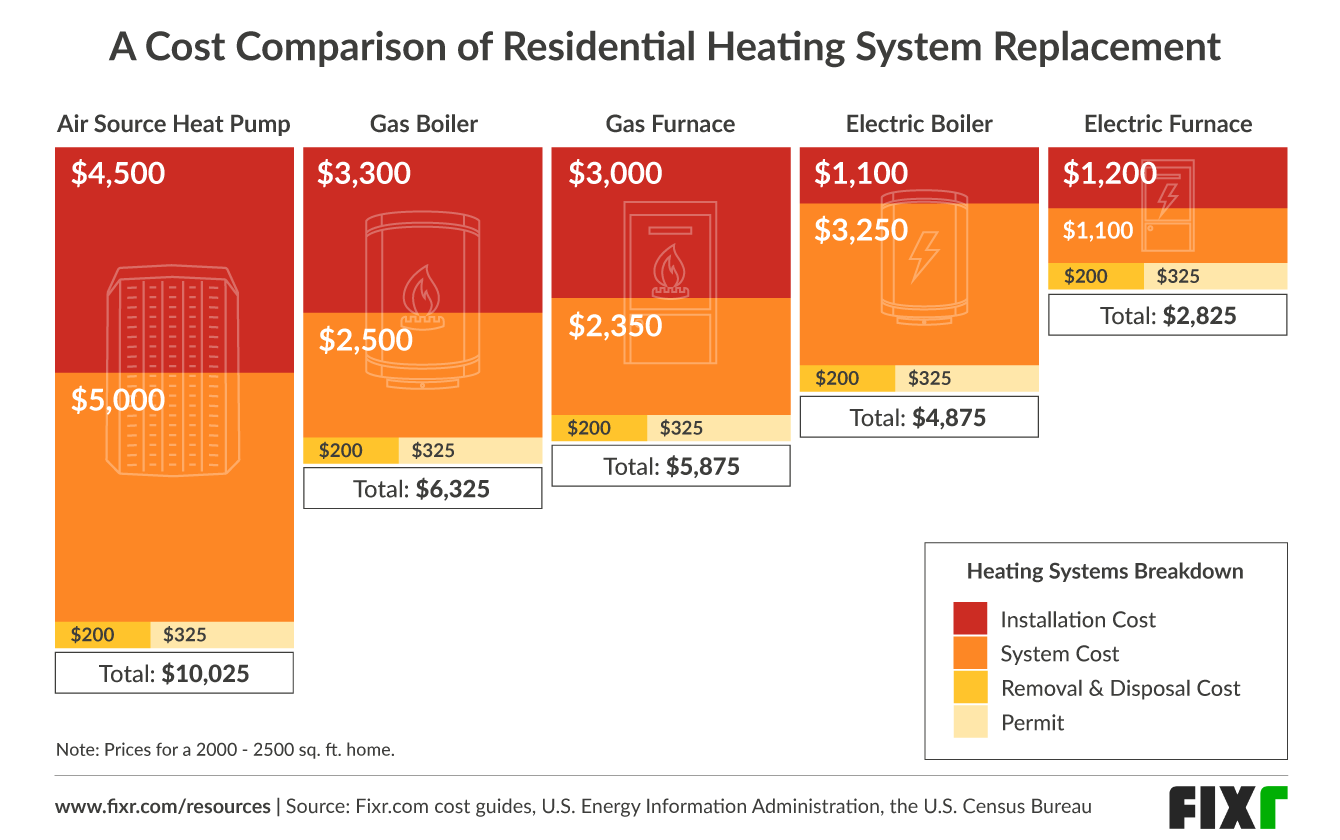
Most portable heater repairs don’t make financial sense.
Age Determines Viability
Units over 10 to 15 years old are nearing end-of-life. Heating elements and thermostats degrade with age, and replacement parts are often discontinued. Labor costs alone can exceed the price of a new unit.
Compare Repair Costs to New Prices
Repairing a heating element typically runs $60 to $100 plus labor, while a new heater costs $50 to $120. Thermostat repairs run $40 to $80 against $60 to $100 for replacement. Even simple fuse replacements costing $10 to $20 may not justify the effort when a new unit costs $50 or more.
When Repair Makes Sense
Only consider repair if the unit is under warranty, you have technical skills and tools, OEM parts are available and affordable, or it’s a high-end specialty model. For standard consumer units, replacement is the smarter choice.
Choose a Reliable Replacement Heater
Not all portable heaters perform equally. Pick one built to last.
Oil-Filled Radiators Offer the Best Reliability
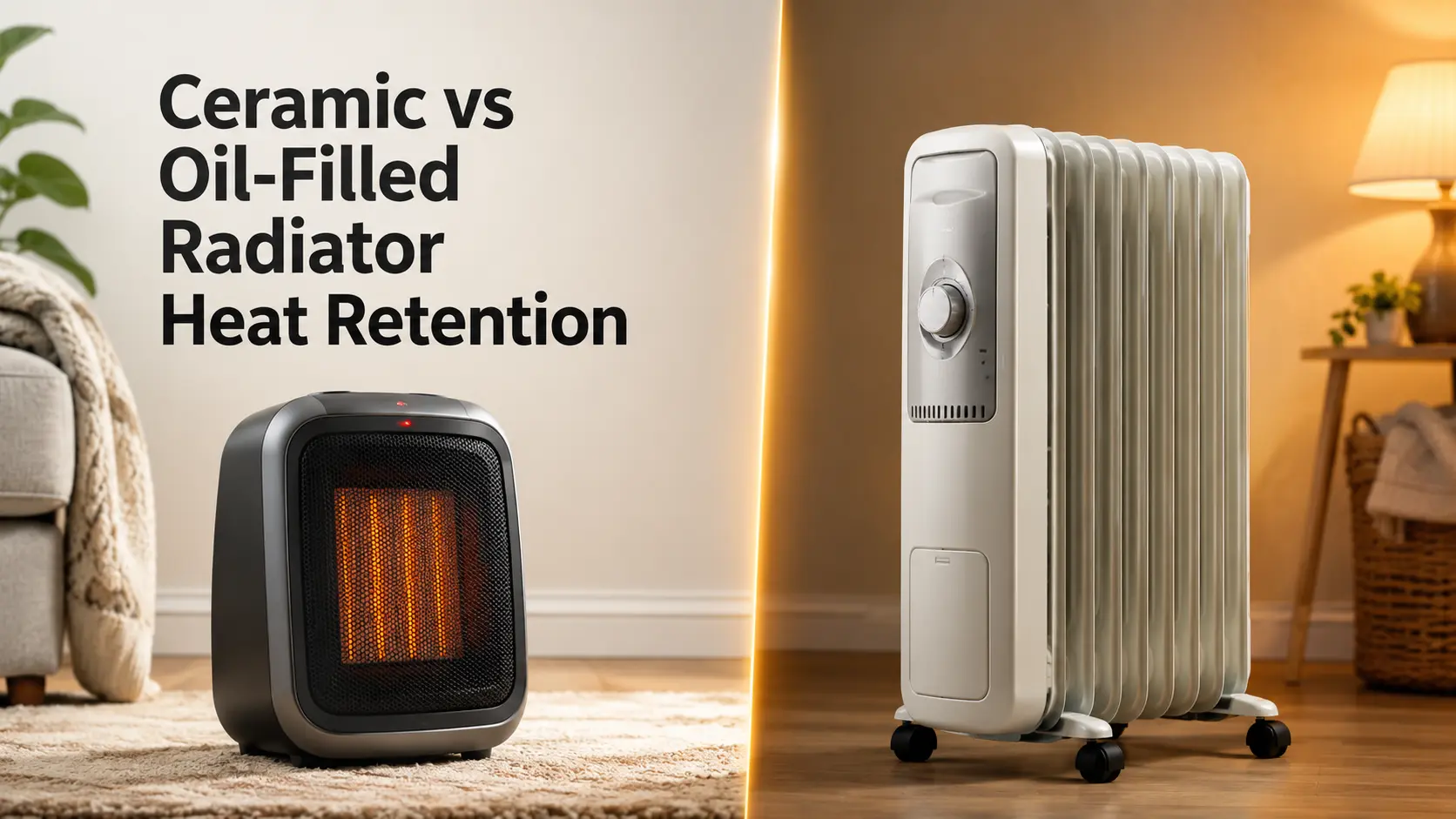
Technicians consistently recommend oil-filled radiators for their silent operation, even heat distribution, and ability to retain warmth after shutdown. They work well in bedrooms and living rooms and handle 24/7 use. Look for models with tip-over and overheat protection.
Vet Modern Electric Models Carefully
New fan-forced or ceramic heaters heat up quickly but vary widely in quality. Check reviews for complaints about “no heat on high” failures. Avoid no-name brands with poor safety ratings. Look for certifications from UL, ETL, or CSA to confirm the unit meets safety standards.
Follow Critical Safety Rules
A malfunctioning heater can cause fires or electrocution. Take these warnings seriously.
Stop Using Damaged Units Immediately
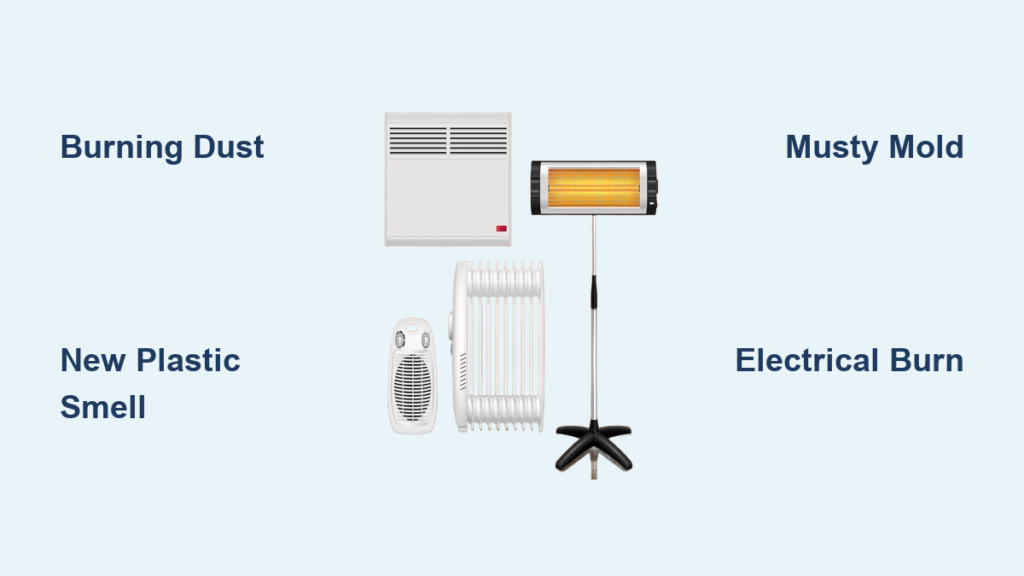
Any sign of a melted plug, frayed cord, burnt smell, or cracked housing means the unit is a fire hazard. Discontinue use right away and replace it.
Never Use Extension Cords
Space heaters draw too much current for most extension cords, which can overheat and ignite. Always plug directly into a wall outlet, preferably on a dedicated circuit.
Leave Internal Repairs to Professionals
Internal components carry lethal voltage and high temperatures. Opening the case may void safety certifications, and miswiring can bypass interlocks that prevent fires. Unless you’re trained, let a qualified technician handle internal fixes.
Prevent Future Heater Failures
Extend your next heater’s lifespan with simple habits.
Clean Vents Monthly
Dust buildup causes overheating and premature shutdowns. Unplug and cool the unit, then use a soft brush or compressed air to clear front, back, and bottom intakes.
Store the Unit Properly
After each season, let the heater cool completely. Store it in a dry, dust-free location and wrap the cord loosely without kinking it.
Use a Wall-Mounted Surge Protector
Plugging into a wall-mounted surge protector guards against voltage spikes that can blow internal fuses. Never use a power strip for this purpose.
Frequently Asked Questions About Portable Heater Problems
Why does my portable heater not working show no lights at all?
A complete lack of lights and sound usually means a blown internal thermal fuse or a tripped safety cutoff. Unplug the heater, wait 30 to 60 minutes for it to cool, then try again. If it still shows no signs of life, the internal fuse has likely failed and needs professional replacement.
Can I use an extension cord with my portable heater?
No. Extension cords and power strips cannot safely handle the 12 to 15 amps that portable heaters draw. Using one risks overheating, melting, and fire. Always plug your heater directly into a wall outlet.
How long should a portable heater last?
Quality portable heaters typically last 10 to 15 years before major components like heating elements wear out. If your unit is in this age range and failing, replacement is usually more economical than repair.
Why does my heater shut off after running for a few minutes?
Sudden shutdowns usually indicate overheat protection engaging due to blocked vents or internal dust buildup. Unplug the heater, clear all air pathways, let it cool for 30 to 60 minutes, then restart. If the problem persists, the thermal cutoff may be defective.
Is it worth repairing an old portable heater?
In most cases, no. Repair costs often exceed the price of a new unit, and parts for older models are frequently discontinued. Repair only makes sense if the unit is under warranty, still relatively new, or a high-end model with available OEM parts.
What type of replacement heater should I buy?
Oil-filled radiators are the most reliable option, offering silent operation, even heat, and strong durability. If you prefer faster heating, choose a ceramic or fan-forced model with UL, ETL, or CSA certification and positive reviews regarding heat output.
Key Takeaways for Fixing a Portable Heater That Stopped Working
Start your diagnosis with the simplest checks: confirm the outlet works, bypass any extension cords, and inspect the breaker panel. Then examine the cord and plug for damage before moving to internal components like fuses, thermostats, and heating elements. If your heater is over 10 years old or parts are unavailable, replace it with an oil-filled radiator or a certified electric model rather than investing in repairs. Above all, prioritize safety by never using a damaged unit, avoiding extension cords, and leaving internal fixes to qualified technicians. With the right approach, you can restore warmth to your home quickly or choose a replacement that will keep you comfortable for years to come.