
Your car heater is blowing cold air right when you need it most. You wait for the engine to warm up, but nothing changes, and the cabin stays freezing. The good news is that most heater problems come from a handful of common causes you can diagnose and fix at home. Knowing how to repair car heater issues saves you hundreds in shop fees and gets you back to a warm ride fast. Below, you will learn how to check coolant, test the thermostat, flush the heater core, and handle other common failures step by step.
Check Coolant Level Before Anything Else

Low coolant is the number one reason a car heater stops working. The heater core relies on hot engine coolant to warm the air entering your cabin, so even a small drop in level can kill the heat.
Locate the Coolant Reservoir
Open the hood and look for a translucent plastic tank near the radiator. The coolant level should sit between the “min” and “max” markings on the side. Never remove the radiator cap when the engine is hot, because pressurized steam can cause severe burns.
Refill With the Correct Coolant Mix
If the level is low, top it off with a 50/50 mix of antifreeze and distilled water. Check your owner’s manual for the correct type, such as OAT, HOAT, or IAT, since mixing types can cause corrosion. After refilling, run the engine with the heater set to high to bleed trapped air from the system.
Watch for Coolant Leaks
Inspect hoses, the radiator, water pump, and heater core for visible leaks. A sweet smell inside the car or damp carpet on the passenger side often points to a leaking heater core inside the dashboard.
Test the Thermostat for Proper Operation
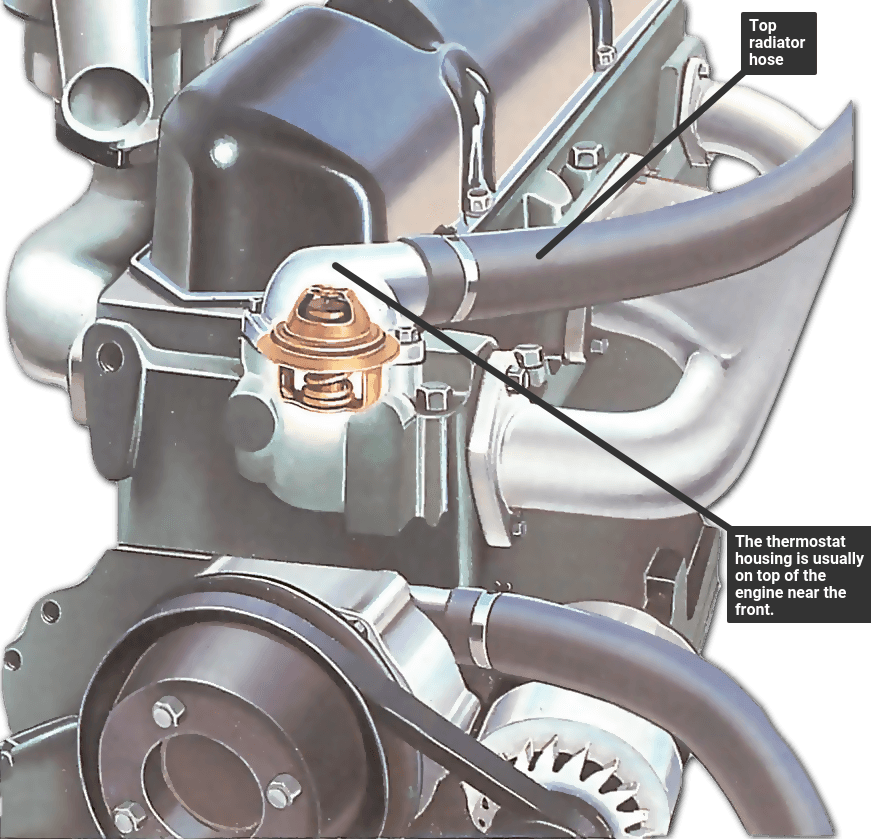
A thermostat stuck in the open position prevents the engine from reaching operating temperature. No hot engine means no hot air from the vents.
Confirm the Engine Reaches Operating Temperature
Start the engine and let it idle for 10 to 15 minutes. Watch the dashboard temperature gauge. If it stays in the cold range, the thermostat is likely stuck open and needs replacement.
Perform a Radiator Hose Touch Test
After the engine warms up, carefully touch the upper radiator hose. It should feel hot as coolant flows through. If it stays cool while the engine warms, the thermostat is not opening.
Replace a Stuck Thermostat
- Drain coolant until it sits below the thermostat housing.
- Unbolt the housing, usually located where the upper radiator hose meets the engine.
- Remove the old thermostat and match it to the replacement.
- Install the new thermostat with a fresh gasket.
- Reassemble the housing and refill the cooling system.
- Run the engine with the heater on to bleed air pockets.
Inspect the Heater Control Valve

Some vehicles use a control valve to regulate hot coolant flow into the heater core. When this valve fails, coolant never reaches the core.
Find the Valve Along the Heater Hoses
Follow the heater hoses from the firewall. The valve is usually mounted in line with one of these hoses and may be cable-operated, vacuum-controlled, or electric.
Test Whether the Valve Opens
With the engine running and the heater on, watch or feel the valve to see if it opens. For vacuum valves, check for cracked or disconnected vacuum lines. For electric valves, use a multimeter to confirm power is reaching the unit.
Replace or Temporarily Bypass a Faulty Valve
If the valve is stuck closed, replace it. In an emergency, you can bypass the valve by connecting the two hoses with a straight coupler, but only use this as a short-term fix.
Flush a Clogged Heater Core
Debris and rust can clog the small passages inside the heater core, blocking hot coolant and killing cabin heat.
Identify the Inlet and Outlet Hoses
Locate the two smaller hoses entering the firewall. These connect directly to the heater core and are smaller in diameter than radiator hoses.
Disconnect and Flush the Core
- Clamp both hoses and disconnect them from the core.
- Attach a garden hose to one outlet.
- Flush water through until it runs clear.
- Reverse the flow and flush again to clear stubborn debris.
Reconnect the Hoses and Refill
Reattach both hoses, remove the clamps, and refill the cooling system. Run the engine with the heater on high to purge any trapped air.
Check the Blend Door and Actuator

The blend door controls whether air passes over the heater core or bypasses it. When the door or its actuator fails, you get cold air no matter the temperature setting.
Listen for Actuator Sounds
Turn the temperature knob from cold to hot while the engine runs. You should hear a faint motor or clicking sound behind the dash. Silence often means a failed actuator.
Locate the Actuator Under the Dash
Check your service manual for the exact location. Most actuators sit on the HVAC housing beneath the dashboard, and some require partial dash disassembly to reach.
Replace a Failed Actuator
- Disconnect the battery for safety.
- Remove any panels needed to access the actuator.
- Unplug the electrical connector and unscrew the old unit.
- Install the new actuator and test before reassembling the dash.
Pro Tip: Manually moving the blend door with a screwdriver can confirm whether the door itself is stuck or the actuator has failed.
Examine the Heater Hoses for Flow Problems

If the hoses carrying coolant to the heater core are blocked or collapsed, hot coolant never reaches the cabin.
Feel Both Hoses When the Engine Is Hot
With the engine at operating temperature and the heater on, both hoses should feel hot. If one stays cool, coolant flow is restricted somewhere in the system.
Check for Kinks, Bulges, or Collapse
Run your hands along the full length of each hose. Look for soft spots, cracks, bulges, or internal collapse near the hose clamps.
Replace Any Damaged Hoses
Swap out cracked or soft hoses with heater-rated replacements. Secure them with proper clamps to prevent future leaks.
Bleed Trapped Air from the Cooling System
Air pockets can block coolant flow even when the system is full. This often happens after a coolant refill or a leak repair.
Use the Bleeder Valve if Your Car Has One
Some vehicles include a bleeder screw on the thermostat housing or heater hose. Open it while refilling the system and close it once coolant (not air) flows out.
Park on an Incline
Angle the front of the vehicle slightly uphill. This helps air bubbles rise toward the radiator and reservoir instead of getting trapped in the heater core.
Run the Engine With the Heater On
With the radiator cap off (only when cold), start the engine and set the heater to high with the blower on max. Gently squeeze the upper radiator hose to push air bubbles out.
Prevent Future Car Heater Problems
A little maintenance goes a long way toward keeping your heater reliable year after year.
Flush the Cooling System Every 1 to 2 Years
Rust and scale build up over time, especially in older vehicles. A full system flush every 12 to 24 months keeps coolant flowing freely.
Replace the Thermostat Proactively
Swap the thermostat every 60,000 to 100,000 miles, even if it still seems to work. A new thermostat is cheap insurance against being stranded with no heat.
Inspect Hoses and Clamps Twice a Year
Check before winter and before summer. Replace any hoses that feel soft, cracked, or swollen, and tighten loose clamps.
Stick With the Correct Coolant Type
Never mix coolant types. Using the wrong formula can cause sludge, corrosion, and clogged passages inside the heater core.
Frequently Asked Questions About Car Heater Repair
Why is my car heater blowing cold air?
The most common causes are low coolant, a stuck-open thermostat, a clogged heater core, or a failed blend door actuator. Start by checking the coolant level, then test the thermostat and heater hoses.
Can I repair a car heater myself?
Yes, most heater repairs are beginner-friendly. Checking coolant, replacing a thermostat, flushing the heater core, and swapping hoses all require only basic tools. More complex jobs like replacing a heater core or blend door actuator may require dash removal.
How much does it cost to repair a car heater?
Costs vary by problem. A thermostat replacement runs about $20 to $50 for parts. A heater core flush costs under $20 in supplies. Full heater core replacement can run $500 to $1,000 at a shop due to labor.
How long does it take to fix a car heater?
Simple fixes like topping off coolant take 10 minutes. Replacing a thermostat takes about 1 hour. Flushing a heater core takes 1 to 2 hours. Full heater core or actuator replacement can take 3 to 6 hours.
What does a bad heater core sound like?
A failing heater core usually does not make noise, but a clogged core can cause gurgling or bubbling sounds from the dashboard. A leaking core often produces a sweet coolant smell and wet carpet on the passenger side.
Is it safe to drive with a broken car heater?
In mild weather, yes. In cold climates, a broken heater can lead to fogged windows and reduced visibility, which is a safety risk. Address the problem before winter driving whenever possible.
Key Takeaways for Repairing Your Car Heater
Start with the simplest checks first: coolant level, thermostat operation, and heater hose condition. These three areas solve the majority of car heater problems without expensive parts or tools. Move on to flushing the heater core or replacing the blend door actuator only if the basics check out. Regular coolant flushes and hose inspections prevent most heater failures before they happen. If you have worked through these steps and still have no heat, the issue may be a failing heater core inside the dashboard, which is best handled by a professional mechanic.