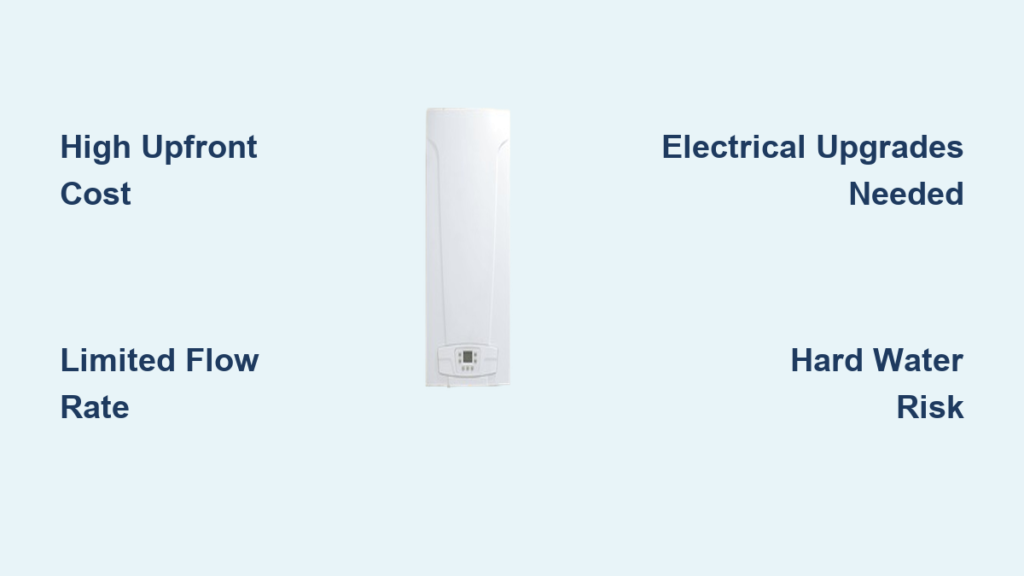
You’re standing in a cold shower because your traditional water heater ran out of hot water—again. It’s moments like this that make homeowners consider switching to an electric tankless water heater. These compact units heat water on demand, eliminating the risk of running out. But before you make the switch, it’s crucial to weigh the electric tankless water heater pros and cons. While they offer endless hot water and long-term savings, they also come with limitations like high upfront costs and flow rate constraints. This guide breaks down everything you need to know—from efficiency and space savings to electrical requirements and climate considerations—so you can decide if going tankless is the right move for your home.
Energy Efficiency Explained
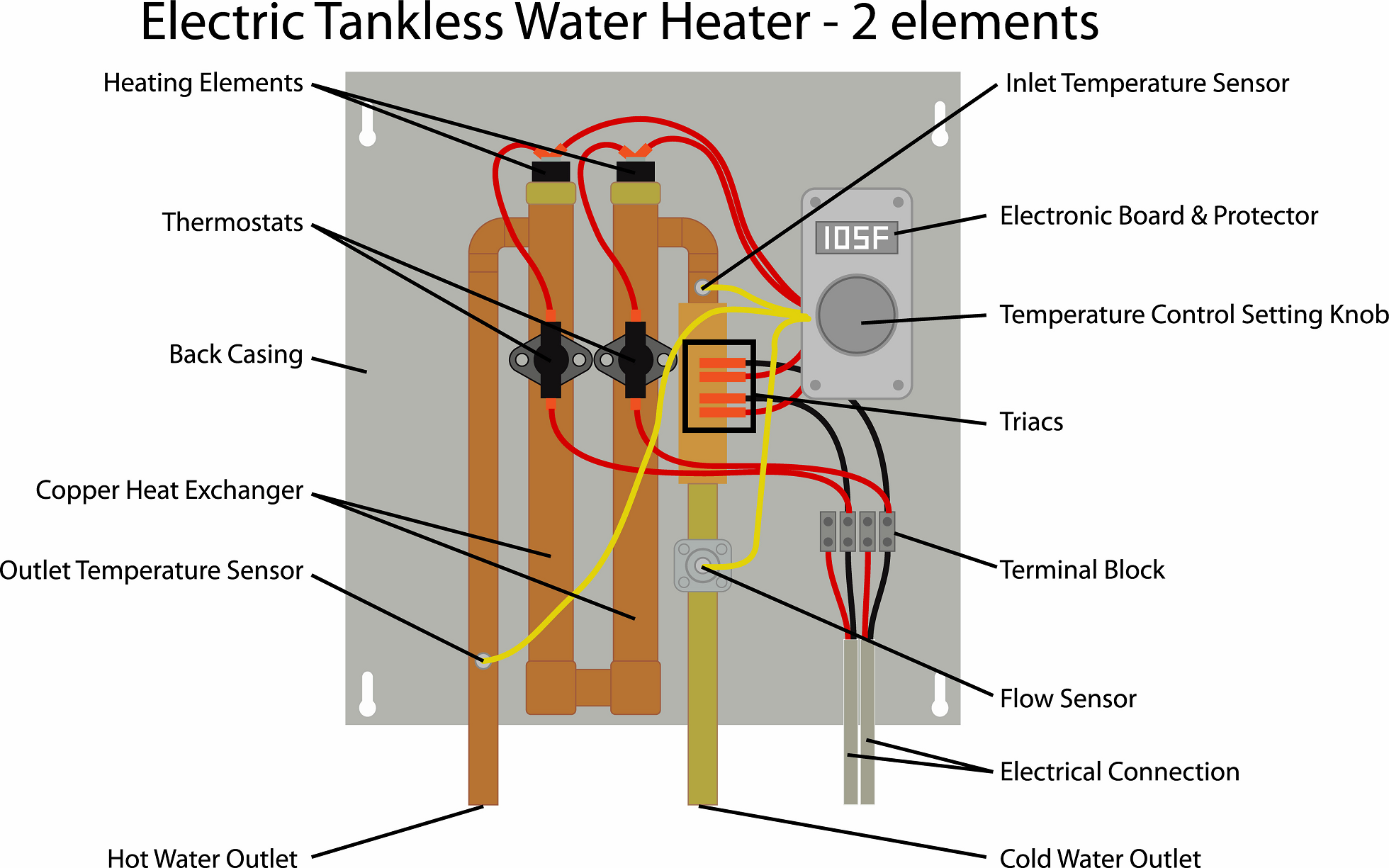
Electric tankless water heaters outperform traditional storage tanks in energy use by only heating water when needed. No standby heat loss means no wasted energy keeping gallons of water hot 24/7. This on-demand operation typically results in 20–30% lower energy bills compared to standard electric tanks.
How On-Demand Heating Saves Power
When you turn on a hot tap, cold water flows into the unit and passes over electric heating elements. These activate instantly, raising the water temperature within seconds. Once the tap closes, the system shuts off—no lingering power draw. This precise control eliminates the constant energy drain of reheating a tank.
Electric vs. Gas Efficiency Comparison
While both electric and gas tankless models are more efficient than storage tanks, electric units often edge out gas models in efficiency ratings due to fewer combustion losses. However, electricity costs vary by region, so savings depend on local utility rates. In areas with low-cost power, electric tankless heaters deliver consistent monthly savings.
Space-Saving Wall-Mounted Design
One of the most noticeable benefits of an electric tankless water heater is its compact size. Unlike bulky tanks that occupy entire closets or basements, these units mount directly on walls and take up minimal space.
Installation Flexibility Indoors
Because electric tankless heaters don’t require venting, they can be installed almost anywhere—under sinks, in utility rooms, or even inside cabinets. This flexibility allows homeowners to reclaim valuable floor space while placing the unit close to high-use fixtures for faster hot water delivery.
No Venting Required
Unlike gas models, electric tankless units produce no exhaust gases, so there’s no need for flue pipes or roof penetrations. This simplifies installation and reduces material and labor costs. The absence of venting also means fewer potential leak points and improved indoor air quality.
Limited Simultaneous Water Flow

While electric tankless heaters provide endless hot water in theory, their real-world performance depends on flow rate capacity. Most electric models deliver 2–5 gallons per minute (GPM), which may not support multiple high-demand appliances at once.
What Happens During Peak Usage?
If someone is showering while the dishwasher runs and laundry is being done, the demand can exceed the unit’s heating capacity. This leads to lukewarm or cold water at one or more outlets. Proper sizing is critical—undersized units struggle during peak usage times.
Single vs. Whole-House Units
Smaller point-of-use electric tankless heaters work well for individual fixtures like bathroom sinks or kitchen faucets. For whole-house coverage, larger units or multiple installations may be necessary. Homes with three or more bathrooms often require a hybrid setup to avoid flow conflicts.
High Upfront Installation Costs
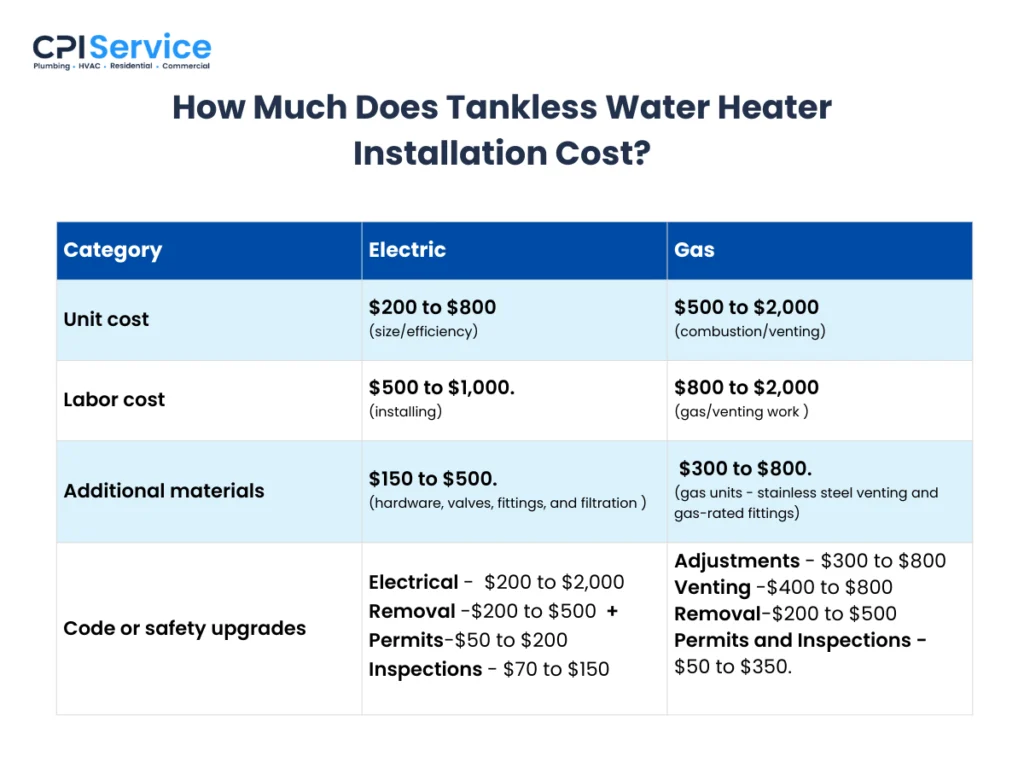
The initial cost of an electric tankless water heater is significantly higher than a traditional tank model. Prices range from $500 to $1,500 for the unit alone, with total installation costs often exceeding $2,000.
Electrical System Upgrades Needed
Most electric tankless heaters require a dedicated 240-volt circuit and double-pole breaker. Older homes may need electrical panel upgrades to handle the additional load, adding $500–$1,500 to the project. Licensed electricians are required for safe installation due to high amperage demands.
Labor and Retrofit Expenses
Plumbing modifications, wall mounting, and code compliance checks increase labor time. If your home lacks sufficient electrical capacity, rewiring or panel replacement becomes unavoidable. These hidden costs can surprise homeowners who only budget for the unit itself.
Longer Lifespan Than Traditional Heaters
Electric tankless water heaters last 15–20 years—nearly twice as long as standard tank models. This extended durability stems from fewer moving parts and no risk of tank corrosion.
Reduced Maintenance Over Time
With no storage tank to drain or rust, maintenance focuses on periodic descaling to remove mineral buildup. Units in hard water areas benefit from annual flushing with vinegar or descaling solution to preserve efficiency.
Anti-Scaling Technology Benefits
Some modern electric tankless models include built-in anti-scaling features like self-cleaning modes or magnetic water treatment. These reduce limescale accumulation, extending component life and maintaining consistent performance over time.
Climate Impacts Performance
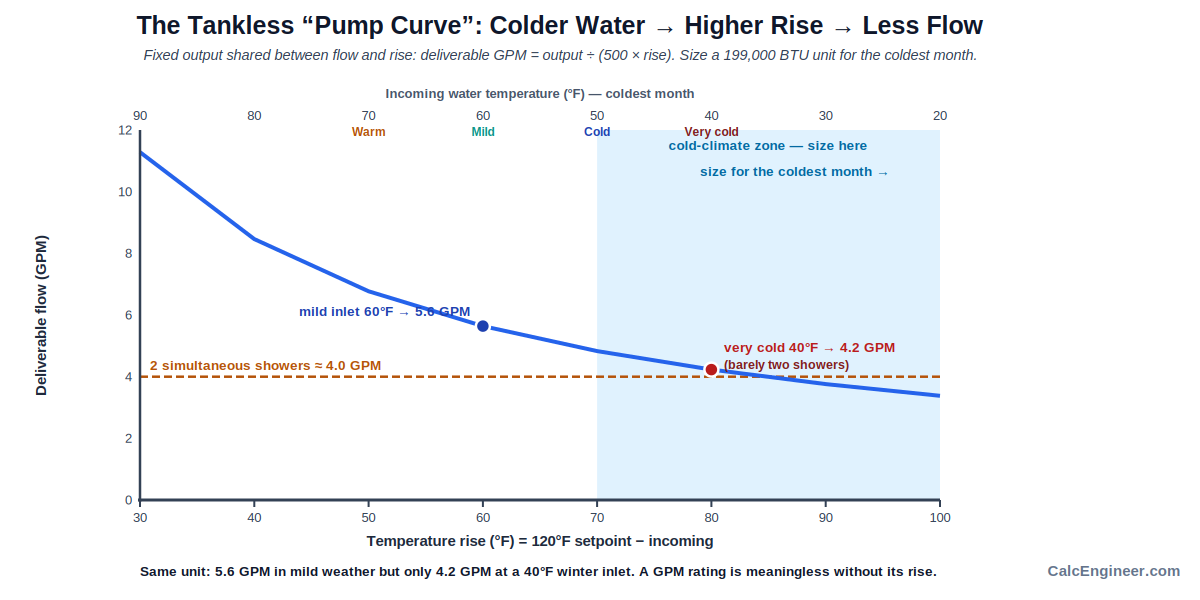
Incoming water temperature affects how hard an electric tankless heater must work. In colder climates, groundwater can be as low as 40°F, requiring more energy to reach standard shower temperatures of 105°F.
Higher Kilowatt Demand in Cold Areas
To compensate for cold inlet water, units in northern regions often need higher kilowatt ratings (e.g., 27–36 kW). Such models demand robust electrical systems and may exceed the capacity of older homes without service upgrades.
Sizing Based on Geographic Location
Manufacturers provide flow rate charts based on temperature rise. For example, a 36 kW unit might deliver 5 GPM with a 40°F rise but only 2.5 GPM with a 70°F rise. Accurate sizing requires knowing your area’s average groundwater temperature to ensure adequate output.
No Risk of Tank Leaks or Flooding
Traditional water heaters pose a constant risk of leaking or rupturing as tanks corrode over time. Electric tankless units eliminate this danger entirely—there’s no tank to fail.
Avoid Costly Water Damage
A leaking storage tank can flood basements, destroy flooring, and lead to mold growth. Repairing water damage often costs thousands. With no stored water, tankless systems prevent such disasters, offering peace of mind.
Ideal for Upper-Floor Installations
Because there’s no risk of overflow, electric tankless heaters can safely be installed on upper floors, in attics, or near sensitive areas like living rooms. This opens up installation options unavailable to traditional tanks.
Requires Water Quality Management
Hard water shortens the lifespan of electric tankless heaters by causing mineral buildup inside the heat exchanger. Over time, scale reduces efficiency, restricts flow, and can lead to premature failure.
Need for Water Softeners
Homes with hard water should install a whole-house water softener to protect the unit. Softened water prevents limescale, ensuring optimal performance and longevity. Without treatment, descaling may be needed every 6–12 months.
DIY Descaling Procedure
Regular maintenance involves connecting a recirculation pump to flush the system with a descaling solution. The process takes about 45 minutes and should be done annually—or more often in extreme hard water conditions. Skipping this step risks costly repairs.
Instant Hot Water With Delayed Delivery
While electric tankless heaters produce hot water instantly, delivery time depends on pipe length. If the unit is far from the faucet, you’ll still wait for hot water to travel through cold pipes.
Recirculation Pump Solutions
To eliminate wait times, some homeowners install recirculation pumps. These keep hot water circulating in the pipes, providing near-instant access. However, this convenience comes at the cost of slightly higher energy use.
Point-of-Use Units Eliminate Lag
Installing small electric tankless heaters near remote fixtures—like a guest bathroom or kitchen island—ensures immediate hot water without long pipe runs. This targeted approach improves efficiency and user satisfaction.
Ideal for Specific Home Setups
Not all homes benefit equally from electric tankless systems. The best candidates have modern electrical infrastructure, moderate hot water demand, and space constraints.
Best Applications for Tankless
- Small to medium homes with 1–2 bathrooms
- Accessory dwelling units (ADUs) or tiny homes
- Reno projects where space is limited
- Warm climate regions with milder groundwater
These setups align well with the strengths of electric tankless technology.
When to Consider Alternatives
Large families, homes with simultaneous high-demand usage, or properties with outdated electrical panels may find traditional tanks or gas-powered tankless models more practical. Retrofitting challenges can outweigh benefits in older homes.
Frequently Asked Questions About Electric Tankless Water Heaters
What are the negatives of an electric tankless water heater?
Electric tankless water heaters have higher upfront installation costs and may require electrical upgrades before installation. They have limited simultaneous hot water capacity, typically 2–5 GPM, so running multiple appliances at once may exceed the unit’s flow rate. Electric models require dedicated circuits that might need rewiring, and colder climates require more powerful units with higher energy draws.
Why avoid an electric tankless water heater?
You may want to avoid an electric tankless water heater if your home has limited electrical capacity, as installation could require expensive panel upgrades. Higher initial costs and potential electrical system reconfigurations make installation significantly more expensive than traditional tanks. If you frequently use multiple hot water sources simultaneously, these units cannot heat water faster than their capacity allows.
Do plumbers recommend electric tankless water heaters?
Professional plumbers typically recommend electric tankless water heaters for homes with appropriate usage patterns and adequate electrical infrastructure. These units work well for households that use hot water consistently throughout the day rather than all at once, and for homes where space is limited. Plumbers consider household size, simultaneous usage patterns, existing electrical capacity, climate, and budget when making recommendations.
Is it worth switching to an electric tankless water heater?
Switching to an electric tankless water heater is worth it if you value continuous hot water, energy savings, and space efficiency despite higher upfront costs. Electric tankless units last 15–20 years compared to 10 years for traditional tanks and use less energy by only heating water on demand. While initial costs are higher due to installation and potential system upgrades, lower operating costs over the unit’s lifespan often offset the investment.
Key Takeaways for Choosing an Electric Tankless Water Heater
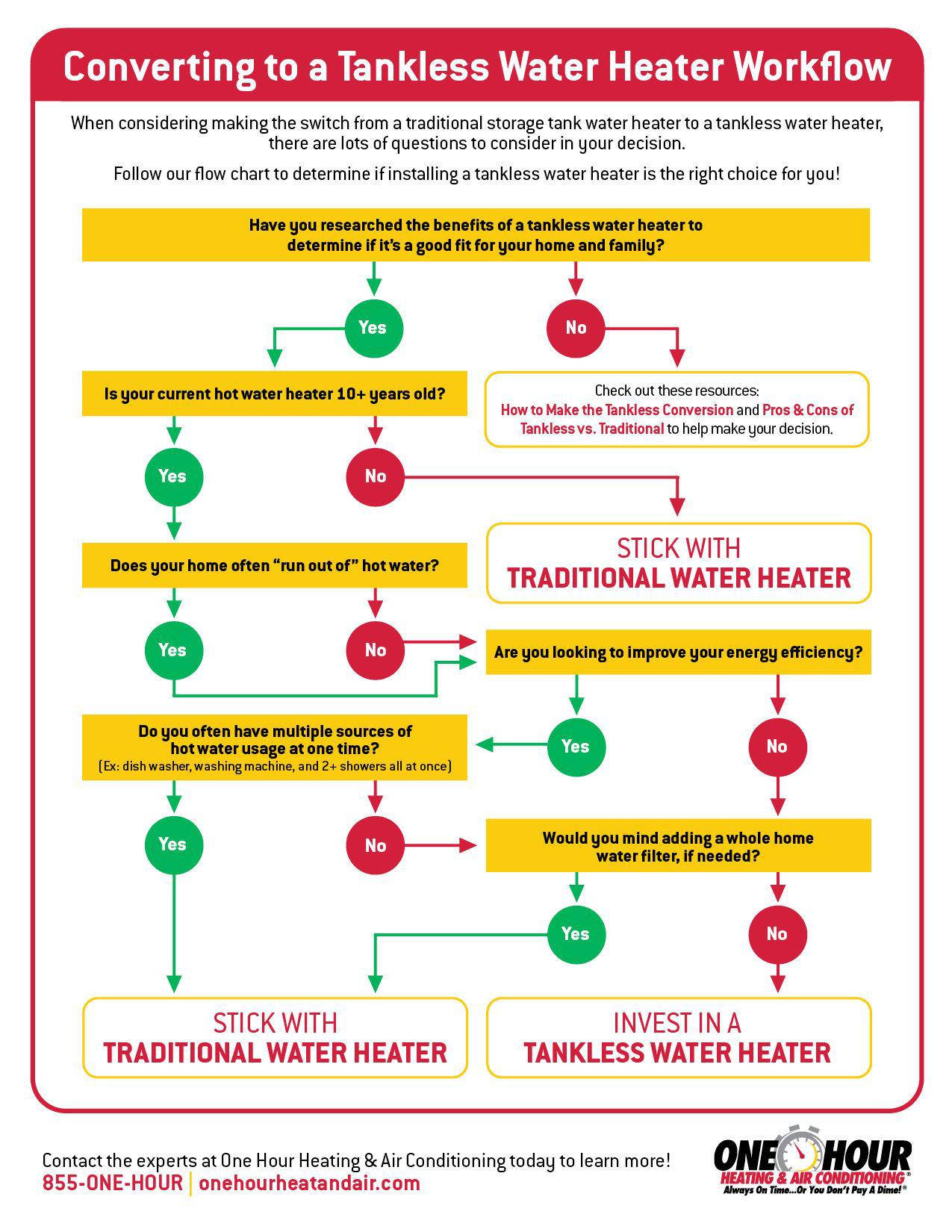
Electric tankless water heaters deliver real advantages for the right household: lower energy bills, compact wall-mounted design, a 15–20 year lifespan, and virtually unlimited hot water. The trade-offs include high upfront costs, potential electrical panel upgrades, flow rate limitations during simultaneous use, and sensitivity to hard water and cold inlet temperatures.
Your next step is to assess your home’s electrical capacity, average groundwater temperature, and peak hot water demand. If your home fits the profile—moderate usage, modern wiring, and a warmer climate—an electric tankless water heater can pay for itself through energy savings and decades of reliable service. For households with heavy simultaneous demand or older electrical systems, a traditional tank or gas tankless model may be the more practical choice.