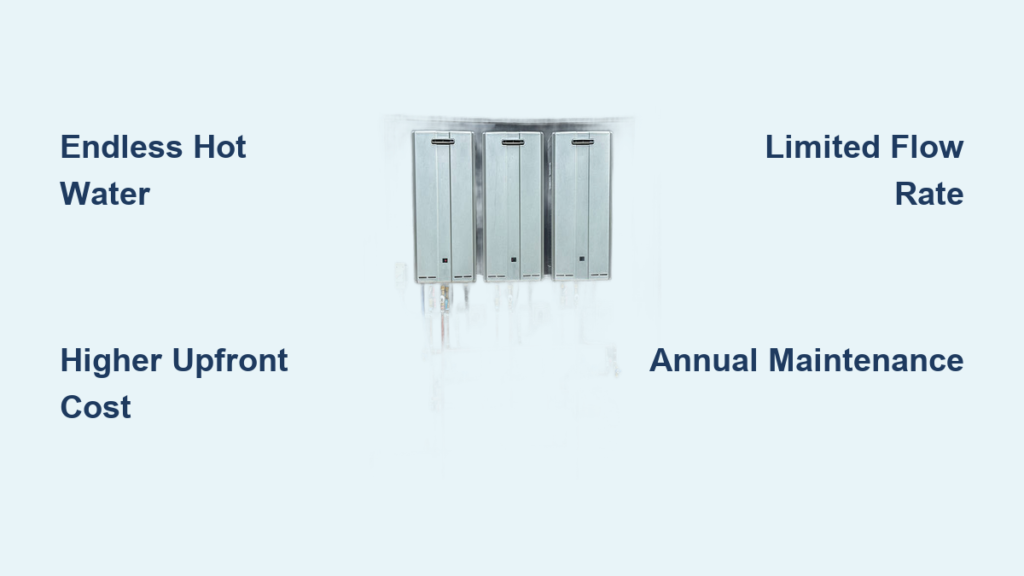
You’re standing in a cold shower because your traditional water heater ran out of hot water again. It’s a frustrating experience that drives many homeowners to explore tankless water heaters as a modern alternative. These compact units heat water on demand, promising lower energy bills and a longer lifespan than bulky tank models. Understanding the tankless water heater pros and cons helps you decide whether this upgrade matches your home’s needs and budget. In this guide, you’ll learn exactly how tankless systems compare to traditional models, what installation really involves, and how to determine if one is right for your household.
Endless Hot Water on Demand
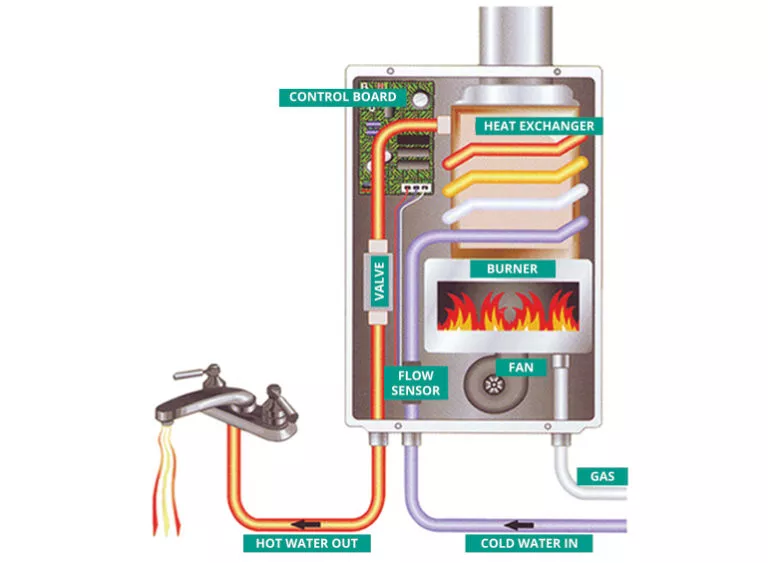
Tankless water heaters eliminate cold showers by heating water only when you need it. Unlike traditional tanks that store 40–80 gallons of preheated water, these units activate the moment you turn on a hot water tap.
How On-Demand Heating Works
Cold water passes through a heat exchanger powered by gas or electricity. Within seconds, it reaches your set temperature. This means you can run a bath, wash dishes, and do laundry back-to-back without depleting a stored supply.
Perfect for Busy Mornings
Families with tight schedules benefit most. One person showers for 10 minutes, and the next gets equally hot water immediately. There’s no waiting for a tank to refill and reheat between uses.
Higher Energy Efficiency
One of the strongest advantages of going tankless is reduced energy waste. Since there’s no stored water to keep hot 24/7, the system avoids standby heat loss, which is a major energy drain in traditional heaters.
Cut Water Heating Costs by 20–30%
Energy studies show tankless units can reduce water heating expenses by up to 30%, especially in homes using 41 gallons or less of hot water daily. Savings grow when you pair the unit with a timer or smart controls.
Lower Carbon Footprint
Less energy consumption means fewer greenhouse gas emissions. For environmentally conscious homeowners, switching to tankless supports long-term sustainability goals.
Look for ENERGY STAR® Certification
Units with the ENERGY STAR® label meet strict efficiency guidelines from the U.S. Environmental Protection Agency. Many qualify for rebates or tax credits that offset the higher purchase price.
Space-Saving Wall-Mounted Design
Tankless water heaters are roughly the size of a carry-on suitcase. They free up floor space that traditional tanks typically occupy in garages, basements, or utility closets.
Reclaim Valuable Square Footage
Mounting the unit on a wall opens up floor area for storage, shelving, or remodeling. This is especially valuable in apartments, tiny homes, or tight utility rooms where every inch counts.
Flexible Placement Options
Because they’re compact, tankless units can be installed indoors or outdoors depending on climate. Some models fit under sinks or inside cabinets for point-of-use setups that reduce wait times at distant fixtures.
Longer Lifespan Than Traditional Tanks
Most tankless water heaters last 20 years or more, nearly double the 10–15 year lifespan of standard storage tanks.
Fewer Replacements Over a Lifetime
A longer service life means fewer full-system replacements. This reduces long-term costs and the environmental impact tied to manufacturing and disposing of old units.
Durable Heat Exchanger Construction
The core component, the heat exchanger, is built from copper or stainless steel. With proper care, it withstands decades of constant use without losing efficiency.
Extended Warranty Coverage
Many manufacturers offer 10–15 year warranties on heat exchangers. Register your unit promptly after installation to activate full coverage.
Reduced Risk of Flooding and Water Damage
Traditional water heaters carry a real danger. A ruptured tank can release dozens of gallons of water in minutes, causing severe property damage and mold growth.
No Large Reservoir to Fail
Since tankless units don’t store water, there’s no massive tank that can burst. Even if a leak develops, it’s usually small and slow, giving you time to shut off the system before serious damage occurs.
Safer for Upper Floors and Attics
Homeowners installing units on second floors or in lofts appreciate this peace of mind. You avoid the risk of a catastrophic basement flood caused by a failed tank above.
Higher Upfront Investment
The biggest barrier to going tankless is the initial price. Units cost significantly more than traditional models, even before installation labor is added.
Equipment Prices Vary by Type
- Electric models: $500–$700
- Gas models: $1,000–$1,500
- High-output dual units: Up to $2,000
Compare that to $400–$800 for most standard tank heaters.
Installation Can Double the Total
Labor and home modifications often add $1,000–$3,000. Older properties may require new gas lines, upgraded venting, or electrical panel improvements for electric models.
Return on Investment Takes Time
Monthly savings help, but it can take 10–15 years to recoup the higher upfront cost. Homeowners planning to move sooner may never break even.
Limited Flow Rate Under Heavy Demand

Tankless heaters provide unlimited hot water, but they have limits on how much they can heat at once. Exceed that limit and temperatures drop.
Measured in Gallons Per Minute
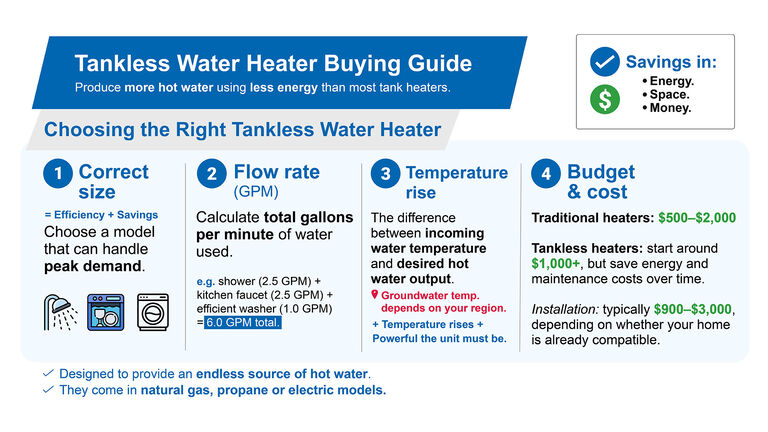
Most units deliver 5–9 GPM. Common household demands add up fast:
– Shower: 2.5 GPM
– Dishwasher: 1.5 GPM
– Kitchen faucet: 1.5 GPM
Running two showers and a dishwasher simultaneously can exceed capacity, resulting in lukewarm water.
The Cold Water Sandwich Effect
When demand stops and starts rapidly, like briefly turning off a faucet mid-task, you may notice a short burst of cold water before the heater reactivates. It’s minor but can be annoying.
Proper Sizing Matters
Undersized units struggle under load. A professional load calculation based on your peak water usage ensures you choose a model that meets your household’s needs.
Complex Installation Requirements
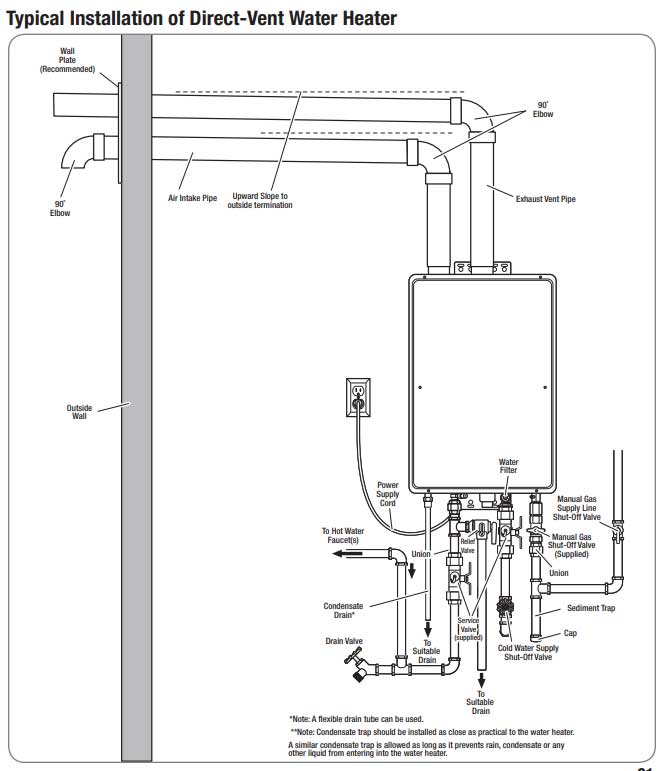
Tankless water heaters aren’t simple drop-in replacements. Retrofitting one into a home designed for a tank system often requires substantial upgrades.
Gas Models Need Specialized Venting
High-efficiency condensing units require PVC venting that handles corrosive exhaust gases. Routing these pipes through walls or roofs adds labor and material costs.
Electric Units May Need Circuit Upgrades
A typical electric tankless heater requires 120–200 amps. Many older homes can’t support this demand without an expensive electrical service upgrade.
Location Affects Performance
Placing the unit far from bathrooms or kitchens increases the wait time for hot water. Recirculation pumps solve this problem but add complexity and cost.
Delayed Hot Water at Distant Fixtures
Unlike tank systems that keep hot water ready at the tap, tankless units take a few seconds to ignite and heat incoming water.
Noticeable Wait Times
If the unit sits 50 feet from a shower, it may take 10–20 seconds for hot water to arrive. Cold weather makes this worse because inlet water temperatures drop further.
Solutions Come at a Price
To reduce delays, consider:
– Point-of-use units near remote fixtures
– Recirculation pumps with timers or motion sensors
– Insulated hot water lines
Each option improves response time but increases both upfront and operating costs.
Mineral Buildup Requires Ongoing Maintenance
Hard water is the enemy of tankless systems. Calcium and magnesium accumulate inside the heat exchanger, reducing efficiency and potentially causing premature failure.
Annual Flushing Is Essential
Manufacturers recommend flushing the system with a vinegar solution at least once per year. Skipping this step can void your warranty and shorten the unit’s lifespan.
Hard Water Areas Need Extra Protection
If your water contains over 7 grains per gallon of hardness, install a water softener. This protects the heater along with your plumbing and other appliances.
Warning Signs of Buildup
Watch for these red flags:
– Reduced water flow
– Inconsistent water temperatures
– Error codes on the digital display
Address these symptoms quickly by descaling or calling a licensed technician.
Not Ideal for Large Households

Tankless systems work beautifully in small to medium homes but can fall short in large houses with high simultaneous demand.
Multiple Units May Be Required
A single unit might handle one bathroom well, but three bathrooms running hot water at once require either a larger industrial-grade model or two units installed in parallel.
Whole-Home vs. Point-of-Use Strategies
Some homeowners install a central tankless unit plus smaller point-of-use units under sinks or near showers. This distributes the load effectively across the home.
Cost vs. Practicality Trade-Offs
Adding multiple units drives up both purchase and maintenance costs. For very large families, a hybrid system combining tankless heating with a small storage tank may offer the best balance.
Frequently Asked Questions About Tankless Water Heaters
How long do tankless water heaters typically last?
Tankless water heaters typically last 20 years or more with proper maintenance. This is roughly double the 10–15 year lifespan of traditional tank models. Annual flushing and a water softener in hard-water areas help maximize service life.
Can a tankless water heater run two showers at the same time?
Yes, if the unit is properly sized. Most tankless models deliver 5–9 GPM, and a single shower uses about 2.5 GPM. Running two showers simultaneously is possible on mid-to-large units, but adding a third fixture like a dishwasher may exceed capacity.
Do tankless water heaters save money on energy bills?
Tankless water heaters can reduce water heating costs by 20–30%, especially in homes using 41 gallons or less of hot water daily. Savings are highest when you avoid standby heat loss from a traditional tank.
What maintenance does a tankless water heater require?
Annual flushing with a vinegar solution removes mineral buildup from the heat exchanger. Homes with hard water above 7 grains per gallon should also install a water softener to prevent scale accumulation and protect the warranty.
Are tankless water heaters worth the higher upfront cost?
Tankless water heaters are worth the investment for homeowners planning to stay 10–15 years or longer. The higher upfront cost pays off through energy savings, a longer lifespan, and reduced flood risk. Short-term residents may not recoup the difference before moving.
Can I install a tankless water heater myself?
Professional installation is strongly recommended. Gas models require specialized venting and gas line work, while electric models often need panel upgrades. Improper installation voids warranties and creates safety hazards.
Key Takeaways for Choosing a Tankless Water Heater
Tankless water heaters deliver real advantages: endless hot water, 20–30% energy savings, a 20+ year lifespan, and a compact wall-mounted design that frees up floor space. They also reduce the risk of catastrophic flooding since there’s no large tank to rupture. However, the higher upfront cost, complex installation, limited flow rate under heavy demand, and annual maintenance requirements mean they’re not a perfect fit for every home.
Before deciding, evaluate your household’s peak water usage, existing electrical and gas infrastructure, and long-term plans for the property. Small to medium households with moderate demand and a long-term outlook gain the most benefit. Large families or homes with hard water and tight budgets may find traditional tanks or hybrid systems more practical. For a site-specific recommendation, consult a licensed plumber or HVAC technician who can assess your home’s unique needs and recommend the right unit size and configuration.